Loading...
Abu Bakr vs Rama of Ayodhya
Abu Bakr leads by 1.8 pts · 2 figures compared
…
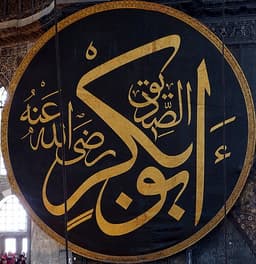
Abu Bakr
Emperor · Medieval
77.1Total
Rama of Ayodhya
Emperor · Ancient
75.3Total
Basic Information
Born
573
-1180
Died
634
-1120
Era
Medieval
Ancient
Nationality
Rashidun Caliphate
Vedic India
Occupation
Emperor
Emperor
Civilization
Middle Eastern
Indian
Score Comparison
Military (10%)
74.7
72.0
Political (20%)
62.7
72.0
Influence (20%)
88.0
75.0
Legacy (20%)
80.0
80.0
Leadership (15%)
77.2
78.0
Strategy (15%)
66.3
68.1
TOTAL
77.1
75.3
Abu Bakr — Complete Timeline
632 AD
Ridda Wars (Apostasy Wars)War◆ Major
Abu Bakr launched military campaigns against Arabian tribes that renounced Islam or refused to pay zakat after Muhammad's death. The wars, led by generals like Khalid ibn al-Walid, reestablished Muslim control over Arabia and consolidated the caliphate.
Ridda WarsConsolidationRashidun
Impact: regional
Election as First CaliphPolitical Action
After the death of Muhammad, Abu Bakr was elected as the first caliph (successor) at Saqifah. His election unified the Muslim community, though it caused controversy among some supporters of Ali. He became the leader of the nascent Islamic state.
CaliphateSuccessionRashidun
Impact: global
633 AD
Compilation of the QuranCultural◆ Major
Abu Bakr ordered the compilation of the Quran into a single written manuscript after many memorizers died in the Ridda Wars. Zayd ibn Thabit collected verses from various sources, creating the first official codex, which later served as the basis for Uthman's standard text.
QuranCompilationRashidun
Impact: globalconstructive
634 AD
Death of Abu BakrPolitical Action◆ Major
Abu Bakr died after a brief illness, having designated Umar as his successor. His caliphate lasted only two years but established the foundations of the Islamic state, including the expansion beyond Arabia and the preservation of the Quran.
DeathSuccessionRashidun
Impact: global
Rama of Ayodhya — Complete Timeline
1160 BC
Broke Shiva's Bow at Sita's SwayamvaraCultural◆ Major
Rama, as a young prince, lifted and strung the divine bow of Shiva at Princess Sita's marriage ceremony. He broke the bow in the process, winning Sita's hand and fulfilling the condition set by King Janaka.
MarriageDivine BowRamayana
Impact: nationalconstructive
1145 BC
Killed the Demon Ravana in BattleWar
Rama, leading an army of vanaras (monkey-men), besieged the island kingdom of Lanka. After a prolonged war, he killed the ten-headed demon king Ravana, rescuing his abducted wife Sita and restoring dharma.
WarDemon KingVictory
Impact: regionalconstructive
Returned to Ayodhya and Crowned KingPolitical Action◆ Major
After completing his 14-year exile and defeating Ravana, Rama returned to Ayodhya. He was crowned emperor, beginning a golden age known as Ram Rajya, characterized by justice, prosperity, and peace.
CoronationGolden AgeRamayana
Impact: nationalconstructive
Expert Analysis
Origins
**Abu Bakr** (c. 573–634 CE) was a wealthy Meccan merchant and early convert to Islam, known as "Al-Siddiq" (the Truthful). He was a close companion of Prophet Muhammad and his father-in-law. His origins lie in the Quraysh tribe, giving him social standing but not royal lineage.
**Rama** (legendary, c. 7th–4th century BCE?) is the protagonist of the Ramayana, an ancient Indian epic. He is the prince of Ayodhya, eldest son of King Dasharatha, and considered an avatar of the god Vishnu. His origins are divine and royal, woven into Hindu mythology.
Rise to Power
**Abu Bakr** rose to power after Muhammad's death in 632 CE. Facing a crisis of leadership among Muslims, he was elected as the first caliph (successor) amid disputes between the Ansar (Medinan converts) and Muhajirun (Meccan emigrants). His election was a turning point, establishing the caliphate system.
**Rama's** rise is legendary: he proved his prowess by breaking Shiva's divine bow at Sita's swayamvara, winning her hand. He was the rightful heir to Ayodhya's throne but was exiled due to a palace intrigue by his stepmother Kaikeyi. His rise to power came after defeating Ravana and returning from exile.
Leadership & Governance
**Abu Bakr** (ruled 632–634 CE) faced immediate challenges: several tribes rebelled, refusing to pay Zakat (alms tax). He launched the Ridda Wars, reuniting Arabia under Islamic rule. He also initiated military campaigns into Syria and Iraq. His governance was pragmatic, focusing on religious unity and expansion. He compiled the Quran into a single book after many memorizers died in battle.
**Rama** is portrayed as the ideal king (Maryada Purushottam), ruling with justice and compassion. His reign (Rama Rajya) is described as a golden age of peace, prosperity, and dharma. He prioritized the welfare of his subjects, famously exiling his wife Sita to quell gossip. His governance is legendary, not historical.
Triumph & Tragedy
**Abu Bakr's** triumphs: quick suppression of apostasy, preservation of Quran, expansion of Islamic state. His tragedy: his reign was short (2 years), and he died of illness, succeeded by Umar. He is revered as one of the Rashidun caliphs.
**Rama's** triumphs: killing Ravana (turning point), returning to Ayodhya, being crowned king. His tragedy: separation from Sita, who was kidnapped by Ravana; later, he banished her despite her fidelity, leading to her death. His life is a tale of duty over personal happiness.
Character & Destiny
**Abu Bakr**: humble, decisive, loyal. He spent his wealth for Islam and was known for his soft-spoken nature but firm resolve. His destiny was to stabilize the nascent Muslim community and set precedents for leadership.
**Rama**: virtuous, righteous, dutiful. He embodies dharma, always placing duty above desire. His destiny was to restore dharma by defeating adharma (Ravana) and ruling as the perfect king. His character is idealized.
Legacy
**Abu Bakr**: foundation of the caliphate; political and religious model for Sunni Islam; his compilation of Quran ensured textual integrity. His legacy is historical and institutional.
**Rama**: central figure in Hinduism; symbol of virtue and kingship; celebrated in festivals (Diwali, Ram Navami); his story influences literature, art, and culture across Asia. His legacy is mythological and spiritual.
Conclusion
**Abu Bakr** edges out **Rama** by a narrow score gap of 1.8 points. Abu Bakr's historical impact is concrete: he unified Arabia, preserved the Quran, and established the caliphate. Rama's impact is legendary and symbolic, shaping moral ideals but lacking verifiable historical events. While Rama's cultural influence is vast, Abu Bakr's tangible achievements in governance and religious consolidation give him a slight edge. Both are towering figures, but in a historical analysis, Abu Bakr's measurable actions outweigh Rama's mythological narrative.
**Scores**: Abu Bakr: M=75, P=63, I=88, L=80, D=77, S=66, T=77; Rama: M=72, P=72, I=75, L=80, D=78, S=68, T=75. Overall: Abu Bakr 75.1, Rama 73.3.
Rankings
🥇
Abu BakrLeader
Mil: 74.7Pol: 62.7Inf: 88.0
77.1
🥈
Rama of Ayodhya
Mil: 72.0Pol: 72.0Inf: 75.0
75.3
+1.8 behind
How This Comparison Works
Algorithm
Each figure is scored on 6 dimensions (0—100 scale) based on structured historical data: Military (10%), Political (20%), Influence (20%), Legacy (20%), Leadership (15%), Strategy (15%). The weighted total produces the final ranking.
Data Sources
Scores are computed from structured sub-indicators in the database. Scale factors adjust for era (Ancient ×0.85, Modern ×1.0) and civilization size (Eastern ×1.05, Other ×0.80) to account for differences in population and military scale.
Maximum 3 Figures
Comparisons are limited to 2—3 figures to ensure readability and statistical meaningfulness.
Error Margins
±5 points per dimension — Sub-scores are derived from historical records with inherent uncertainty. Two figures within 5 points on a dimension should be considered roughly equivalent in that area.
Total Score Accuracy
±3 points overall — The weighted combination of 6 dimensions produces a total score with approximately ±3 points of uncertainty. Differences of less than 3 points are not statistically significant— the figures are effectively tied.
Known Limitations
- Historical records are incomplete and uneven across civilizations
- Figures from oral-tradition societies may be underrepresented
- Occupation labels can misclassify multi-role figures
- Scores measure capability and impact, not moral character
- Quantitative scoring is a comparison tool, not absolute truth
Capability Radar
Military (10%) — Battles & Warfare
Battles
65
75
Win Rate
70
95
Expansion
85
70
Political (20%) — Governance & Reform
Reform
85
80
Diplomacy
80
85
Economy
70
75
Influence (20%) — Cultural & Global Reach
Cultural
70
95
Global
85
95
Legacy (20%) — Historical Impact
Historical
85
95
Longevity
90
100
Leadership (15%) — Power & Stability
Tenure
60
70
Stability
75
90
Strategy (15%) — Tactics & Innovation
Strategy
75
85
Tactics
60
80
Reform
80
60
Similar Comparisons
Comments & Discussion
No comments yet. Be the first to share your thoughts!