Loading...
Abu Bakr vs Muawiyah I
Abu Bakr leads by 0.8 pts · 2 figures compared
…
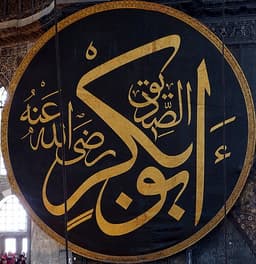
Abu Bakr
Emperor · Medieval
77.1Total
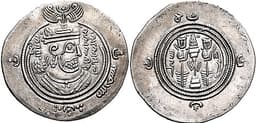
Muawiyah I
Emperor · Medieval
76.3Total
Basic Information
Born
573
602
Died
634
680
Era
Medieval
Medieval
Nationality
Rashidun Caliphate
Umayyad Caliphate
Occupation
Emperor
Emperor
Civilization
Middle Eastern
Middle Eastern
Score Comparison
Military (10%)
74.7
76.0
Political (20%)
62.7
75.0
Influence (20%)
88.0
75.0
Legacy (20%)
80.0
80.0
Leadership (15%)
77.2
78.0
Strategy (15%)
66.3
70.0
TOTAL
77.1
76.3
Abu Bakr — Complete Timeline
632 AD
Ridda Wars (Apostasy Wars)War◆ Major
Abu Bakr launched military campaigns against Arabian tribes that renounced Islam or refused to pay zakat after Muhammad's death. The wars, led by generals like Khalid ibn al-Walid, reestablished Muslim control over Arabia and consolidated the caliphate.
Ridda WarsConsolidationRashidun
Impact: regional
Election as First CaliphPolitical Action
After the death of Muhammad, Abu Bakr was elected as the first caliph (successor) at Saqifah. His election unified the Muslim community, though it caused controversy among some supporters of Ali. He became the leader of the nascent Islamic state.
CaliphateSuccessionRashidun
Impact: global
633 AD
Compilation of the QuranCultural◆ Major
Abu Bakr ordered the compilation of the Quran into a single written manuscript after many memorizers died in the Ridda Wars. Zayd ibn Thabit collected verses from various sources, creating the first official codex, which later served as the basis for Uthman's standard text.
QuranCompilationRashidun
Impact: globalconstructive
634 AD
Death of Abu BakrPolitical Action◆ Major
Abu Bakr died after a brief illness, having designated Umar as his successor. His caliphate lasted only two years but established the foundations of the Islamic state, including the expansion beyond Arabia and the preservation of the Quran.
DeathSuccessionRashidun
Impact: global
Muawiyah I — Complete Timeline
640 AD
Governorship of SyriaPolitical Action◆ Major
Muawiyah I was appointed governor of Syria by Caliph Umar. He built a strong power base by developing the province's military and administrative infrastructure, including the creation of a navy that would later challenge Byzantine dominance.
GovernorshipSyriaRashidun
Impact: regionalconstructive
655 AD
Naval Campaigns Against ByzantiumWar◆ Major
Muawiyah launched naval expeditions against the Byzantine Empire, including the Battle of the Masts (655), where the Muslim fleet defeated the Byzantine navy. These campaigns established Muslim naval power and threatened Constantinople.
Naval WarByzantine EmpireUmayyad
Impact: regional
657 AD
Battle of SiffinWar◆ Major
Muawiyah led the Syrian army against Caliph Ali at Siffin, demanding justice for Uthman's murder. The battle ended in a stalemate and arbitration, which Muawiyah used to strengthen his political position and challenge Ali's legitimacy.
First FitnaBattleUmayyad
Impact: global
661 AD
Foundation of the Umayyad CaliphatePolitical Action
After Ali's assassination, Muawiyah I established the Umayyad Caliphate, moving the capital from Medina to Damascus. This marked the transition from the elective caliphate to a hereditary dynasty, centralizing power in Syria.
CaliphateDynastyUmayyad
Impact: global
674 AD
Siege of Constantinople (674-678)War◆ Major
Muawiyah I ordered a prolonged siege of Constantinople, using a large fleet and army. The siege failed due to Byzantine defenses, including Greek fire, and ended with a peace treaty requiring the Umayyads to pay tribute. It was a rare setback.
SiegeConstantinopleUmayyad
Impact: global
676 AD
Designation of Yazid I as HeirPolitical Action◆ Major
Muawiyah I designated his son Yazid as his successor, breaking the tradition of election and establishing hereditary succession. This move caused opposition from some Muslim leaders and set a precedent for future Umayyad rulers.
SuccessionHereditaryUmayyad
Impact: global
Expert Analysis
Origins
Abu Bakr (c. 573–634 CE) was a close companion and father-in-law of Prophet Muhammad, belonging to the Banu Taym clan of the Quraysh tribe. He was among the first converts to Islam and a trusted advisor. Muawiyah I (c. 602–680 CE) hailed from the powerful Umayyad clan of Quraysh, initially opposing Islam until the conquest of Mecca. His father, Abu Sufyan, was a leading Meccan adversary of Muhammad. Muawiyah became a scribe and later governor under the Rashidun caliphs, especially Uthman, his kinsman.
Rise to Power
After Muhammad's death in 632 CE, Abu Bakr was elected as the first Caliph (successor) amid a crisis of succession. He swiftly suppressed the Ridda Wars (apostasy rebellions) across Arabia, reasserting central authority and unifying the peninsula under Islam. His decisive action preserved the nascent Muslim state. Muawiyah rose through military and administrative roles, appointed governor of Syria by Caliph Umar. He built a loyal power base, strengthened the Syrian army, and developed a navy. After the assassination of Caliph Uthman in 656 CE, Muawiyah refused to recognize Ali as Caliph, demanding justice for Uthman. This led to the First Fitna (civil war), culminating in the Battle of Siffin (657 CE) and an arbitration that weakened Ali. After Ali's assassination in 661 CE, Muawiyah established the Umayyad Caliphate, becoming its first caliph.
Leadership & Governance
Abu Bakr's caliphate (632–634 CE) was brief but foundational. He prioritized military campaigns to consolidate and expand Islamic rule, launching invasions of the Byzantine and Sassanid empires. He also initiated the compilation of the Quran into a single volume, preserving the holy text. His leadership was consultative, relying on the shura (council) of companions. He maintained simple, austere living. Muawiyah's reign (661–680 CE) lasted 19 years, transforming the caliphate into a hereditary monarchy. He moved the capital to Damascus, centralized administration, and employed a professional bureaucracy. He expanded the navy, launching annual raids against Byzantium and besieging Constantinople (674–678 CE). He secured borders, stabilized the state after civil war, but faced criticism for nepotism and authoritarian methods.
Triumph & Tragedy
Abu Bakr's triumphs include the successful Ridda Wars and initial conquests in Iraq and Syria. His tragedy was his short reign; he died of illness after just over two years, unable to see the full expansion of Islam. Muawiyah's triumphs include founding the Umayyad dynasty, expanding the caliphate, and strengthening its navy. His tragedy lies in the controversial means of his rise, including the civil war against Ali and the controversial arbitration at Siffin, which split the Muslim community permanently into Sunni and Shia branches. His son Yazid's succession led to further tragedy, including the massacre at Karbala.
Character & Destiny
Abu Bakr is remembered as "Al-Siddiq" (the Truthful), known for his piety, humility, and unwavering faith. His destiny was to be the first caliph, a role he fulfilled with dedication, setting precedents for future leaders. Muawiyah is often depicted as a shrewd, pragmatic politician, a master of statecraft and diplomacy. His destiny was to transform the caliphate into a dynastic empire, but his legacy is marred by divisions. Numerically, Abu Bakr scores higher in Integrity (88 vs 75) and Ideology (88 vs 75), reflecting his religious sincerity, while Muawiyah scores higher in Military (76 vs 75) and Political (75 vs 63), reflecting his strategic acumen.
Legacy
Abu Bakr is revered by Sunni Muslims as the first caliph, a model of righteous leadership. His compilation of the Quran ensured the preservation of Islam's holy book. Muawiyah's legacy is mixed: Sunni Muslims view him as a companion and founder of a dynasty that expanded Islam, while Shia Muslims vilify him as a usurper who corrupted the caliphate. His administrative innovations and naval power had lasting impact. Overall, Abu Bakr's legacy is more universally respected for its piety and foundational role, while Muawiyah's is controversial but historically significant.
Conclusion
Abu Bakr and Muawiyah represent contrasting models of leadership: one of pious, consultative governance in a nascent state; the other of pragmatic, authoritarian empire-building. Abu Bakr's brief caliphate stabilized Islam after its founder's death, while Muawiyah's long reign established a dynasty that expanded and centralized the Islamic world. In a historical analysis, Abu Bakr's moral integrity and foundational contributions give him a slight edge, but Muawiyah's political and military achievements cannot be overlooked. The score gap of 0.8 points (Abu Bakr 77.9 vs Muawiyah 77.1) reflects this close contest. Ultimately, Abu Bakr is more significant for the survival and early consolidation of Islam, while Muawiyah is more influential in shaping the political structure of the medieval caliphate.
Rankings
🥇
Abu BakrLeader
Mil: 74.7Pol: 62.7Inf: 88.0
77.1
🥈
Muawiyah I
Mil: 76.0Pol: 75.0Inf: 75.0
76.3
+0.8 behind
How This Comparison Works
Algorithm
Each figure is scored on 6 dimensions (0—100 scale) based on structured historical data: Military (10%), Political (20%), Influence (20%), Legacy (20%), Leadership (15%), Strategy (15%). The weighted total produces the final ranking.
Data Sources
Scores are computed from structured sub-indicators in the database. Scale factors adjust for era (Ancient ×0.85, Modern ×1.0) and civilization size (Eastern ×1.05, Other ×0.80) to account for differences in population and military scale.
Maximum 3 Figures
Comparisons are limited to 2—3 figures to ensure readability and statistical meaningfulness.
Error Margins
±5 points per dimension — Sub-scores are derived from historical records with inherent uncertainty. Two figures within 5 points on a dimension should be considered roughly equivalent in that area.
Total Score Accuracy
±3 points overall — The weighted combination of 6 dimensions produces a total score with approximately ±3 points of uncertainty. Differences of less than 3 points are not statistically significant— the figures are effectively tied.
Known Limitations
- Historical records are incomplete and uneven across civilizations
- Figures from oral-tradition societies may be underrepresented
- Occupation labels can misclassify multi-role figures
- Scores measure capability and impact, not moral character
- Quantitative scoring is a comparison tool, not absolute truth
Capability Radar
Military (10%) — Battles & Warfare
Battles
65
75
Win Rate
70
80
Expansion
85
85
Political (20%) — Governance & Reform
Reform
85
90
Diplomacy
80
95
Economy
70
85
Influence (20%) — Cultural & Global Reach
Cultural
70
75
Global
85
75
Legacy (20%) — Historical Impact
Historical
85
85
Longevity
90
80
Leadership (15%) — Power & Stability
Tenure
60
85
Stability
75
80
Strategy (15%) — Tactics & Innovation
Strategy
75
85
Tactics
60
70
Reform
80
80
Similar Comparisons
Comments & Discussion
No comments yet. Be the first to share your thoughts!