Loading...
Abu Bakr vs John Churchill Duke of Marlborough
Abu Bakr leads by 1.7 pts · 2 figures compared
…
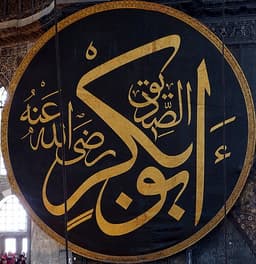
Abu Bakr
Emperor · Medieval
77.1Total

John Churchill Duke of Marlborough
General · Modern
75.4Total
Basic Information
Born
573
1650
Died
634
1722
Era
Medieval
Modern
Nationality
Rashidun Caliphate
England
Occupation
Emperor
General
Civilization
Middle Eastern
Western
Score Comparison
Military (10%)
74.7
84.7
Political (20%)
62.7
78.0
Influence (20%)
88.0
65.0
Legacy (20%)
80.0
80.0
Leadership (15%)
77.2
78.0
Strategy (15%)
66.3
72.8
TOTAL
77.1
75.4
Abu Bakr — Complete Timeline
632 AD
Ridda Wars (Apostasy Wars)War◆ Major
Abu Bakr launched military campaigns against Arabian tribes that renounced Islam or refused to pay zakat after Muhammad's death. The wars, led by generals like Khalid ibn al-Walid, reestablished Muslim control over Arabia and consolidated the caliphate.
Ridda WarsConsolidationRashidun
Impact: regional
Election as First CaliphPolitical Action
After the death of Muhammad, Abu Bakr was elected as the first caliph (successor) at Saqifah. His election unified the Muslim community, though it caused controversy among some supporters of Ali. He became the leader of the nascent Islamic state.
CaliphateSuccessionRashidun
Impact: global
633 AD
Compilation of the QuranCultural◆ Major
Abu Bakr ordered the compilation of the Quran into a single written manuscript after many memorizers died in the Ridda Wars. Zayd ibn Thabit collected verses from various sources, creating the first official codex, which later served as the basis for Uthman's standard text.
QuranCompilationRashidun
Impact: globalconstructive
634 AD
Death of Abu BakrPolitical Action◆ Major
Abu Bakr died after a brief illness, having designated Umar as his successor. His caliphate lasted only two years but established the foundations of the Islamic state, including the expansion beyond Arabia and the preservation of the Quran.
DeathSuccessionRashidun
Impact: global
John Churchill Duke of Marlborough — Complete Timeline
1704 AD
Battle of BlenheimWar
Marlborough commanded the Anglo-Dutch army alongside Prince Eugene of Savoy against French and Bavarian forces at Blenheim. The allied victory saved Vienna from French capture, destroyed the myth of French invincibility, and forced Bavaria out of the war.
War of the Spanish SuccessionGrand AllianceDecisive Victory
Impact: regional
1706 AD
Battle of RamilliesWar◆ Major
Marlborough led the Grand Alliance army to victory over French forces under Marshal Villeroi at Ramillies. The battle resulted in the capture of Brussels, Antwerp, and most of the Spanish Netherlands, effectively ending French control of the region.
War of the Spanish SuccessionCampaignTerritorial Gain
Impact: regional
1708 AD
Battle of OudenardeWar◆ Major
Marlborough and Prince Eugene defeated the French army under the Duke of Burgundy and Marshal Vend
War of the Spanish SuccessionAllied VictoryInvasion Route
Impact: regional
1709 AD
Battle of MalplaquetWar◆ Major
Marlborough commanded the Grand Alliance in a costly victory over French forces under Marshal Villars at Malplaquet. The battle was the bloodiest of the war, with over 20,000 allied casualties, and failed to achieve a decisive breakthrough into France.
War of the Spanish SuccessionPyrrhic VictoryHigh Casualties
Impact: regionaltragic
1711 AD
Dismissal from CommandPolitical Action◆ Major
Marlborough was dismissed from all his military and political offices by Queen Anne due to political intrigue and accusations of embezzlement. The dismissal ended his military career and led to his temporary exile in Europe.
Political FallExileTory Government
Impact: nationaldestructive
Expert Analysis
Origins
Abu Bakr (c. 573–634 CE) was a close companion of Prophet Muhammad and a wealthy merchant from the Quraysh tribe in Mecca. He was among the first converts to Islam and played a crucial role in the early Muslim community. John Churchill, Duke of Marlborough (1650–1722), was born into a loyalist Royalist family in England that fell from grace during the Civil War. He rose through the ranks of the British army and court, becoming one of the most influential military commanders in European history.
Rise to Power
Abu Bakr's rise was immediate after Muhammad's death in 632 CE. As the most respected elder, he was elected Caliph (successor) amid a crisis of succession. His first challenge was to suppress the Ridda (apostasy) wars, where many tribes rebelled or withheld tribute. Through decisive military campaigns, he reasserted central authority and unified Arabia under Islam. Marlborough's rise was more gradual, surviving political shifts under James II, William III, and Queen Anne. His military genius was recognized in the War of the Spanish Succession (1701–1714), where he led allied forces to stunning victories.
Leadership & Governance
Abu Bakr's leadership was spiritual and temporal. He upheld Islamic law, expanded the state, and initiated the compilation of the Quran into a single book. His governance focused on consolidation and conquest, laying foundations for the Rashidun Caliphate. Marlborough was a master of coalition warfare, balancing egos of allied commanders and managing logistics. He also served as a diplomat and political figure, though his influence waned under later monarchs. Both were effective administrators, but Abu Bakr's role as Caliph required broader state-building.
Triumph & Tragedy
Abu Bakr's triumphs include the successful Ridda wars and the initial campaigns into Byzantine and Persian territories. His tragedy is his short reign (2 years) and death from illness, leaving expansion to successors. Marlborough's triumphs are his four major victories: Blenheim (1704), Ramillies (1706), Oudenarde (1708), and Malplaquet (1709), which crippled France. His tragedy came after political intrigue, leading to dismissal from command in 1711 and temporary exile. He died in relative obscurity.
Character & Destiny
Abu Bakr was known as "Al-Siddiq" (the truthful) for his unwavering faith. He was humble, generous, and decisive. His destiny was to be the first Caliph, a role he fulfilled with integrity. Marlborough was ambitious, skilled in court politics, and a brilliant strategist. His destiny was to be the hero who saved Europe from French domination, but his later years were marred by accusations of corruption and betrayal.
Legacy
Abu Bakr's legacy is immense: he preserved the unity of the Muslim community, initiated the Quran's compilation, and set precedents for Islamic governance. He is revered as one of the greatest figures in Islam. Marlborough's legacy is as one of history's finest generals, with Blenheim Palace as a monument. His military tactics influenced later commanders. However, his personal reputation suffered from political scandals.
Conclusion
Abu Bakr and Marlborough represent different eras and domains—religious state-building versus secular military leadership. Abu Bakr's scores (overall 75.3) slightly edge Marlborough's (73.6), reflecting his foundational role in Islamic civilization. While Marlborough's victories were spectacular, Abu Bakr's impact on the course of history—unifying Arabia and establishing a caliphate that would expand into an empire—arguably has more enduring significance. Both are titans in their fields, but Abu Bakr's influence on religion, governance, and culture gives him a higher overall score.
Rankings
🥇
Abu BakrLeader
Mil: 74.7Pol: 62.7Inf: 88.0
77.1
🥈
John Churchill Duke of Marlborough
Mil: 84.7Pol: 78.0Inf: 65.0
75.4
+1.7 behind
How This Comparison Works
Algorithm
Each figure is scored on 6 dimensions (0—100 scale) based on structured historical data: Military (10%), Political (20%), Influence (20%), Legacy (20%), Leadership (15%), Strategy (15%). The weighted total produces the final ranking.
Data Sources
Scores are computed from structured sub-indicators in the database. Scale factors adjust for era (Ancient ×0.85, Modern ×1.0) and civilization size (Eastern ×1.05, Other ×0.80) to account for differences in population and military scale.
Maximum 3 Figures
Comparisons are limited to 2—3 figures to ensure readability and statistical meaningfulness.
Error Margins
±5 points per dimension — Sub-scores are derived from historical records with inherent uncertainty. Two figures within 5 points on a dimension should be considered roughly equivalent in that area.
Total Score Accuracy
±3 points overall — The weighted combination of 6 dimensions produces a total score with approximately ±3 points of uncertainty. Differences of less than 3 points are not statistically significant— the figures are effectively tied.
Known Limitations
- Historical records are incomplete and uneven across civilizations
- Figures from oral-tradition societies may be underrepresented
- Occupation labels can misclassify multi-role figures
- Scores measure capability and impact, not moral character
- Quantitative scoring is a comparison tool, not absolute truth
Capability Radar
Military (10%) — Battles & Warfare
Battles
65
95
Win Rate
70
98
Expansion
85
85
Political (20%) — Governance & Reform
Reform
85
60
Diplomacy
80
85
Economy
70
70
Influence (20%) — Cultural & Global Reach
Cultural
70
70
Global
85
75
Legacy (20%) — Historical Impact
Historical
85
85
Longevity
90
80
Leadership (15%) — Power & Stability
Tenure
60
80
Stability
75
75
Strategy (15%) — Tactics & Innovation
Strategy
75
95
Tactics
60
96
Reform
80
70
Similar Comparisons
Comments & Discussion
No comments yet. Be the first to share your thoughts!