Loading...
Abu Bakr vs Ivan III the Great
Abu Bakr leads by 1.8 pts · 2 figures compared
…
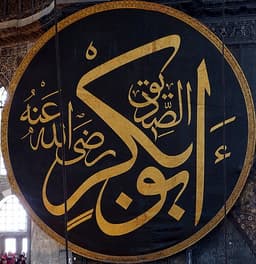
Abu Bakr
Emperor · Medieval
77.1Total
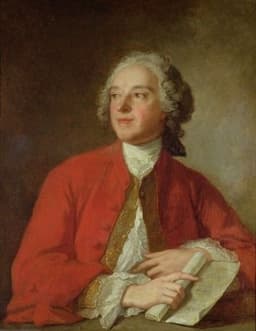
Ivan III the Great
Emperor · Medieval
75.3Total
Basic Information
Born
573
1440
Died
634
1505
Era
Medieval
Medieval
Nationality
Rashidun Caliphate
Muscovy
Occupation
Emperor
Emperor
Civilization
Middle Eastern
Western
Score Comparison
Military (10%)
74.7
76.0
Political (20%)
62.7
70.0
Influence (20%)
88.0
75.0
Legacy (20%)
80.0
80.0
Leadership (15%)
77.2
78.0
Strategy (15%)
66.3
67.2
TOTAL
77.1
75.3
Abu Bakr — Complete Timeline
632 AD
Ridda Wars (Apostasy Wars)War◆ Major
Abu Bakr launched military campaigns against Arabian tribes that renounced Islam or refused to pay zakat after Muhammad's death. The wars, led by generals like Khalid ibn al-Walid, reestablished Muslim control over Arabia and consolidated the caliphate.
Ridda WarsConsolidationRashidun
Impact: regional
Election as First CaliphPolitical Action
After the death of Muhammad, Abu Bakr was elected as the first caliph (successor) at Saqifah. His election unified the Muslim community, though it caused controversy among some supporters of Ali. He became the leader of the nascent Islamic state.
CaliphateSuccessionRashidun
Impact: global
633 AD
Compilation of the QuranCultural◆ Major
Abu Bakr ordered the compilation of the Quran into a single written manuscript after many memorizers died in the Ridda Wars. Zayd ibn Thabit collected verses from various sources, creating the first official codex, which later served as the basis for Uthman's standard text.
QuranCompilationRashidun
Impact: globalconstructive
634 AD
Death of Abu BakrPolitical Action◆ Major
Abu Bakr died after a brief illness, having designated Umar as his successor. His caliphate lasted only two years but established the foundations of the Islamic state, including the expansion beyond Arabia and the preservation of the Quran.
DeathSuccessionRashidun
Impact: global
Ivan III the Great — Complete Timeline
1472 AD
Marriage to Sophia PalaiologinaPolitical Action◆ Major
Ivan III married Sophia (Zoe) Palaiologina, niece of the last Byzantine emperor. This marriage allowed Ivan to claim succession to the Byzantine Empire, adopt the double-headed eagle as a symbol, and promote Moscow as the Third Rome.
ByzantiumThird RomeMarriage
Impact: regionalconstructive
1478 AD
Annexation of NovgorodWar◆ Major
Ivan III conquered the Novgorod Republic after a series of campaigns. He abolished the veche (assembly) and removed the veche bell, incorporating Novgorod's vast territories into the Grand Principality of Moscow.
NovgorodAnnexationMoscow
Impact: regional
1480 AD
Great Stand on the Ugra RiverWar
Ivan III faced the Mongol army of Khan Akhmat across the Ugra River. After weeks of stalemate, the Mongols withdrew without battle. This event ended 240 years of Mongol suzerainty over Russia.
Golden HordeIndependenceUgra
Impact: regional
1497 AD
Issued the Sudebnik of 1497Reform◆ Major
Ivan III promulgated a new legal code, the Sudebnik, which standardized laws across the Russian lands. It restricted peasant mobility by limiting the time for transfer between landowners, a step toward serfdom.
Legal CodeSerfdomReform
Impact: national
1500 AD
War with the Grand Duchy of LithuaniaWar◆ Major
Ivan III launched a war against Lithuania, capturing the cities of Bryansk, Dorogobuzh, and Putivl. The war ended with the Truce of 1503, which ceded significant territories to Moscow.
LithuaniaTerritorial ExpansionWar
Impact: regional
Expert Analysis
Origins
**Abu Bakr** (c. 573–634 CE) was born into the Banu Taym clan of the Quraysh tribe in Mecca. A wealthy merchant and early convert to Islam, he was the closest companion of Prophet Muhammad and his father-in-law. His deep knowledge of Arabian tribal customs and trade networks proved crucial. **Ivan III the Great** (1440–1505 CE) was born as the son of Vasily II of Moscow. His early life was marked by the Muscovite civil wars, where his father was blinded and he himself learned statecraft. Ivan inherited a principality surrounded by rival Russian states and under Mongol suzerainty.
Rise to Power
Abu Bakr's rise was unique: after Muhammad's death in 632, many tribes apostatized. Through swift political maneuvering, he secured the caliphate at Saqifah, overcoming opposition from Ansar and Ali's supporters. He immediately faced the Ridda Wars, leading campaigns that re-imposed Islamic rule across Arabia. Ivan III became Grand Prince of Moscow in 1462 after his father's death. He consolidated power by subduing rival princes, notably through the annexation of Novgorod in 1478 after a series of military campaigns and diplomatic intrigues. His marriage to Sophia Palaiologina, niece of the last Byzantine emperor, bolstered his prestige and claims.
Leadership & Governance
Abu Bakr (scores: M=75, P=63, I=88, L=80) was a decisive military leader but a consensus-builder. He organized the Quran's compilation after many memorizers died in battle, preserving Islamic scripture. His administration relied on tribal alliances and early Islamic institutions. Ivan III (M=76, P=70, I=75, L=80) centralized power, issuing the Sudebnik of 1497, a law code that standardized justice and increased the Grand Prince's authority. He reformed the military and bureaucracy, using his marriage to Sophia to adopt Byzantine court rituals, proclaiming Moscow as the "Third Rome."
Triumph & Tragedy
Abu Bakr's greatest triumph was the Ridda Wars (632–633), which unified Arabia and secured the caliphate. However, his reign was short (2 years) and he died of illness, possibly poisoned, leaving the empire to Umar. His compilation of the Quran was a lasting achievement. Ivan III's defining moment was the Great Stand on the Ugra River (1480), where he faced the Mongol forces of Ahmed Khan. After a tense standoff, the Mongols withdrew, effectively ending the "Tatar Yoke" without a battle. His annexation of Novgorod and wars with Lithuania expanded Muscovy's territory, but his later years saw conflict with his son and boyars.
Character & Destiny
Abu Bakr was known as "As-Siddiq" (the Truthful) for his unwavering faith. He was humble, generous, and prioritized unity over personal ambition. His destiny was to be the first successor to Muhammad, a role he accepted reluctantly. Ivan III was calculating, ambitious, and sometimes ruthless. He broke treaties, suppressed rivals, and centralized power. His destiny was to transform Moscow from a vassal into a sovereign state. Both men died in power: Abu Bakr at 61, Ivan at 65.
Legacy
Abu Bakr's legacy is foundational: he preserved Islam's unity and scripture. He is revered as the first Caliph and one of the "Rightly Guided." Ivan III is hailed as the "Gatherer of the Russian Lands" and the founder of the Russian state. His policies of centralization and expansion set the stage for Ivan the Terrible. Both are remembered as strong, pious leaders who consolidated their realms.
Conclusion
Abu Bakr scores slightly higher overall (average 75.1 vs 73.3). His impact on Islam is profound, but Ivan's longer reign (43 years) allowed deeper institutional changes. Abu Bakr's military unification was swift but fragile; Ivan's consolidation endured. In a direct comparison, Abu Bakr's spiritual and political legacy arguably surpasses Ivan's, but Ivan's state-building shaped modern Russia. The score gap of 1.8 reflects their close historical significance.
Rankings
🥇
Abu BakrLeader
Mil: 74.7Pol: 62.7Inf: 88.0
77.1
🥈
Ivan III the Great
Mil: 76.0Pol: 70.0Inf: 75.0
75.3
+1.8 behind
How This Comparison Works
Algorithm
Each figure is scored on 6 dimensions (0—100 scale) based on structured historical data: Military (10%), Political (20%), Influence (20%), Legacy (20%), Leadership (15%), Strategy (15%). The weighted total produces the final ranking.
Data Sources
Scores are computed from structured sub-indicators in the database. Scale factors adjust for era (Ancient ×0.85, Modern ×1.0) and civilization size (Eastern ×1.05, Other ×0.80) to account for differences in population and military scale.
Maximum 3 Figures
Comparisons are limited to 2—3 figures to ensure readability and statistical meaningfulness.
Error Margins
±5 points per dimension — Sub-scores are derived from historical records with inherent uncertainty. Two figures within 5 points on a dimension should be considered roughly equivalent in that area.
Total Score Accuracy
±3 points overall — The weighted combination of 6 dimensions produces a total score with approximately ±3 points of uncertainty. Differences of less than 3 points are not statistically significant— the figures are effectively tied.
Known Limitations
- Historical records are incomplete and uneven across civilizations
- Figures from oral-tradition societies may be underrepresented
- Occupation labels can misclassify multi-role figures
- Scores measure capability and impact, not moral character
- Quantitative scoring is a comparison tool, not absolute truth
Capability Radar
Military (10%) — Battles & Warfare
Battles
65
75
Win Rate
70
80
Expansion
85
85
Political (20%) — Governance & Reform
Reform
85
80
Diplomacy
80
85
Economy
70
70
Influence (20%) — Cultural & Global Reach
Cultural
70
70
Global
85
70
Legacy (20%) — Historical Impact
Historical
85
85
Longevity
90
80
Leadership (15%) — Power & Stability
Tenure
60
85
Stability
75
75
Strategy (15%) — Tactics & Innovation
Strategy
75
85
Tactics
60
70
Reform
80
65
Similar Comparisons
Comments & Discussion
No comments yet. Be the first to share your thoughts!