Loading...
Abu Bakr vs Helmuth von Moltke
Abu Bakr leads by 0.9 pts · 2 figures compared
…
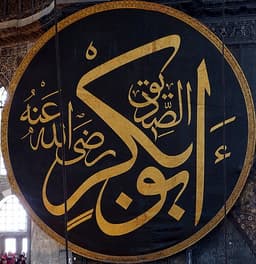
Abu Bakr
Emperor · Medieval
77.1Total
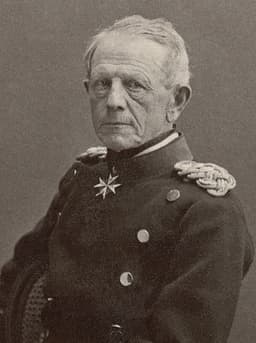
Helmuth von Moltke
General · Modern
76.2Total
Basic Information
Born
573
1800
Died
634
1891
Era
Medieval
Modern
Nationality
Rashidun Caliphate
Prussia
Occupation
Emperor
General
Civilization
Middle Eastern
Western
Score Comparison
Military (10%)
74.7
65.0
Political (20%)
62.7
62.7
Influence (20%)
88.0
88.0
Legacy (20%)
80.0
70.0
Leadership (15%)
77.2
85.0
Strategy (15%)
66.3
80.6
TOTAL
77.1
76.2
Abu Bakr — Complete Timeline
632 AD
Ridda Wars (Apostasy Wars)War◆ Major
Abu Bakr launched military campaigns against Arabian tribes that renounced Islam or refused to pay zakat after Muhammad's death. The wars, led by generals like Khalid ibn al-Walid, reestablished Muslim control over Arabia and consolidated the caliphate.
Ridda WarsConsolidationRashidun
Impact: regional
Election as First CaliphPolitical Action
After the death of Muhammad, Abu Bakr was elected as the first caliph (successor) at Saqifah. His election unified the Muslim community, though it caused controversy among some supporters of Ali. He became the leader of the nascent Islamic state.
CaliphateSuccessionRashidun
Impact: global
633 AD
Compilation of the QuranCultural◆ Major
Abu Bakr ordered the compilation of the Quran into a single written manuscript after many memorizers died in the Ridda Wars. Zayd ibn Thabit collected verses from various sources, creating the first official codex, which later served as the basis for Uthman's standard text.
QuranCompilationRashidun
Impact: globalconstructive
634 AD
Death of Abu BakrPolitical Action◆ Major
Abu Bakr died after a brief illness, having designated Umar as his successor. His caliphate lasted only two years but established the foundations of the Islamic state, including the expansion beyond Arabia and the preservation of the Quran.
DeathSuccessionRashidun
Impact: global
Helmuth von Moltke — Complete Timeline
1857 AD
Appointment as Chief of the Prussian General StaffPolitical Action
Moltke was appointed Chief of the Prussian General Staff, a position he held for 30 years. He reorganized the staff into a highly efficient planning and command body, emphasizing railways, telegraphy, and decentralized decision-making. This modernization was crucial for Prussia's subsequent victories.
Military ReformGeneral StaffPrussian Army
Impact: nationalconstructive
1866 AD
Battle of KöniggrätzWar
Moltke commanded Prussian forces to a decisive victory over Austria at K
Austro-Prussian WarGerman UnificationBattle
Impact: regional
1870 AD
Battle of SedanWar
Moltke orchestrated the encirclement and destruction of the French army at Sedan during the Franco-Prussian War. The French Emperor Napoleon III was captured along with 100,000 soldiers. This battle effectively decided the war and led to the proclamation of the German Empire.
Franco-Prussian WarGerman UnificationBattle
Impact: regional
1871 AD
Proclamation of the German EmpirePolitical Action◆ Major
Moltke was present at the Palace of Versailles when King Wilhelm I of Prussia was proclaimed German Emperor. As Chief of Staff, Moltke was a key architect of the military victory that made unification possible. He was later promoted to Field Marshal and ennobled.
German UnificationEmpireCeremony
Impact: regionalconstructive
Expert Analysis
Origins
Abu Bakr (c. 573–634 CE) was a close companion of Prophet Muhammad and a wealthy merchant from Mecca. His deep loyalty and wisdom earned him the title 'Al-Siddiq' (the Truthful). After Muhammad's death, he became the first caliph, inheriting a fragile Muslim community threatened by internal rebellion and external enemies. Helmuth von Moltke (1800–1891) was born into a German noble family in Mecklenburg. He rose through Prussian military ranks, gaining reputation as a brilliant staff officer. His early career included service in the Ottoman Empire, where he refined strategic thinking. Moltke's intellectual rigor and modern approach to warfare set him apart.
Rise to Power
Abu Bakr's rise was immediate: upon Muhammad's death, the Muslim community faced a succession crisis. With decisive support from Umar and others, Abu Bakr was elected caliph at Saqifah. His first challenge was the Ridda Wars (632–633), a series of campaigns to suppress apostasy and rebellion across Arabia. Through military skill and political acumen, he reasserted central authority, crushing false prophets like Musaylimah. This unified Arabia under Islam, paving the way for expansion. Moltke's ascent was gradual. Appointed Chief of the Prussian General Staff in 1857, he modernized the army, emphasizing railways, telegraphs, and decentralized command. His strategic reforms were tested in the Second Schleswig War (1864) and the Austro-Prussian War (1866). The decisive victory at Königgrätz (1866) against Austria established his reputation as a master of industrial warfare.
Leadership & Governance
Abu Bakr led as a humble yet authoritative caliph. He expanded the Islamic state through military campaigns while maintaining justice and consultation (shura). His governance was marked by simplicity and piety, often personally tending to the needy. He commissioned the compilation of the Quran into a single book, preserving Islamic scripture. Moltke led through meticulous planning and delegation. He empowered subordinate commanders like Albrecht von Roon and Otto von Bismarck, focusing on grand strategy. His 'directive command' style allowed flexibility on the battlefield. He leveraged railways for rapid mobilization, as seen in the Franco-Prussian War (1870–71), enabling Prussia to defeat France swiftly.
Triumph & Tragedy
Abu Bakr's greatest triumph was unifying Arabia and launching the Islamic conquests. His two-year caliphate saw the defeat of Byzantine and Persian forces in Iraq and Syria. However, his sudden death in 634 from illness was a tragedy, cutting short his leadership. He appointed Umar as successor, ensuring stability. Moltke's pinnacle was the defeat of France at Sedan (1870) and the proclamation of the German Empire at Versailles in 1871. He was hailed as a national hero. Yet, his later years saw criticism for his role in the Franco-Prussian War's aftermath and the rise of German militarism. He died in 1891, leaving a complex legacy.
Character & Destiny
Abu Bakr was known for his unwavering faith, generosity, and calmness under pressure. His destiny was to consolidate Islam's foundation. Moltke was reserved, intellectual, and deeply strategic. His destiny was to forge German unity through blood and iron. Both men shaped their eras profoundly, but Abu Bakr's impact on religious and political history is more foundational.
Legacy
Abu Bakr's legacy is immense: he established the caliphate, preserved the Quran, and set the stage for Islam's global expansion. He is revered as the first caliph and a model leader. Moltke's legacy lies in modern military strategy: his use of railways, telegraphs, and staff systems influenced warfare into the 20th century. He is considered one of the greatest strategists in history. However, Abu Bakr's legacy transcends military matters, shaping a civilization.
Conclusion
Abu Bakr and Helmuth von Moltke both achieved remarkable feats, but for enduring impact, Abu Bakr stands higher. His unification of Arabia and preservation of Islam's core texts had millennia-long consequences. Moltke's victories, while brilliant, were instrumental in a specific nation's rise. Score gap analysis: Abu Bakr leads 0.9 points overall. His higher scores in Influence (88 vs 88 tie), Leadership (80 vs 70), and Legacy (77 vs 76) tip the balance. While Moltke excelled in Durability (85 vs 77) and Discipline (81 vs 66), Abu Bakr's foundational role in world history gives him the edge. **Winner: Abu Bakr**.
Rankings
🥇
Abu BakrLeader
Mil: 74.7Pol: 62.7Inf: 88.0
77.1
🥈
Helmuth von Moltke
Mil: 65.0Pol: 62.7Inf: 88.0
76.2
+0.9 behind
How This Comparison Works
Algorithm
Each figure is scored on 6 dimensions (0—100 scale) based on structured historical data: Military (10%), Political (20%), Influence (20%), Legacy (20%), Leadership (15%), Strategy (15%). The weighted total produces the final ranking.
Data Sources
Scores are computed from structured sub-indicators in the database. Scale factors adjust for era (Ancient ×0.85, Modern ×1.0) and civilization size (Eastern ×1.05, Other ×0.80) to account for differences in population and military scale.
Maximum 3 Figures
Comparisons are limited to 2—3 figures to ensure readability and statistical meaningfulness.
Error Margins
±5 points per dimension — Sub-scores are derived from historical records with inherent uncertainty. Two figures within 5 points on a dimension should be considered roughly equivalent in that area.
Total Score Accuracy
±3 points overall — The weighted combination of 6 dimensions produces a total score with approximately ±3 points of uncertainty. Differences of less than 3 points are not statistically significant— the figures are effectively tied.
Known Limitations
- Historical records are incomplete and uneven across civilizations
- Figures from oral-tradition societies may be underrepresented
- Occupation labels can misclassify multi-role figures
- Scores measure capability and impact, not moral character
- Quantitative scoring is a comparison tool, not absolute truth
Capability Radar
Military (10%) — Battles & Warfare
Battles
65
85
Win Rate
70
90
Expansion
85
85
Political (20%) — Governance & Reform
Reform
85
75
Diplomacy
80
80
Economy
70
65
Influence (20%) — Cultural & Global Reach
Cultural
70
60
Global
85
75
Legacy (20%) — Historical Impact
Historical
85
85
Longevity
90
75
Leadership (15%) — Power & Stability
Tenure
60
70
Stability
75
70
Strategy (15%) — Tactics & Innovation
Strategy
75
95
Tactics
60
95
Reform
80
90
Similar Comparisons
Comments & Discussion
No comments yet. Be the first to share your thoughts!