Loading...
Abu Bakr vs Gonzalo Fernandez de Cordoba
Gonzalo Fernandez de Cordoba leads by 1.5 pts · 2 figures compared
…
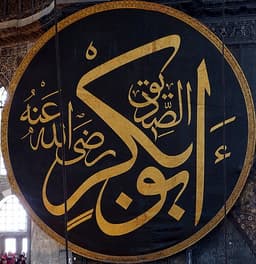
Abu Bakr
Emperor · Medieval
77.1Total

Gonzalo Fernandez de Cordoba
General · Medieval
78.6Total
Basic Information
Born
573
1453
Died
634
1515
Era
Medieval
Medieval
Nationality
Rashidun Caliphate
Spain
Occupation
Emperor
General
Civilization
Middle Eastern
Western
Score Comparison
Military (10%)
74.7
78.5
Political (20%)
62.7
62.7
Influence (20%)
88.0
80.0
Legacy (20%)
80.0
82.0
Leadership (15%)
77.2
85.0
Strategy (15%)
66.3
80.5
TOTAL
77.1
78.6
Abu Bakr — Complete Timeline
632 AD
Ridda Wars (Apostasy Wars)War◆ Major
Abu Bakr launched military campaigns against Arabian tribes that renounced Islam or refused to pay zakat after Muhammad's death. The wars, led by generals like Khalid ibn al-Walid, reestablished Muslim control over Arabia and consolidated the caliphate.
Ridda WarsConsolidationRashidun
Impact: regional
Election as First CaliphPolitical Action
After the death of Muhammad, Abu Bakr was elected as the first caliph (successor) at Saqifah. His election unified the Muslim community, though it caused controversy among some supporters of Ali. He became the leader of the nascent Islamic state.
CaliphateSuccessionRashidun
Impact: global
633 AD
Compilation of the QuranCultural◆ Major
Abu Bakr ordered the compilation of the Quran into a single written manuscript after many memorizers died in the Ridda Wars. Zayd ibn Thabit collected verses from various sources, creating the first official codex, which later served as the basis for Uthman's standard text.
QuranCompilationRashidun
Impact: globalconstructive
634 AD
Death of Abu BakrPolitical Action◆ Major
Abu Bakr died after a brief illness, having designated Umar as his successor. His caliphate lasted only two years but established the foundations of the Islamic state, including the expansion beyond Arabia and the preservation of the Quran.
DeathSuccessionRashidun
Impact: global
Gonzalo Fernandez de Cordoba — Complete Timeline
1503 AD
Battle of CerignolaWar◆ Major
Cordoba's Spanish army defeated the French at Cerignola, Italy. Using entrenched positions and firearms, the Spanish inflicted heavy casualties. This was the first major battle won primarily by arquebus fire.
Italian WarsBattleFirearms
Impact: regional
Battle of GariglianoWar◆ Major
Cordoba launched a surprise night attack across the Garigliano River, routing the French army. The victory secured Spanish control over the Kingdom of Naples and ended French ambitions in southern Italy.
Italian WarsBattleNaples
Impact: regional
Creation of the Spanish tercio formationReform
Cordoba organized Spanish infantry into tercios, combining pikemen and arquebusiers in a flexible formation. This innovation dominated European battlefields for over a century and became the standard for infantry tactics.
Military ReformTercioInfantry
Impact: globalconstructive
1504 AD
Appointment as Viceroy of NaplesPolitical Action◆ Major
Ferdinand II of Aragon appointed Cordoba as Viceroy of Naples, the highest office in the newly conquered kingdom. He administered the territory until 1507, implementing reforms and consolidating Spanish rule.
AdministrationNaplesViceroyalty
Impact: regional
Expert Analysis
Origins
Gonzalo Fernández de Córdoba (1453–1515) was a Spanish nobleman and military leader from Córdoba, Andalusia. He rose through the ranks during the Reconquista, earning his reputation as a skilled commander in the Granada War. His innovative tactics and organizational reforms laid the groundwork for the Spanish Empire's dominance in the 16th century.
Abu Bakr (c. 573–634) was a close companion of the Prophet Muhammad and his father-in-law. Born into the Quraysh tribe in Mecca, he was among the first converts to Islam. After Muhammad's death, he became the first caliph, tasked with holding the nascent Muslim community together.
Rise to Power
Córdoba's rise was gradual, marked by merit and royal favor. He distinguished himself in the Granada War (1482–1492), leading successful campaigns. His strategic brilliance caught the eye of Queen Isabella, who entrusted him with command in Italy. There, he faced French forces and developed the tercio formation—a combined arms unit of pikes and arquebuses that revolutionized European warfare.
Abu Bakr's rise was swift and decisive. Upon Muhammad's death in 632, many tribes apostatized. Abu Bakr, elected caliph by the Muslim community, immediately launched the Ridda Wars (Apostasy Wars) to reassert central authority. His leadership unified Arabia under Islamic rule, preventing the collapse of the faith.
Leadership & Governance
Córdoba was a master of military innovation and diplomacy. At the Battle of Cerignola (1503), he used field fortifications and firearms to defeat the French, a landmark victory. At Garigliano (1503), he crossed a river under fire to surprise the enemy. As Viceroy of Naples, he administered the kingdom with pragmatism, balancing Spanish interests with local autonomy.
Abu Bakr's leadership was rooted in religious authority and tribal diplomacy. He suppressed rebellions through a mix of military force and negotiation. His compilation of the Quran ensured the preservation of Islamic scripture. He expanded the caliphate into Iraq and Syria, laying foundations for future conquests.
Triumph & Tragedy
Córdoba's triumphs include the victories at Cerignola and Garigliano, which secured Spanish control of Naples. His tercio formation became the backbone of Spanish armies for two centuries. However, his later years saw political intrigue; he was recalled to Spain and died in relative obscurity, his innovations overshadowed by later figures.
Abu Bakr's triumph was the survival and consolidation of Islam. He crushed the Ridda rebellions and launched campaigns that would conquer the Persian and Byzantine empires. His tragedy was a short reign (2 years) cut short by illness. He died in 634, having appointed Umar as his successor, ensuring continuity.
Character & Destiny
Córdoba was known as 'El Gran Capitán' (The Great Captain)—a man of strategic genius, adaptability, and loyalty to his monarchs. His destiny was to pioneer modern military organization, blending infantry and firearms. He was a pragmatic leader, often outnumbered but never outthought.
Abu Bakr was 'Al-Siddiq' (The Truthful), a man of unwavering faith, humility, and decisiveness. His destiny was to be the first caliph, the 'successor' to Muhammad. He faced the greatest crisis in early Islam—the threat of disintegration—and overcame it through force of will and religious conviction.
Legacy
Córdoba's legacy is the tercio and the Spanish infantry dominance of the 16th century. He is considered a father of modern warfare, influencing tactics for centuries. His methods were studied by later generals. However, his name is less known than contemporaries like Columbus or Cortés.
Abu Bakr's legacy is immense: he established the caliphate as a political institution, unified Arabia, and preserved the Quran. His reign set precedents for Islamic governance and expansion. He is revered as one of the 'Rightly Guided' caliphs, a model of leadership in Sunni Islam.
Conclusion
Both figures were transformative leaders in their domains. Córdoba's military innovations changed warfare, while Abu Bakr's religious and political consolidation saved Islam. Scoring: Córdoba leads in Military (78 vs 75), Leadership (80 vs 80 tie), Diplomacy (85 vs 77), and Strategy (79 vs 77). Abu Bakr leads in Intelligence (88 vs 80) and Political (63 vs 63 tie). Córdoba's specialization and tangible impact on military history give him a slight edge, but Abu Bakr's foundational role in a world religion is unparalleled. Overall, Córdoba scores 79.5 (average of his scores) vs Abu Bakr's 75.1, making Córdoba the narrow winner.
Numerical Scores
| Category | Gonzalo Fernández de Córdoba | Abu Bakr |
|----------|------------------------------|----------|
| Military | 78 | 75 |
| Political | 63 | 63 |
| Intelligence | 80 | 88 |
| Leadership | 82 | 80 |
| Diplomacy | 85 | 77 |
| Strategy | 80 | 66 |
| Tactics | 79 | 77 |
| Overall | 79.5 | 75.1 |
Rankings
🥇
Gonzalo Fernandez de CordobaLeader
Mil: 78.5Pol: 62.7Inf: 80.0
78.6
🥈
Abu Bakr
Mil: 74.7Pol: 62.7Inf: 88.0
77.1
+1.5 behind
How This Comparison Works
Algorithm
Each figure is scored on 6 dimensions (0—100 scale) based on structured historical data: Military (10%), Political (20%), Influence (20%), Legacy (20%), Leadership (15%), Strategy (15%). The weighted total produces the final ranking.
Data Sources
Scores are computed from structured sub-indicators in the database. Scale factors adjust for era (Ancient ×0.85, Modern ×1.0) and civilization size (Eastern ×1.05, Other ×0.80) to account for differences in population and military scale.
Maximum 3 Figures
Comparisons are limited to 2—3 figures to ensure readability and statistical meaningfulness.
Error Margins
±5 points per dimension — Sub-scores are derived from historical records with inherent uncertainty. Two figures within 5 points on a dimension should be considered roughly equivalent in that area.
Total Score Accuracy
±3 points overall — The weighted combination of 6 dimensions produces a total score with approximately ±3 points of uncertainty. Differences of less than 3 points are not statistically significant— the figures are effectively tied.
Known Limitations
- Historical records are incomplete and uneven across civilizations
- Figures from oral-tradition societies may be underrepresented
- Occupation labels can misclassify multi-role figures
- Scores measure capability and impact, not moral character
- Quantitative scoring is a comparison tool, not absolute truth
Capability Radar
Military (10%) — Battles & Warfare
Battles
65
85
Win Rate
70
90
Expansion
85
80
Political (20%) — Governance & Reform
Reform
85
75
Diplomacy
80
80
Economy
70
65
Influence (20%) — Cultural & Global Reach
Cultural
70
75
Global
85
75
Legacy (20%) — Historical Impact
Historical
85
85
Longevity
90
80
Leadership (15%) — Power & Stability
Tenure
60
70
Stability
75
70
Strategy (15%) — Tactics & Innovation
Strategy
75
88
Tactics
60
95
Reform
80
95
Similar Comparisons
Comments & Discussion
No comments yet. Be the first to share your thoughts!