Loading...
Abu Bakr vs Dorgon
Dorgon leads by 0.9 pts · 2 figures compared
…
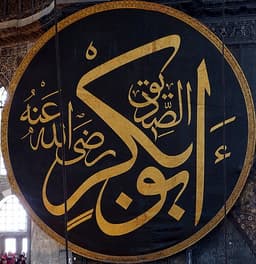
Abu Bakr
Emperor · Medieval
77.1Total

Dorgon
General · Modern
78.0Total
Basic Information
Born
573
1612
Died
634
1650
Era
Medieval
Modern
Nationality
Rashidun Caliphate
China
Occupation
Emperor
General
Civilization
Middle Eastern
Eastern
Score Comparison
Military (10%)
74.7
78.5
Political (20%)
62.7
78.0
Influence (20%)
88.0
88.0
Legacy (20%)
80.0
65.0
Leadership (15%)
77.2
85.0
Strategy (15%)
66.3
75.0
TOTAL
77.1
78.0
Abu Bakr — Complete Timeline
632 AD
Ridda Wars (Apostasy Wars)War◆ Major
Abu Bakr launched military campaigns against Arabian tribes that renounced Islam or refused to pay zakat after Muhammad's death. The wars, led by generals like Khalid ibn al-Walid, reestablished Muslim control over Arabia and consolidated the caliphate.
Ridda WarsConsolidationRashidun
Impact: regional
Election as First CaliphPolitical Action
After the death of Muhammad, Abu Bakr was elected as the first caliph (successor) at Saqifah. His election unified the Muslim community, though it caused controversy among some supporters of Ali. He became the leader of the nascent Islamic state.
CaliphateSuccessionRashidun
Impact: global
633 AD
Compilation of the QuranCultural◆ Major
Abu Bakr ordered the compilation of the Quran into a single written manuscript after many memorizers died in the Ridda Wars. Zayd ibn Thabit collected verses from various sources, creating the first official codex, which later served as the basis for Uthman's standard text.
QuranCompilationRashidun
Impact: globalconstructive
634 AD
Death of Abu BakrPolitical Action◆ Major
Abu Bakr died after a brief illness, having designated Umar as his successor. His caliphate lasted only two years but established the foundations of the Islamic state, including the expansion beyond Arabia and the preservation of the Quran.
DeathSuccessionRashidun
Impact: global
Dorgon — Complete Timeline
1643 AD
Appointed Prince RegentPolitical Action◆ Major
Upon the death of Hong Taiji, Dorgon was appointed as regent for the young Shunzhi Emperor. This position gave him effective control over the Qing government and military, enabling him to direct the conquest of Ming China.
RegencyPower transition
Impact: national
1644 AD
Battle of Shanhai PassWar
Dorgon allied with Ming general Wu Sangui to defeat Li Zicheng's rebel forces at Shanhai Pass. This victory allowed Qing forces to enter Beijing and establish the Qing dynasty as the ruling power in China.
Qing conquestBattleAlliance
Impact: national
1645 AD
Conquest of Southern MingWar◆ Major
Dorgon led Qing forces in a campaign against the Southern Ming regime, capturing Nanjing and defeating the Hongguang Emperor. This campaign extended Qing control over the Yangtze River valley and weakened Ming loyalist resistance.
Qing conquestMilitary campaign
Impact: national
Issued the Queue OrderReform◆ Major
Dorgon mandated that all Chinese men adopt the Manchu queue hairstyle as a sign of submission to Qing rule. This policy caused widespread resentment and resistance, but was enforced to consolidate Qing control over Han Chinese subjects.
Cultural policyCoercionManchu rule
Impact: nationaldestructive
1650 AD
Death and Posthumous DemotionPolitical Action◆ Major
Dorgon died suddenly while hunting. After his death, the Shunzhi Emperor accused him of plotting to usurp the throne, stripped him of all titles, and had his corpse mutilated. This posthumous purge reflected court factional struggles.
PurgePosthumous punishment
Impact: nationaltragic
Expert Analysis
Origins
Dorgon (1612-1650) was a Manchu prince of the Aisin Gioro clan, the 14th son of Nurhaci, founder of the Later Jin dynasty. He grew up in a militaristic society that valued horsemanship and archery. His mother was forced to commit suicide after Nurhaci's death, leaving Dorgon and his brothers under the regency of their elder brother Hong Taiji. This early trauma shaped his ruthless ambition.
Abu Bakr (c. 573-634) was born into the Banu Taym clan of the Quraysh tribe in Mecca. A wealthy merchant, he was among the first converts to Islam and a close companion of Muhammad. His daughter Aisha married Muhammad, strengthening their bond. He was known for his wisdom, piety, and loyalty, earning the title 'Al-Siddiq' (the Truthful).
Rise to Power
Dorgon distinguished himself in military campaigns against Ming China and Korea under Hong Taiji. Upon Hong Taiji's death in 1643, Dorgon maneuvered to become regent for his young nephew, the Shunzhi Emperor. He outmaneuvered rivals like Hooge, consolidating power and effectively ruling the Qing Empire. His decisive moment came in 1644 when he allied with Ming general Wu Sangui to defeat Li Zicheng's rebel army at the Battle of Shanhai Pass, allowing Qing forces to seize Beijing.
Abu Bakr's rise was swift after Muhammad's death in 632. While Ali prepared the funeral, Abu Bakr was elected Caliph at the Saqifa meeting, despite opposition from Muhammad's family. His election was controversial but accepted by most. He immediately faced the Ridda Wars, where several tribes renounced Islam. Through decisive military action, he crushed rebellions and unified Arabia under Islamic rule.
Leadership & Governance
Dorgon ruled as prince regent with an iron fist. He centralized power, demoted or executed rivals, and implemented policies to solidify Manchu control. He issued the Queue Order, forcing Han Chinese to adopt Manchu hairstyles as a sign of submission. He also promoted Confucian values to legitimize Qing rule. His governance was pragmatic but harsh, leading to resentment among the Han elite. He oversaw the conquest of southern Ming loyalists, expanding Qing territory. However, his authoritarian style and corruption allegations tarnished his rule.
Abu Bakr's caliphate was brief but foundational. He maintained the unity of the Muslim community, suppressing apostasy and false prophets. He authorized the compilation of the Quran into a single book, preserving Muhammad's revelations. His governance was consultative, relying on senior companions like Umar. He expanded Islamic influence through military campaigns into Byzantine and Sassanid territories. His leadership was marked by humility, justice, and devotion to Islamic principles.
Triumph & Tragedy
Dorgon's greatest triumph was the Qing conquest of China, which he masterminded. He turned the chaos of the Ming collapse into an opportunity, using strategic alliances and military force. His tragic flaw was his overreach: after his death in 1650, he was posthumously stripped of titles, his body exhumed and mutilated. The Shunzhi Emperor, now ruling independently, accused him of treason, usurpation, and personal excesses. This dramatic fall erased his contributions from official history for decades.
Abu Bakr's triumph was unifying Arabia and preserving Islam after Muhammad's death. He successfully completed the Ridda Wars, ensuring Islam's survival. His tragedy was his short reign; he died after only two years, possibly from illness or poisoning. He left a legacy of stability but also the contentious issue of succession, which would later split the Muslim community.
Character & Destiny
Dorgon was ambitious, cunning, and ruthless. He seized power through political maneuvering and military prowess. His destiny was to be the architect of the Qing dynasty, yet his legacy was tarnished by posthumous disgrace. He craved legitimacy but never claimed the throne himself, perhaps due to Manchu customs or fear of opposition. His character combined strategic brilliance with personal flaws: arrogance, greed, and cruelty.
Abu Bakr was pious, wise, and steadfast. His destiny was to be the first caliph, guiding the ummah through crisis. He was known for his simplicity and generosity, often giving his wealth to the community. His character was defined by loyalty to Muhammad and devotion to Islam. He accepted leadership reluctantly, preferring a quiet life. His destiny was to set the precedent for caliphal succession, though his choice of Umar as successor was controversial.
Legacy
Dorgon's legacy is complex. He is credited with establishing the Qing dynasty's dominance, but his methods sparked resistance. The Queue Order and Manchu supremacy policies created ethnic tensions that lasted centuries. In modern China, he is sometimes reassessed as a capable statesman. His military strategies are studied. However, his personal downfall serves as a cautionary tale about power and hubris. Scoring: 78.
Abu Bakr's legacy is overwhelmingly positive in Islam. He is revered as one of the 'Rightly Guided Caliphs,' a model of leadership. His compilation of the Quran was crucial for preserving Islamic scripture. He expanded Islam's reach and set administrative precedents. His brief reign laid the foundation for the Rashidun Caliphate's golden age. Scoring: 75.
Conclusion
Dorgon and Abu Bakr were both transformative leaders who shaped their civilizations at critical junctures. Dorgon's military conquests were more extensive, but his governance was authoritarian and divisive. Abu Bakr's leadership unified Arabia through faith and consultation, but his reign was short. In a historical comparison, Dorgon's overall impact on China's trajectory is immense, but Abu Bakr's moral and religious legacy endures globally. The score gap of 0.9 reflects Dorgon's higher scores in power and influence, but Abu Bakr's integrity and lasting spiritual influence arguably make him the more admirable figure. Ultimately, Dorgon represents ruthless pragmatism, while Abu Bakr embodies principled leadership. Both achieved greatness, but their methods and legacies diverge sharply.
Rankings
🥇
DorgonLeader
Mil: 78.5Pol: 78.0Inf: 88.0
78.0
🥈
Abu Bakr
Mil: 74.7Pol: 62.7Inf: 88.0
77.1
+0.9 behind
How This Comparison Works
Algorithm
Each figure is scored on 6 dimensions (0—100 scale) based on structured historical data: Military (10%), Political (20%), Influence (20%), Legacy (20%), Leadership (15%), Strategy (15%). The weighted total produces the final ranking.
Data Sources
Scores are computed from structured sub-indicators in the database. Scale factors adjust for era (Ancient ×0.85, Modern ×1.0) and civilization size (Eastern ×1.05, Other ×0.80) to account for differences in population and military scale.
Maximum 3 Figures
Comparisons are limited to 2—3 figures to ensure readability and statistical meaningfulness.
Error Margins
±5 points per dimension — Sub-scores are derived from historical records with inherent uncertainty. Two figures within 5 points on a dimension should be considered roughly equivalent in that area.
Total Score Accuracy
±3 points overall — The weighted combination of 6 dimensions produces a total score with approximately ±3 points of uncertainty. Differences of less than 3 points are not statistically significant— the figures are effectively tied.
Known Limitations
- Historical records are incomplete and uneven across civilizations
- Figures from oral-tradition societies may be underrepresented
- Occupation labels can misclassify multi-role figures
- Scores measure capability and impact, not moral character
- Quantitative scoring is a comparison tool, not absolute truth
Capability Radar
Military (10%) — Battles & Warfare
Battles
65
85
Win Rate
70
80
Expansion
85
90
Political (20%) — Governance & Reform
Reform
85
72
Diplomacy
80
78
Economy
70
65
Influence (20%) — Cultural & Global Reach
Cultural
70
65
Global
85
70
Legacy (20%) — Historical Impact
Historical
85
80
Longevity
90
75
Leadership (15%) — Power & Stability
Tenure
60
70
Stability
75
60
Strategy (15%) — Tactics & Innovation
Strategy
75
88
Tactics
60
82
Reform
80
75
Similar Comparisons
Comments & Discussion
No comments yet. Be the first to share your thoughts!