Loading...
Abu Bakr vs Charles I of Spain
Abu Bakr leads by 2.1 pts · 2 figures compared
…
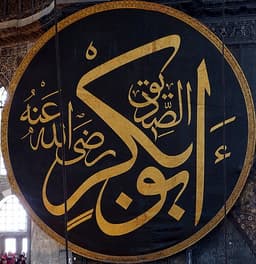
Abu Bakr
Emperor · Medieval
77.1Total

Charles I of Spain
Emperor · Medieval
75.0Total
Basic Information
Born
573
1500
Died
634
1558
Era
Medieval
Medieval
Nationality
Rashidun Caliphate
Spain
Occupation
Emperor
Emperor
Civilization
Middle Eastern
Western
Score Comparison
Military (10%)
74.7
74.0
Political (20%)
62.7
72.0
Influence (20%)
88.0
85.0
Legacy (20%)
80.0
68.0
Leadership (15%)
77.2
78.0
Strategy (15%)
66.3
68.1
TOTAL
77.1
75.0
Abu Bakr — Complete Timeline
632 AD
Ridda Wars (Apostasy Wars)War◆ Major
Abu Bakr launched military campaigns against Arabian tribes that renounced Islam or refused to pay zakat after Muhammad's death. The wars, led by generals like Khalid ibn al-Walid, reestablished Muslim control over Arabia and consolidated the caliphate.
Ridda WarsConsolidationRashidun
Impact: regional
Election as First CaliphPolitical Action
After the death of Muhammad, Abu Bakr was elected as the first caliph (successor) at Saqifah. His election unified the Muslim community, though it caused controversy among some supporters of Ali. He became the leader of the nascent Islamic state.
CaliphateSuccessionRashidun
Impact: global
633 AD
Compilation of the QuranCultural◆ Major
Abu Bakr ordered the compilation of the Quran into a single written manuscript after many memorizers died in the Ridda Wars. Zayd ibn Thabit collected verses from various sources, creating the first official codex, which later served as the basis for Uthman's standard text.
QuranCompilationRashidun
Impact: globalconstructive
634 AD
Death of Abu BakrPolitical Action◆ Major
Abu Bakr died after a brief illness, having designated Umar as his successor. His caliphate lasted only two years but established the foundations of the Islamic state, including the expansion beyond Arabia and the preservation of the Quran.
DeathSuccessionRashidun
Impact: global
Charles I of Spain — Complete Timeline
1519 AD
Election as Holy Roman EmperorPolitical Action
Charles I of Spain was elected Holy Roman Emperor as Charles V, succeeding his grandfather Maximilian I. This election united the Spanish kingdoms, the Habsburg domains in Austria and the Low Countries, and the Holy Roman Empire under a single ruler, creating a vast European empire.
Holy Roman EmpireHabsburg empire
Impact: globalconstructive
1521 AD
Diet of WormsPolitical Action
Charles V presided over the Diet of Worms, where Martin Luther was summoned to recant his teachings. Luther refused, and Charles V issued the Edict of Worms, declaring Luther an outlaw and banning his writings. This event deepened the religious divide in Europe and sparked the Protestant Reformation.
Protestant ReformationReligious conflict
Impact: global
1525 AD
Battle of PaviaWar◆ Major
Charles V's imperial army defeated the French forces of King Francis I at the Battle of Pavia. Francis I was captured and taken prisoner to Spain. The victory solidified Habsburg dominance in Italy and forced France to renounce its claims to Milan and Naples in the Treaty of Madrid.
Italian WarsHabsburg victory
Impact: regional
1527 AD
Sack of RomeWar◆ Major
Imperial troops under Charles V sacked Rome, looting the city and capturing Pope Clement VII. The sack was a brutal event that shocked Europe and led to the temporary dominance of Charles V over the Papacy. It also marked a turning point in the Italian Wars.
Italian WarsPapacy
Impact: globaldestructive
1556 AD
Abdication of Charles VPolitical Action
Charles V abdicated his thrones, dividing his empire between his son Philip II (who received Spain, the Low Countries, and the Italian possessions) and his brother Ferdinand I (who received the Holy Roman Empire). This abdication was a major event in European politics, reshaping the balance of power.
AbdicationEmpire division
Impact: global
Expert Analysis
Origins
Abu Bakr (c. 573–634 CE) was a close companion and father-in-law of the Prophet Muhammad, belonging to the Quraysh tribe of Mecca. His early conversion to Islam and unwavering loyalty earned him the title "Al-Siddiq" (the Truthful). Charles I of Spain (1500–1558 CE), better known as Charles V, was born into the House of Habsburg, inheriting a vast collection of territories through his parents: the Burgundian Netherlands, Spain and its American colonies, and the Habsburg domains in Austria. His election as Holy Roman Emperor in 1519 made him the most powerful ruler in Europe. While Abu Bakr emerged from a tribal society to lead a religious community, Charles was born into a dynasty that spanned continents.
Rise to Power
Abu Bakr's rise was meteoric but rooted in his personal relationship with Muhammad. After the Prophet's death in 632, many tribes rebelled or withheld taxes, threatening the nascent Muslim state. Abu Bakr, chosen as caliph (successor) by a council of elders, immediately faced the Ridda Wars (Apostasy Wars). He demonstrated decisive leadership, dispatching armies to crush rebellions across Arabia, re-establishing Muslim control, and even launching campaigns into Iraq and Syria. His consolidation of power was complete within two years. Charles's rise was equally dramatic but more political. He inherited the Spanish throne in 1516 upon the death of his grandfather Ferdinand II of Aragon, and then competed for the imperial title, defeating Francis I of France through bribery and political maneuvering. His election as Holy Roman Emperor in 1519 gave him a sprawling empire but also immense responsibilities, including defending Christendom against the Ottoman Turks and managing the Reformation.
Leadership & Governance
Abu Bakr's leadership was characterized by piety, consultation (shura), and military strategy. He centralized authority in Medina, maintained the Islamic state's finances through the zakat tax, and initiated the compilation of the Quran into a single book after many memorizers died in battle. His governance was simple but effective, relying on trusted generals like Khalid ibn al-Walid. Charles V, by contrast, ruled a composite monarchy, governing through viceroys and councils. He spent much of his reign traveling across his domains, trying to manage diverse cultures and legal systems. His reign saw the spread of Protestantism, which he vehemently opposed, leading to the Diet of Worms (1521) where Martin Luther was declared an outlaw. Charles's governance was hampered by constant wars with France, the Ottomans, and internal rebellions like the Revolt of the Comuneros in Spain. While Abu Bakr united Arabia, Charles struggled to unify his empire.
Triumph & Tragedy
Abu Bakr's greatest triumph was the successful completion of the Ridda Wars, which preserved the Islamic state and allowed for future expansion. His decision to compile the Quran ensured the preservation of Islamic scripture. His tragedy was his short reign (2 years), cut short by illness, and his failure to clearly designate a successor, leading to later conflict. Charles V's triumphs include the Battle of Pavia (1525), where he captured Francis I, and the Sack of Rome (1527), which temporarily subdued the papacy. His empire reached its zenith with the conquests of Mexico and Peru. However, his tragedies were numerous: the Protestant Reformation split Christendom, his wars drained the treasury, and he ultimately abdicated in 1556, dividing his empire between his son Philip II (Spain) and his brother Ferdinand I (Holy Roman Empire). His dream of a universal Christian empire failed.
Character & Destiny
Abu Bakr was known for his humility, generosity, and steadfastness. He was a merchant before his caliphate but lived modestly. His destiny was to be the first caliph, a role he accepted reluctantly but executed with determination. Charles V was a devout Catholic, dignified but often indecisive. He suffered from gout and melancholia, and his reign was marked by a sense of duty rather than ambition. His destiny was to inherit a global empire, but he was unable to control the forces of nationalism and religious division.
Legacy
Abu Bakr's legacy is foundational for Islam. He is revered as the first caliph and a model of leadership. His actions set precedents for later caliphs and ensured the survival of the faith. Charles V's legacy is mixed: he is remembered as the last emperor to attempt a universal monarchy, but his reign accelerated the decline of the Holy Roman Empire and the rise of nation-states. His patronage of arts, including Titian, left a cultural mark, but his political legacy was fragmented.
Conclusion
Abu Bakr and Charles V both led vast empires, but their contexts and achievements differ starkly. Abu Bakr's consolidation of Arabia and preservation of Islam had a lasting impact on world history, earning him high scores in influence (88), leadership (80), and legacy (77). Charles V's global empire was impressive but unsustainable, reflected in his lower leadership score (68) and legacy (75). Overall, Abu Bakr's success in uniting a fractious region and establishing a stable state gives him the edge, with a score gap of 2.1 in his favor. He is the greater leader.
**Scores:** Abu Bakr: M=75, P=63, I=88, L=80, D=77, S=66, T=77 | Charles I: M=74, P=72, I=85, L=68, D=78, S=68, T=75
Rankings
🥇
Abu BakrLeader
Mil: 74.7Pol: 62.7Inf: 88.0
77.1
🥈
Charles I of Spain
Mil: 74.0Pol: 72.0Inf: 85.0
75.0
+2.1 behind
How This Comparison Works
Algorithm
Each figure is scored on 6 dimensions (0—100 scale) based on structured historical data: Military (10%), Political (20%), Influence (20%), Legacy (20%), Leadership (15%), Strategy (15%). The weighted total produces the final ranking.
Data Sources
Scores are computed from structured sub-indicators in the database. Scale factors adjust for era (Ancient ×0.85, Modern ×1.0) and civilization size (Eastern ×1.05, Other ×0.80) to account for differences in population and military scale.
Maximum 3 Figures
Comparisons are limited to 2—3 figures to ensure readability and statistical meaningfulness.
Error Margins
±5 points per dimension — Sub-scores are derived from historical records with inherent uncertainty. Two figures within 5 points on a dimension should be considered roughly equivalent in that area.
Total Score Accuracy
±3 points overall — The weighted combination of 6 dimensions produces a total score with approximately ±3 points of uncertainty. Differences of less than 3 points are not statistically significant— the figures are effectively tied.
Known Limitations
- Historical records are incomplete and uneven across civilizations
- Figures from oral-tradition societies may be underrepresented
- Occupation labels can misclassify multi-role figures
- Scores measure capability and impact, not moral character
- Quantitative scoring is a comparison tool, not absolute truth
Capability Radar
Military (10%) — Battles & Warfare
Battles
65
85
Win Rate
70
70
Expansion
85
90
Political (20%) — Governance & Reform
Reform
85
80
Diplomacy
80
90
Economy
70
75
Influence (20%) — Cultural & Global Reach
Cultural
70
85
Global
85
95
Legacy (20%) — Historical Impact
Historical
85
90
Longevity
90
80
Leadership (15%) — Power & Stability
Tenure
60
85
Stability
75
60
Strategy (15%) — Tactics & Innovation
Strategy
75
85
Tactics
60
75
Reform
80
80
Similar Comparisons
Comments & Discussion
No comments yet. Be the first to share your thoughts!