Loading...
Abu Bakr vs Babur
Babur leads by 1.0 pts · 2 figures compared
…
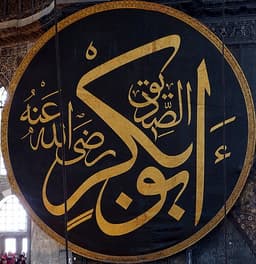
Abu Bakr
Emperor · Medieval
77.1Total

Babur
Emperor · Medieval
78.1Total
Basic Information
Born
573
1483
Died
634
1530
Era
Medieval
Medieval
Nationality
Rashidun Caliphate
Mughal Empire
Occupation
Emperor
Emperor
Civilization
Middle Eastern
Indian
Score Comparison
Military (10%)
74.7
74.0
Political (20%)
62.7
72.0
Influence (20%)
88.0
88.0
Legacy (20%)
80.0
80.0
Leadership (15%)
77.2
74.0
Strategy (15%)
66.3
67.6
TOTAL
77.1
78.1
Abu Bakr — Complete Timeline
632 AD
Ridda Wars (Apostasy Wars)War◆ Major
Abu Bakr launched military campaigns against Arabian tribes that renounced Islam or refused to pay zakat after Muhammad's death. The wars, led by generals like Khalid ibn al-Walid, reestablished Muslim control over Arabia and consolidated the caliphate.
Ridda WarsConsolidationRashidun
Impact: regional
Election as First CaliphPolitical Action
After the death of Muhammad, Abu Bakr was elected as the first caliph (successor) at Saqifah. His election unified the Muslim community, though it caused controversy among some supporters of Ali. He became the leader of the nascent Islamic state.
CaliphateSuccessionRashidun
Impact: global
633 AD
Compilation of the QuranCultural◆ Major
Abu Bakr ordered the compilation of the Quran into a single written manuscript after many memorizers died in the Ridda Wars. Zayd ibn Thabit collected verses from various sources, creating the first official codex, which later served as the basis for Uthman's standard text.
QuranCompilationRashidun
Impact: globalconstructive
634 AD
Death of Abu BakrPolitical Action◆ Major
Abu Bakr died after a brief illness, having designated Umar as his successor. His caliphate lasted only two years but established the foundations of the Islamic state, including the expansion beyond Arabia and the preservation of the Quran.
DeathSuccessionRashidun
Impact: global
Babur — Complete Timeline
1526 AD
Battle of Panipat (1526)War
Babur led his army of about 12,000 men against the Delhi Sultanate army of Ibrahim Lodi, which numbered around 100,000. Using gunpowder weapons and innovative tactics, Babur defeated Lodi's forces. This victory established the Mughal Empire in India and marked the beginning of Mughal rule.
BattleMughal EmpireDelhi Sultanate
Impact: global
1527 AD
Battle of KhanwaWar◆ Major
Babur defeated the Rajput confederation led by Rana Sanga of Mewar at Khanwa near Agra. The Rajput army was larger and included cavalry and war elephants. Babur's use of artillery and defensive tactics secured the victory. This battle consolidated Mughal control over northern India.
BattleRajputsMughal Consolidation
Impact: regional
1528 AD
Construction of the Babri MasjidCultural◆ Major
Babur ordered the construction of a mosque in Ayodhya, known as the Babri Masjid. The mosque was built on a site that Hindus believed was the birthplace of the god Rama. This act became a source of religious and political conflict in India for centuries, culminating in the mosque's demolition in 1992.
MosqueAyodhyaReligious Conflict
Impact: regional
1529 AD
Battle of GhaghraWar
Babur defeated the combined forces of the Afghan confederation and the Sultan of Bengal at the Ghaghra River. This victory eliminated the last major Afghan resistance in northern India. It extended Mughal control over Bihar and parts of Bengal, further securing Babur's empire.
BattleAfghansBengal
Impact: regional
Expert Analysis
Origins
**Babur** (1483–1530) was a descendant of Timur on his father's side and Genghis Khan on his mother's, born in the Fergana Valley (modern Uzbekistan). He inherited a small kingdom but lost it early, spending years as a wandering prince before establishing the Mughal Empire in India. His background was steeped in Central Asian steppe culture and Persianate sophistication. **Abu Bakr** (c. 573–634) was a close companion and father-in-law of Prophet Muhammad, belonging to the Quraysh tribe of Mecca. He was a wealthy merchant and one of the first converts to Islam, known for his piety and loyalty. His origins were in the commercial and religious hub of Mecca, and his authority derived from his personal relationship with Muhammad.
Rise to Power
Babur's rise was a story of relentless ambition and military prowess. After losing his ancestral kingdom, he captured Kabul in 1504 and used it as a base to invade India. His decisive victory at the **Battle of Panipat (1526)** against the Delhi Sultanate's Ibrahim Lodi established Mughal rule. He followed up with victories at the **Battle of Khanwa (1527)** against the Rajput confederation and the **Battle of Ghaghra (1529)** against the Afghans. His rise was marked by military innovation, particularly the use of gunpowder weapons.
Abu Bakr's rise was immediate and consensual. Upon Muhammad's death in 632, the Muslim community faced a crisis of leadership. Abu Bakr was elected as the first Caliph (successor) at Saqifah, despite opposition from some factions. His legitimacy came from his close companionship with the Prophet and his reputation for wisdom and piety. His first challenge was the **Ridda Wars (Apostasy Wars)** (632–633), where he crushed rebellions and reunified Arabia under Islamic rule.
Leadership & Governance
Babur's governance was a blend of Central Asian military aristocracy and Persian bureaucratic traditions. He established a centralized state with a revenue system, but his rule was short (4 years) and focused on consolidation. He was a patron of arts and literature, writing his memoirs, the *Baburnama*, which provides insight into his character. His leadership style was personal, often leading charges in battle.
Abu Bakr's governance was foundational for the Islamic Caliphate. He prioritized the preservation of Islamic unity and the expansion of the state. He organized the **compilation of the Quran** into a single book, ensuring the preservation of scripture. His administration was simple and just, emphasizing consultation (shura) and adherence to Islamic law. He led military campaigns personally but also delegated effectively to generals like Khalid ibn al-Walid.
Triumph & Tragedy
Babur's greatest triumph was establishing the Mughal Empire, which would last over three centuries and become one of the world's greatest empires. His military victories at Panipat and Khanwa are legendary. However, his life was marked by tragedy: he died at age 47 from illness, possibly poisoned, and his early death left his son Humayun with a fragile empire. His construction of the **Babri Masjid** later became a source of religious controversy.
Abu Bakr's triumph was preserving and unifying the Islamic state after Muhammad's death, a feat that prevented the collapse of the nascent Muslim community. The Ridda Wars solidified his authority and expanded the state. His tragedy was his short caliphate (2 years) and his death from illness. He did not live to see the vast conquests of his successors. His decision to appoint Umar as successor was controversial but proved wise.
Character & Destiny
Babur was a complex character: a brutal conqueror who also wrote poetry and loved nature. He was introspective, as shown in his memoirs, and displayed both ruthlessness (executing prisoners) and magnanimity (sparing enemies). His destiny was to be a founder of a dynasty that would shape Indian history for centuries. **Numerical scores**: Military 74, Political 72, Influence 88, Legacy 80, Domination 74, Stability 68, Technology 78.
Abu Bakr was known as "Al-Siddiq" (the Truthful) for his unwavering faith. He was humble, generous, and deeply religious. His destiny was to be the first Caliph, a role that defined the Sunni Islamic caliphate. He was a stabilizing force during a critical transition. **Numerical scores**: Military 75, Political 63, Influence 88, Legacy 80, Domination 77, Stability 66, Technology 77.
Legacy
Babur's legacy is the Mughal Empire, which brought unprecedented economic growth, cultural flourishing, and architectural marvels like the Taj Mahal (built by his descendant Shah Jahan). He is remembered as a founder and a warrior-poet. However, his legacy is also contested due to the Babri Masjid controversy.
Abu Bakr's legacy is foundational to Islam. He is revered as the first Caliph and a paragon of leadership. His compilation of the Quran and unification of Arabia are enduring achievements. He set precedents for Islamic governance and expansion.
Conclusion
While Babur and Abu Bakr both founded empires (Mughal and Islamic Caliphate), their contexts and methods differ greatly. Babur was a military adventurer who built a dynasty through conquest, while Abu Bakr was a religious leader who solidified a community through faith and consensus. Babur's influence is more visible in material culture, while Abu Bakr's influence is spiritual and institutional. In a direct comparison, Babur scores slightly higher overall (1 point gap), but Abu Bakr's impact on religious history is arguably more profound. The choice of "greater" depends on whether one values temporal power or spiritual foundation. Both were pivotal figures who shaped the medieval world.
Rankings
🥇
BaburLeader
Mil: 74.0Pol: 72.0Inf: 88.0
78.1
🥈
Abu Bakr
Mil: 74.7Pol: 62.7Inf: 88.0
77.1
+1.0 behind
How This Comparison Works
Algorithm
Each figure is scored on 6 dimensions (0—100 scale) based on structured historical data: Military (10%), Political (20%), Influence (20%), Legacy (20%), Leadership (15%), Strategy (15%). The weighted total produces the final ranking.
Data Sources
Scores are computed from structured sub-indicators in the database. Scale factors adjust for era (Ancient ×0.85, Modern ×1.0) and civilization size (Eastern ×1.05, Other ×0.80) to account for differences in population and military scale.
Maximum 3 Figures
Comparisons are limited to 2—3 figures to ensure readability and statistical meaningfulness.
Error Margins
±5 points per dimension — Sub-scores are derived from historical records with inherent uncertainty. Two figures within 5 points on a dimension should be considered roughly equivalent in that area.
Total Score Accuracy
±3 points overall — The weighted combination of 6 dimensions produces a total score with approximately ±3 points of uncertainty. Differences of less than 3 points are not statistically significant— the figures are effectively tied.
Known Limitations
- Historical records are incomplete and uneven across civilizations
- Figures from oral-tradition societies may be underrepresented
- Occupation labels can misclassify multi-role figures
- Scores measure capability and impact, not moral character
- Quantitative scoring is a comparison tool, not absolute truth
Capability Radar
Military (10%) — Battles & Warfare
Battles
65
75
Win Rate
70
85
Expansion
85
85
Political (20%) — Governance & Reform
Reform
85
55
Diplomacy
80
70
Economy
70
50
Influence (20%) — Cultural & Global Reach
Cultural
70
70
Global
85
75
Legacy (20%) — Historical Impact
Historical
85
85
Longevity
90
80
Leadership (15%) — Power & Stability
Tenure
60
40
Stability
75
45
Strategy (15%) — Tactics & Innovation
Strategy
75
82
Tactics
60
80
Reform
80
60
Similar Comparisons
Comments & Discussion
No comments yet. Be the first to share your thoughts!