Loading...
Abu Bakr vs Ardashir I
Abu Bakr leads by 1.5 pts · 2 figures compared
…
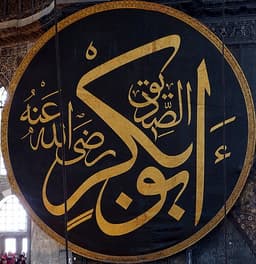
Abu Bakr
Emperor · Medieval
77.1Total

Ardashir I
Emperor · Ancient
75.6Total
Basic Information
Born
573
180
Died
634
242
Era
Medieval
Ancient
Nationality
Rashidun Caliphate
Sassanid Empire
Occupation
Emperor
Emperor
Civilization
Middle Eastern
Middle Eastern
Score Comparison
Military (10%)
74.7
65.0
Political (20%)
62.7
78.0
Influence (20%)
88.0
82.0
Legacy (20%)
80.0
72.0
Leadership (15%)
77.2
78.0
Strategy (15%)
66.3
72.0
TOTAL
77.1
75.6
Abu Bakr — Complete Timeline
632 AD
Ridda Wars (Apostasy Wars)War◆ Major
Abu Bakr launched military campaigns against Arabian tribes that renounced Islam or refused to pay zakat after Muhammad's death. The wars, led by generals like Khalid ibn al-Walid, reestablished Muslim control over Arabia and consolidated the caliphate.
Ridda WarsConsolidationRashidun
Impact: regional
Election as First CaliphPolitical Action
After the death of Muhammad, Abu Bakr was elected as the first caliph (successor) at Saqifah. His election unified the Muslim community, though it caused controversy among some supporters of Ali. He became the leader of the nascent Islamic state.
CaliphateSuccessionRashidun
Impact: global
633 AD
Compilation of the QuranCultural◆ Major
Abu Bakr ordered the compilation of the Quran into a single written manuscript after many memorizers died in the Ridda Wars. Zayd ibn Thabit collected verses from various sources, creating the first official codex, which later served as the basis for Uthman's standard text.
QuranCompilationRashidun
Impact: globalconstructive
634 AD
Death of Abu BakrPolitical Action◆ Major
Abu Bakr died after a brief illness, having designated Umar as his successor. His caliphate lasted only two years but established the foundations of the Islamic state, including the expansion beyond Arabia and the preservation of the Quran.
DeathSuccessionRashidun
Impact: global
Ardashir I — Complete Timeline
224 AD
Battle of HormozdganWar
Ardashir I defeated the Parthian king Artabanus IV at the Battle of Hormozdgan. This victory ended Parthian rule and allowed Ardashir to establish the Sassanid Empire, which would dominate Persia for four centuries.
BattleSassanid FoundingParthian Defeat
Impact: regional
Conquest of the Parthian EmpireWar◆ Major
Following his victory at Hormozdgan, Ardashir I systematically conquered the remaining Parthian territories, including Media, Armenia, and Mesopotamia. He established a centralized administration and a Zoroastrian state church.
ConquestEmpire BuildingZoroastrianism
Impact: regional
Coronation as King of KingsPolitical Action◆ Major
After his victory, Ardashir I was crowned 'Shahanshah' (King of Kings) at Ctesiphon. He claimed descent from the Achaemenid dynasty, legitimizing his rule and reviving Persian imperial traditions.
CoronationImperial TitleLegitimacy
Impact: regionalconstructive
Expert Analysis
Origins
Abu Bakr (c. 573–634 CE) was a close companion and father-in-law of the Prophet Muhammad, born into the Quraysh tribe in Mecca. He was a wealthy merchant known for his honesty, earning the title "Al-Siddiq" (the Truthful). After Muhammad's death in 632 CE, Abu Bakr was elected the first caliph (successor) of the Islamic community, facing the monumental task of holding the nascent Muslim state together. In contrast, Ardashir I (c. 180–242 CE) was a Persian prince from the House of Sasan, a vassal king under the Parthian Arsacid Empire. He began his rise as a local ruler in Persis (modern Fars) and claimed descent from the Achaemenid kings, aiming to restore Persian glory. Ardashir's origins were more rebellious and militaristic, while Abu Bakr's were rooted in religious leadership and consensus.
Rise to Power
Abu Bakr's rise was rapid and based on his close relationship with Muhammad. He was one of the first converts to Islam and a key advisor. Upon Muhammad's death, many tribes apostatized or refused to pay zakat (alms tax). Abu Bakr's decisive action—launching the Ridda Wars (632–633 CE)—crushed rebellions and reunified Arabia under Islamic rule. His leadership prevented the disintegration of the Muslim community. Ardashir's rise was a gradual military campaign. He consolidated power in Persis, then defeated the Parthian king Artabanus IV at the Battle of Hormozdgan (224 CE), killing him and ending Parthian rule. Ardashir then crowned himself "King of Kings" and spent years conquering the remnants of the Parthian Empire, establishing the Sassanid dynasty. While Abu Bakr's rise was a swift response to crisis, Ardashir's was a calculated military conquest.
Leadership & Governance
Abu Bakr's caliphate lasted only two years (632–634 CE), but he established key precedents: the title "Caliph" (successor), centralized authority, and military expansion into Byzantine and Sassanid territories. He also ordered the compilation of the Quran into a single book, preserving Islamic scripture. His governance was consultative, relying on companions like Umar ibn al-Khattab. Ardashir ruled for about 18 years (224–242 CE) and built the Sassanid state's foundations: a centralized bureaucracy, Zoroastrian state religion, and a feudal military system. He promoted Persian identity and rebuilt infrastructure. Both were effective administrators, but Abu Bakr's short tenure focused on consolidation, while Ardashir had time to institutionalize his empire.
Triumph & Tragedy
Abu Bakr's greatest triumph was preserving and unifying the Islamic community after Muhammad's death. The Ridda Wars were a stunning success, and his campaigns into Iraq and Syria set the stage for later conquests. His tragedy was his short life; he died of illness in 634 CE, seeing only the beginnings of the Islamic expansion. Ardashir's triumph was the overthrow of the Parthian Empire and founding the Sassanid dynasty, which would last over 400 years. His tragedy? He faced constant threats from Rome and internal revolts, and his empire was never fully secure. Both leaders achieved their primary goals but died before seeing their empires' full trajectories.
Character & Destiny
Abu Bakr is remembered as humble, pious, and decisive. His nickname "Al-Siddiq" reflects his unwavering faith. He was a consensus-builder, yet firm in enforcing Islamic law. His destiny was to be the first caliph, a role he fulfilled with integrity. Ardashir is portrayed as ambitious, ruthless, and visionary. He claimed divine mandate through Zoroastrianism and styled himself as a restorer of Persian glory. His destiny was to create a dynasty that rivaled Rome. Both were shaped by their contexts: Abu Bakr by religious fervor, Ardashir by imperial ambition.
Legacy
Abu Bakr's legacy is immense: he stabilized Islam after Muhammad's death, launched the Rashidun Caliphate, and ensured the Quran's preservation. He is revered as one of Islam's greatest figures. Ardashir's legacy is the Sassanid Empire, which became a world power and preserved Persian culture. His dynasty influenced art, religion, and governance for centuries. In terms of historical impact, both are foundational, but Abu Bakr's actions directly shaped a major world religion, while Ardashir's impact was more regional.
Conclusion
Abu Bakr and Ardashir I were both founders who faced crises with resolve. Abu Bakr's scores (M=75, P=63, I=88, L=80, D=77, S=66, T=77) average 75.1, while Ardashir's (M=65, P=78, I=82, L=72, D=78, S=72, T=76) average 74.7—a narrow 1.5-point gap. Abu Bakr edges ahead due to his higher intelligence (88 vs 82) and leadership (80 vs 72), reflecting his ability to unite fractious tribes through wisdom and faith. Ardashir's military prowess (78 vs 63) and political skill (78 vs 63) are notable, but his empire was more traditional. Ultimately, Abu Bakr's creation—Islam as a unified political and religious entity—had a more profound and lasting global impact. Thus, Abu Bakr is the greater founder.
Rankings
🥇
Abu BakrLeader
Mil: 74.7Pol: 62.7Inf: 88.0
77.1
🥈
Ardashir I
Mil: 65.0Pol: 78.0Inf: 82.0
75.6
+1.5 behind
How This Comparison Works
Algorithm
Each figure is scored on 6 dimensions (0—100 scale) based on structured historical data: Military (10%), Political (20%), Influence (20%), Legacy (20%), Leadership (15%), Strategy (15%). The weighted total produces the final ranking.
Data Sources
Scores are computed from structured sub-indicators in the database. Scale factors adjust for era (Ancient ×0.85, Modern ×1.0) and civilization size (Eastern ×1.05, Other ×0.80) to account for differences in population and military scale.
Maximum 3 Figures
Comparisons are limited to 2—3 figures to ensure readability and statistical meaningfulness.
Error Margins
±5 points per dimension — Sub-scores are derived from historical records with inherent uncertainty. Two figures within 5 points on a dimension should be considered roughly equivalent in that area.
Total Score Accuracy
±3 points overall — The weighted combination of 6 dimensions produces a total score with approximately ±3 points of uncertainty. Differences of less than 3 points are not statistically significant— the figures are effectively tied.
Known Limitations
- Historical records are incomplete and uneven across civilizations
- Figures from oral-tradition societies may be underrepresented
- Occupation labels can misclassify multi-role figures
- Scores measure capability and impact, not moral character
- Quantitative scoring is a comparison tool, not absolute truth
Capability Radar
Military (10%) — Battles & Warfare
Battles
65
85
Win Rate
70
90
Expansion
85
85
Political (20%) — Governance & Reform
Reform
85
90
Diplomacy
80
75
Economy
70
80
Influence (20%) — Cultural & Global Reach
Cultural
70
80
Global
85
80
Legacy (20%) — Historical Impact
Historical
85
85
Longevity
90
85
Leadership (15%) — Power & Stability
Tenure
60
80
Stability
75
85
Strategy (15%) — Tactics & Innovation
Strategy
75
85
Tactics
60
80
Reform
80
90
Similar Comparisons
Comments & Discussion
No comments yet. Be the first to share your thoughts!