Loading...
Abu Bakr vs Al-Mustansir
Abu Bakr leads by 21.5 pts · 2 figures compared
…
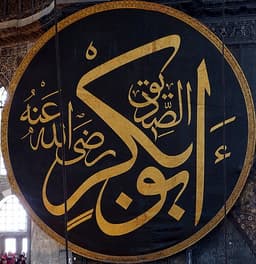
Abu Bakr
Emperor · Medieval
77.1Total
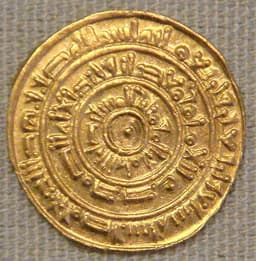
Al-Mustansir
Emperor · Medieval
55.6Total
Basic Information
Born
573
1192
Died
634
1242
Era
Medieval
Medieval
Nationality
Rashidun Caliphate
Abbasid Caliphate
Occupation
Emperor
Emperor
Civilization
Middle Eastern
Middle Eastern
Score Comparison
Military (10%)
74.7
20.0
Political (20%)
62.7
68.0
Influence (20%)
88.0
55.0
Legacy (20%)
80.0
58.0
Leadership (15%)
77.2
71.0
Strategy (15%)
66.3
45.0
TOTAL
77.1
55.6
Abu Bakr — Complete Timeline
632 AD
Ridda Wars (Apostasy Wars)War◆ Major
Abu Bakr launched military campaigns against Arabian tribes that renounced Islam or refused to pay zakat after Muhammad's death. The wars, led by generals like Khalid ibn al-Walid, reestablished Muslim control over Arabia and consolidated the caliphate.
Ridda WarsConsolidationRashidun
Impact: regional
Election as First CaliphPolitical Action
After the death of Muhammad, Abu Bakr was elected as the first caliph (successor) at Saqifah. His election unified the Muslim community, though it caused controversy among some supporters of Ali. He became the leader of the nascent Islamic state.
CaliphateSuccessionRashidun
Impact: global
633 AD
Compilation of the QuranCultural◆ Major
Abu Bakr ordered the compilation of the Quran into a single written manuscript after many memorizers died in the Ridda Wars. Zayd ibn Thabit collected verses from various sources, creating the first official codex, which later served as the basis for Uthman's standard text.
QuranCompilationRashidun
Impact: globalconstructive
634 AD
Death of Abu BakrPolitical Action◆ Major
Abu Bakr died after a brief illness, having designated Umar as his successor. His caliphate lasted only two years but established the foundations of the Islamic state, including the expansion beyond Arabia and the preservation of the Quran.
DeathSuccessionRashidun
Impact: global
Al-Mustansir — Complete Timeline
1227 AD
Foundation of the Mustansiriya MadrasaCultural◆ Major
Al-Mustansir established the Mustansiriya Madrasa in Baghdad, a major educational institution that taught Islamic law, medicine, mathematics, and literature. It became one of the most prominent centers of learning in the medieval Islamic world, operating for centuries.
Impact: regionalconstructive
Expert Analysis
Al-Mustansir vs Abu Bakr
# The Caliph Who Forged a Nation and the Caliph Who Built a School
In the summer of 634, a dying man in Medina dictated his final wish: that Umar, not his own blood, should lead the Muslim community after him. Abu Bakr had ruled for barely two years, yet in that time he had saved Islam from disintegration. Two centuries later, another caliph sat in Baghdad, surrounded by scholars and architects, drawing up plans for a madrasa that would become the Oxford of the Islamic world. Al-Mustansir never led an army, never crushed a rebellion. But he built a school. The contrast between these two men—one a warrior-statesman who held a fledgling faith together with sheer will, the other a patron of learning who watched his empire shrink—tells a story about what it means to rule in different ages.
Origins
Abu Bakr was born in 573 into the Quraysh tribe of Mecca, a merchant society where honor and lineage mattered, but where a new prophet was about to turn the world upside down. He was Muhammad’s closest companion, the first adult male convert to Islam, a man known for his quiet steadiness. When others wavered during the Hijra, he stood firm. When the Prophet lay dying, Abu Bakr was at his side. His authority came not from birth but from proximity to the source—he was the friend who had never doubted.
Al-Mustansir was born in 1192, into an Abbasid caliphate that had long ceased to be a real empire. By his time, the caliphs of Baghdad were figureheads, spiritual leaders whose temporal power had been stripped by Buyids, then Seljuks, then the rising tide of Mongol horsemen on the eastern horizon. He inherited a throne that was more a pulpit than a seat of power. His world was one of survival through diplomacy and cultural prestige, not conquest.
Rise to Power
Abu Bakr’s elevation came in a moment of crisis. When Muhammad died in 632, the Muslim community nearly fractured. The Ansar of Medina gathered at Saqifah to elect their own leader, while the Muhajirun of Mecca scrambled to assert their claim. Abu Bakr, with characteristic calm, reminded everyone that leadership belonged to the Quraysh—but that all Muslims, regardless of tribe, were brothers. In that tense meeting, he was elected the first caliph, a title meaning “successor.” It was a political masterstroke, but it was only the beginning of his trial.
Al-Mustansir became caliph in 1226 after the death of his father, al-Zahir. There was no crisis of succession, no war of apostasy. He inherited a stable but diminished realm. His path to power was smooth, which was precisely the problem: he had never been tested by fire.
Leadership & Governance
Abu Bakr’s caliphate was a whirlwind of war. Within months of his election, Arabian tribes that had pledged allegiance to Muhammad renounced Islam or refused to pay the zakat tax. Abu Bakr’s response was unyielding: “If they withhold a single camel’s halter,” he reportedly said, “I will fight them for it.” The Ridda Wars—the Wars of Apostasy—were brutal and swift. He dispatched eleven army columns across the peninsula, crushing rebellions in Yamama, Bahrain, Oman, and Yemen. By 633, Arabia was unified under Muslim rule for the first time.
But Abu Bakr was not merely a military commander. His political wisdom was on full display when he ordered the compilation of the Quran. After hundreds of Quran-memorizers fell in battle, he feared the holy text might be lost. He entrusted Zayd ibn Thabit with the task, producing the first written codex. This single act preserved the core of Islamic faith for all time.
Al-Mustansir governed in a different key. His military score of 37.0 reflects a caliph who never led an army. Instead, he built. In 1227, he founded the Mustansiriya Madrasa in Baghdad, a sprawling institution that taught law, medicine, mathematics, and theology. It housed a library, a hospital, and quarters for students from across the Islamic world. It was a beacon of learning in an age of gathering darkness—the Mongols were coming, and Baghdad would fall in 1258, just sixteen years after his death.
Triumph & Tragedy
Abu Bakr’s greatest triumph was survival itself. He took a community on the brink of disintegration and forged it into a state. His tragedy was his brevity: he died in 634, after only two years as caliph, having designated Umar as his successor. He never saw the conquests of Persia and Byzantium that his work made possible.
Al-Mustansir’s triumph was the madrasa that still bears his name. It stood for centuries as a symbol of Baghdad’s intellectual glory. His tragedy was that he could not stop what was coming. The Mongol horde under Hulagu would sack Baghdad in 1258, slaughtering hundreds of thousands and burning the libraries he had cherished. The Mustansiriya survived, but the world that produced it did not.
Character & Destiny
Abu Bakr was a man of action, decisive and uncompromising. His leadership score of 81.3 reflects a ruler who inspired loyalty through integrity, not charisma. He was called *al-Siddiq*—“the Truthful”—because he believed Muhammad without hesitation. That same directness defined his rule: see the problem, solve it, move on.
Al-Mustansir was a man of contemplation. His political score of 66.6 and leadership of 74.4 show a competent administrator, but his military score of 37.0 reveals his limits. He governed in an age when the sword had grown heavier than the pen. He chose the pen, perhaps wisely, but the sword came anyway.
Legacy
Abu Bakr is remembered as the first caliph, the unifier of Arabia, the preserver of the Quran. His legacy is foundational: every Muslim who recites the Quran today owes something to his foresight. He is a figure of near-mythic stature in Islamic history, the model of righteous leadership.
Al-Mustansir is remembered for a building. The Mustansiriya Madrasa is one of the oldest universities in the world, a testament to the Abbasid love of learning. But his legacy is also a cautionary tale: culture alone cannot defend a civilization. The Mongols did not care about his library.
Conclusion
Two caliphs, two centuries apart, two different answers to the question of what a ruler should be. Abu Bakr built a nation in two years; Al-Mustansir built a school in sixteen. One saved Islam from dissolution; the other tried to save knowledge from oblivion. Neither was wrong. But their stories remind us that history rewards different virtues at different times. When the foundations crack, you need a builder. When the walls are already high, you need a scholar. The tragedy is that the scholar often inherits the cracks.
Rankings
🥇
Abu BakrLeader
Mil: 74.7Pol: 62.7Inf: 88.0
77.1
🥈
Al-Mustansir
Mil: 20.0Pol: 68.0Inf: 55.0
55.6
+21.5 behind
How This Comparison Works
Algorithm
Each figure is scored on 6 dimensions (0—100 scale) based on structured historical data: Military (10%), Political (20%), Influence (20%), Legacy (20%), Leadership (15%), Strategy (15%). The weighted total produces the final ranking.
Data Sources
Scores are computed from structured sub-indicators in the database. Scale factors adjust for era (Ancient ×0.85, Modern ×1.0) and civilization size (Eastern ×1.05, Other ×0.80) to account for differences in population and military scale.
Maximum 3 Figures
Comparisons are limited to 2—3 figures to ensure readability and statistical meaningfulness.
Error Margins
±5 points per dimension — Sub-scores are derived from historical records with inherent uncertainty. Two figures within 5 points on a dimension should be considered roughly equivalent in that area.
Total Score Accuracy
±3 points overall — The weighted combination of 6 dimensions produces a total score with approximately ±3 points of uncertainty. Differences of less than 3 points are not statistically significant— the figures are effectively tied.
Known Limitations
- Historical records are incomplete and uneven across civilizations
- Figures from oral-tradition societies may be underrepresented
- Occupation labels can misclassify multi-role figures
- Scores measure capability and impact, not moral character
- Quantitative scoring is a comparison tool, not absolute truth
Capability Radar
Military (10%) — Battles & Warfare
Battles
65
5
Win Rate
70
5
Expansion
85
5
Political (20%) — Governance & Reform
Reform
85
70
Diplomacy
80
40
Economy
70
50
Influence (20%) — Cultural & Global Reach
Cultural
70
70
Global
85
50
Legacy (20%) — Historical Impact
Historical
85
65
Longevity
90
60
Leadership (15%) — Power & Stability
Tenure
60
60
Stability
75
30
Strategy (15%) — Tactics & Innovation
Strategy
75
5
Tactics
60
5
Reform
80
5
Similar Comparisons
Comments & Discussion
沙漠校尉6/16/2026
阿布·巴克尔根本就是个“军事外包商”,自己没带过一场仗,却让哈立德·本·瓦利德去血洗阿拉伯半岛。两个月的统治?我称它为“借来的威严”。反观穆斯台绥尔,至少他在缩水的帝国里做了件实在事——建学校。哪个更有远见?不用我多说了吧。
CaliphSkeptic6/16/2026
The analysis romanticizes both men, but let's be real: Abu Bakr's two-year reign is mostly success-by-proxy. He inherited Muhammad's momentum, and the Ridda wars were less "saving Islam" and more suppressing Bedouin tax revolts. The real genius came from Khalid ibn al-Walid, not a dying merchant. Give credit to the sword, not the politician.
DataDrill6/16/2026
The comparison ignores key metrics: Abu Bakr's caliphate covered roughly 2 million km²; Al-Mustansir's ruled over a fraction of that. But let's talk legacy bang-for-buck: Abu Bakr left a unified state for two years of rule; Al-Mustansir's Madrasa lasted centuries and produced scholars like Ibn al-Nafis. I'd rather have a school that changes medicine than a desert empire that crumbles.
秦时明月6/16/2026
说阿布·巴克尔“平定半岛”?真实情况是,他颁布严苛的天课法令,逼得部落揭竿而起,然后让猛将去镇压。这不是外交,是内战。穆斯台绥尔倒好,坐在巴格达修书院,任由蒙古铁蹄逼近——这两人一个太狠,一个太软。我选谁都不舒服,但历史给软弱者更多同情。
LioNTamer6/16/2026
Abu Bakr was a religious zealot with a talent for delegation, not a nation-builder. His caliphate barely addressed governance structure; it was all military consolidation. Al-Mustansir, though a puppet, invested in intellectual infrastructure—that's real nation-building. Crash course vs. sustainable development? Give me the school any day.
凤凰台上6/16/2026
对比有点不公平:阿布·巴克尔站在先知肩膀上,穆斯台绥尔却在阴沟里挣扎。但我要说,后者那所穆斯坦绥里耶学校,收养了被蒙古劫掠后的学者,保存了亚里士多德的译本。这是文明的反击。而前者——除了《古兰经》里几句夸奖,他留给历史的不过是“忠诚的管家”而已。