Loading...
Abraham Lincoln vs Yuan Shikai
Abraham Lincoln leads by 17.5 pts · 2 figures compared
…
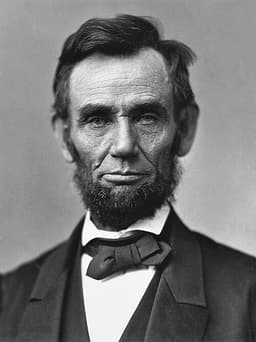
Abraham Lincoln
Politician · Modern
77.5Total
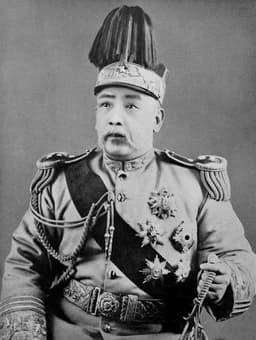
Yuan Shikai
Politician · Modern
60.0Total
Basic Information
Born
1809
1859
Died
1865
1916
Era
Modern
Modern
Nationality
United States
China
Occupation
Politician
Politician
Civilization
Western
Eastern
Score Comparison
Military (10%)
50.0
45.0
Political (20%)
88.0
72.0
Influence (20%)
80.0
57.2
Legacy (20%)
82.0
54.0
Leadership (15%)
85.0
72.0
Strategy (15%)
60.0
61.2
TOTAL
77.5
60.0
Abraham Lincoln — Complete Timeline
1861 AD
Suspension of Habeas CorpusPolitical Action◆ Major
Lincoln suspended the writ of habeas corpus in parts of the Union, allowing the military to arrest and detain suspected Confederate sympathizers without trial. This action was controversial and challenged civil liberties during wartime.
Habeas CorpusCivil LibertiesCivil War
Impact: nationaldestructive
1862 AD
Signing of the Homestead ActPolitical Action◆ Major
Lincoln signed the Homestead Act, granting 160 acres of public land to settlers for a small fee. This encouraged westward expansion and agricultural development, but also displaced Native American tribes.
Homestead ActWestward ExpansionLand Policy
Impact: nationalconstructive
1863 AD
Emancipation ProclamationPolitical Action
Lincoln issued the Emancipation Proclamation, declaring slaves in Confederate states free. This shifted the Civil War's focus to ending slavery and allowed African Americans to join the Union Army.
EmancipationCivil WarSlavery
Impact: globalprogressive
Gettysburg AddressCultural◆ Major
Lincoln delivered the Gettysburg Address at the dedication of the Soldiers' National Cemetery. The speech redefined the Civil War as a struggle for national unity and equality, and became one of the most famous speeches in US history.
Gettysburg AddressCivil WarOratory
Impact: nationalconstructive
1865 AD
Assassination by John Wilkes BoothOther
Lincoln was shot by John Wilkes Booth at Ford's Theatre in Washington, D.C., and died the next day. His assassination occurred just days after the Civil War ended, plunging the nation into mourning and affecting Reconstruction.
AssassinationCivil WarReconstruction
Impact: nationaltragic
Yuan Shikai — Complete Timeline
1901 AD
Command of the Beiyang ArmyReform◆ Major
Yuan Shikai took command of the Beiyang Army, the most modern military force in late Qing China. He expanded and trained the army, which became the basis for his political power and later dominated Chinese politics.
Military reformBeiyang Army
Impact: national
1912 AD
Appointed First President of the Republic of ChinaPolitical Action
Yuan Shikai became the first president of the Republic of China after negotiating the abdication of the Qing emperor. He used his control of the Beiyang Army to pressure the revolutionary government into accepting his leadership.
PresidencyRepublic of China
Impact: national
1915 AD
Declaration of the Empire of ChinaPolitical Action◆ Major
Yuan Shikai declared himself emperor of the Empire of China, attempting to restore the monarchy. This move sparked widespread opposition from provincial leaders and foreign powers, leading to the collapse of his regime.
Monarchy restorationPolitical crisis
Impact: nationaldestructive
Signing of the Twenty-One DemandsPolitical Action◆ Major
Yuan Shikai accepted most of Japan's Twenty-One Demands, which expanded Japanese influence in China. The agreement granted Japan economic rights in Manchuria and Shandong, and was seen as a national humiliation.
DiplomacyJapanese imperialism
Impact: globaltragic
1916 AD
Death and Collapse of the Beiyang GovernmentPolitical Action◆ Major
Yuan Shikai died of uremia, leaving no clear successor. His death led to the fragmentation of the Beiyang Army into warlord factions, plunging China into a period of civil war and political instability.
Warlord eraPolitical fragmentation
Impact: nationaltragic
Expert Analysis
Abraham Lincoln vs Yuan Shikai
# The Iron Hand and the Broken Oath
On a cold January morning in 1916, Yuan Shikai sat in the Forbidden City, surrounded by eunuchs and courtiers who had once served emperors. He had declared himself emperor of a new dynasty, but the nation he sought to rule was already slipping from his grasp. Half a world away and half a century earlier, Abraham Lincoln had stood on a battlefield in Pennsylvania, delivering a speech that would echo through eternity. Two men, both rising from modest beginnings to the highest office in their lands, both facing a nation tearing itself apart. One would be remembered as a savior, the other as a betrayer. What drove them down such different paths?
Origins
Yuan Shikai was born in 1859 to a landowning family in Henan Province, a region steeped in Confucian tradition and the fading glory of the Qing dynasty. His father had hoped he would become a scholar-official, but young Yuan failed the civil service examinations twice. Humiliated, he burned his books and purchased a minor military post instead. The old China was dying, and Yuan sensed that the future belonged to those who could wield modern weapons, not ancient texts.
Abraham Lincoln was born in 1809 in a one-room log cabin in Kentucky, to illiterate parents who could barely scratch a living from the soil. His mother died when he was nine, and his father moved the family to the wilderness of Indiana. Lincoln educated himself by firelight, reading the Bible, Shakespeare, and Blackstone’s Commentaries. Where Yuan learned that failure meant shame, Lincoln learned that failure was simply a step on a longer road.
Rise to Power
Yuan’s ascent came through the barrel of a gun. In 1901, he took command of the Beiyang Army, the most modern military force in late Qing China. He expanded its ranks, equipped it with German rifles, and trained its officers in Western tactics. The Boxer Rebellion had shown that China’s old armies were useless against foreign powers, and Yuan positioned himself as the man who could build a new one. He was not a revolutionary; he was a pragmatist who served whoever held power, whether the Empress Dowager Cixi or the young republican revolutionaries.
Lincoln rose through the messy, unpredictable arena of democratic politics. He served in the Illinois state legislature, then one term in Congress, then lost a Senate race to Stephen Douglas. He was a dark horse candidate for the presidency in 1860, winning with less than 40% of the popular vote. His strength was not military command but moral clarity. When Southern states seceded after his election, Lincoln did not negotiate. He prepared for war.
Leadership & Governance
As president, Lincoln governed with a steady hand through the most terrible crisis in American history. He suspended habeas corpus in 1861 to suppress dissent, a controversial act that he defended as necessary to preserve the Union. He signed the Homestead Act in 1862, opening the West to settlers and transforming the American landscape. And on January 1, 1863, he issued the Emancipation Proclamation, declaring slaves in Confederate states free. It was a military measure as much as a moral one, but it changed the meaning of the war. The Gettysburg Address, delivered later that year, redefined the nation as “conceived in Liberty, and dedicated to the proposition that all men are created equal.”
Yuan Shikai governed through patronage and fear. As the first president of the Republic of China in 1912, he controlled the Beiyang Army and used it to crush opposition. He had negotiated the abdication of the last Qing emperor, but he had no faith in democracy. He saw the republic as a temporary arrangement. In 1915, he made his fatal move: he declared himself emperor of the Empire of China. It was a miscalculation of staggering proportions. The nation that had overthrown the monarchy would not accept a new one, even if the emperor wore a Western military uniform.
Triumph & Tragedy
Lincoln’s greatest triumph was also his tragedy. On April 9, 1865, Confederate General Robert E. Lee surrendered at Appomattox, effectively ending the Civil War. The Union was preserved, and slavery was doomed. Five days later, Lincoln was shot by John Wilkes Booth at Ford’s Theatre. He died the next morning, never seeing the full fruits of his victory. His death made him a martyr, but it also left the nation without his steady hand during Reconstruction.
Yuan’s tragedy was entirely of his own making. In 1915, he accepted most of Japan’s Twenty-One Demands, granting Japan extensive economic and political influence in China. It was a desperate move to secure Japanese support for his imperial ambitions, but it made him a traitor in the eyes of many Chinese. When he declared himself emperor, even his own Beiyang generals turned against him. He was forced to cancel the monarchy after just 83 days. He died of uremia in June 1916, broken and despised. His death left no clear successor, and the Beiyang Army fragmented into warlord factions that plunged China into a decade of chaos.
Character & Destiny
Lincoln was a man of deep melancholy and piercing insight. He carried the weight of the war on his shoulders, visiting hospitals and writing letters to grieving mothers. He understood that power was a trust, not a possession. “Nearly all men can stand adversity,” he once said, “but if you want to test a man’s character, give him power.”
Yuan Shikai was driven by ambition and insecurity. He had risen through a system that rewarded cunning and ruthlessness, and he could not imagine a different way. He saw the republic as a mask for his own rule, and when the mask slipped, the nation saw his true face. His character was his destiny: he could build an army, but he could not build a nation.
Legacy
Lincoln is remembered as one of the greatest presidents in American history. His face is carved into Mount Rushmore. The Emancipation Proclamation and the Gettysburg Address are taught to every schoolchild. His legacy is the preservation of the Union and the abolition of slavery, two achievements that reshaped the United States into a modern nation.
Yuan Shikai is remembered as a traitor and a failed emperor. In Chinese history, he is a cautionary tale: the man who could have led China into the modern world but chose instead to cling to the old one. His Beiyang Army became the seed of the warlord era, and his acceptance of the Twenty-One Demands left a wound in Chinese national consciousness that would fester for generations.
Conclusion
Standing at the crossroads of history, both Lincoln and Yuan faced a nation in crisis. Lincoln chose to lead with moral purpose, even when it cost him his life. Yuan chose to lead with naked ambition, even when it cost him his legacy. The difference between them was not intelligence or opportunity—it was the answer to a single question: What is power for? Lincoln believed it was to serve a cause greater than himself. Yuan believed it was to serve himself. The judgment of history is the echo of that choice.
Rankings
🥇
Abraham LincolnLeader
Mil: 50.0Pol: 88.0Inf: 80.0
77.5
🥈
Yuan Shikai
Mil: 45.0Pol: 72.0Inf: 57.2
60.0
+17.5 behind
How This Comparison Works
Algorithm
Each figure is scored on 6 dimensions (0—100 scale) based on structured historical data: Military (10%), Political (20%), Influence (20%), Legacy (20%), Leadership (15%), Strategy (15%). The weighted total produces the final ranking.
Data Sources
Scores are computed from structured sub-indicators in the database. Scale factors adjust for era (Ancient ×0.85, Modern ×1.0) and civilization size (Eastern ×1.05, Other ×0.80) to account for differences in population and military scale.
Maximum 3 Figures
Comparisons are limited to 2—3 figures to ensure readability and statistical meaningfulness.
Error Margins
±5 points per dimension — Sub-scores are derived from historical records with inherent uncertainty. Two figures within 5 points on a dimension should be considered roughly equivalent in that area.
Total Score Accuracy
±3 points overall — The weighted combination of 6 dimensions produces a total score with approximately ±3 points of uncertainty. Differences of less than 3 points are not statistically significant— the figures are effectively tied.
Known Limitations
- Historical records are incomplete and uneven across civilizations
- Figures from oral-tradition societies may be underrepresented
- Occupation labels can misclassify multi-role figures
- Scores measure capability and impact, not moral character
- Quantitative scoring is a comparison tool, not absolute truth
Capability Radar
Military (10%) — Battles & Warfare
Battles
15
45
Win Rate
20
55
Expansion
0
50
Political (20%) — Governance & Reform
Reform
95
55
Diplomacy
80
70
Economy
70
50
Influence (20%) — Cultural & Global Reach
Cultural
85
40
Global
85
35
Legacy (20%) — Historical Impact
Historical
95
65
Longevity
90
40
Leadership (15%) — Power & Stability
Tenure
65
60
Stability
55
30
Strategy (15%) — Tactics & Innovation
Strategy
55
65
Tactics
10
60
Reform
60
80
Similar Comparisons
Comments & Discussion
LincolnLover696/16/2026
As a military historian, I’m fascinated by how both men faced existential threats but chose opposite paths. Lincoln crushed the Confederacy, preserved the Union, and died a martyr. Yuan Shikai? He modernized the Beiyang Army, raised it on German drill and rifles, then used it to betray the Republic and crown himself Emperor. One saved his nation’s soul; the other sold its future for a title. Give me the log cabin lawyer over the warlord any day.
数据侦探狗6/16/2026
数据告诉我,林肯输掉了1860年大选的40%普选票,却靠选举人团赢了,这不叫“民意统一”。袁在1913年正规当选总统,支持率远超对手。你们吹的“人民英雄”是个少数派总统,袁的军费开支却从1912年的1.2亿银元砍到1915年的8千万,省下的钱修了铁路。谁更管用?数据不撒谎。
ClassicistCaesar6/16/2026
Lincoln’s Gettysburg Address redefined a nation’s creed in 272 words—a masterpiece of rhetoric rivaling Pericles’ funeral oration. Yuan’s “洪宪” era lasted 83 days and produced no lasting prose, only a jumble of Confucian dust. One sought to unite by ideals, the other by decrees. The comparison ends there: Lincoln’s pen built an empire of liberty; Yuan’s seal was a gilded death rattle.
历史课代表赵6/16/2026
你们老说袁是“窃国大盗”,可别忘了他在1905年训练新军时,士兵背的不是《四书五经》,而是算术和测绘。林肯解放黑奴是伟大,可袁在1912年主持的《临时约法》是中国第一部共和宪法。两人都面对分裂,林肯打了四年内战,袁用六个月逼退南方各省独立。谁更狠?袁只是没活到被印在五元钞票上。
RevisionistRick6/16/2026
Cliché: Lincoln = saint, Yuan = traitor. Reality check: Lincoln suspended habeas corpus, jailed 18,000 critics without trial, and signed the Pacific Railroad Act that gave away public lands to crony capitalists. Yuan at least tried to preserve Chinese sovereignty against foreign carve-ups. The real villain here isn’t the man who fumbled a dynasty, but the one who invented mass surveillance in 1862. Let’s stop canonizing imperialists.