Loading...
Abraham Lincoln vs William Pitt the Elder
Abraham Lincoln leads by 7.3 pts · 2 figures compared
…
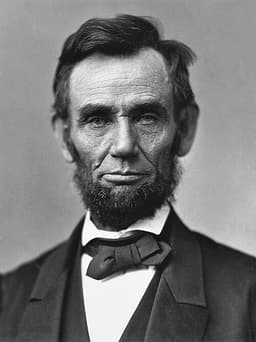
Abraham Lincoln
Politician · Modern
77.5Total
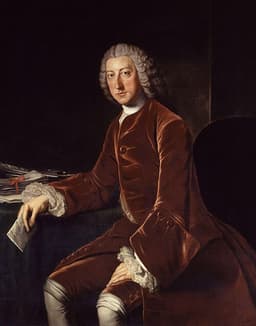
William Pitt the Elder
Politician · Modern
70.2Total
Basic Information
Born
1809
1708
Died
1865
1778
Era
Modern
Modern
Nationality
United States
United Kingdom
Occupation
Politician
Politician
Civilization
Western
Western
Score Comparison
Military (10%)
50.0
67.3
Political (20%)
88.0
72.0
Influence (20%)
80.0
68.0
Legacy (20%)
82.0
68.0
Leadership (15%)
85.0
80.0
Strategy (15%)
60.0
67.2
TOTAL
77.5
70.2
Abraham Lincoln — Complete Timeline
1861 AD
Suspension of Habeas CorpusPolitical Action◆ Major
Lincoln suspended the writ of habeas corpus in parts of the Union, allowing the military to arrest and detain suspected Confederate sympathizers without trial. This action was controversial and challenged civil liberties during wartime.
Habeas CorpusCivil LibertiesCivil War
Impact: nationaldestructive
1862 AD
Signing of the Homestead ActPolitical Action◆ Major
Lincoln signed the Homestead Act, granting 160 acres of public land to settlers for a small fee. This encouraged westward expansion and agricultural development, but also displaced Native American tribes.
Homestead ActWestward ExpansionLand Policy
Impact: nationalconstructive
1863 AD
Emancipation ProclamationPolitical Action
Lincoln issued the Emancipation Proclamation, declaring slaves in Confederate states free. This shifted the Civil War's focus to ending slavery and allowed African Americans to join the Union Army.
EmancipationCivil WarSlavery
Impact: globalprogressive
Gettysburg AddressCultural◆ Major
Lincoln delivered the Gettysburg Address at the dedication of the Soldiers' National Cemetery. The speech redefined the Civil War as a struggle for national unity and equality, and became one of the most famous speeches in US history.
Gettysburg AddressCivil WarOratory
Impact: nationalconstructive
1865 AD
Assassination by John Wilkes BoothOther
Lincoln was shot by John Wilkes Booth at Ford's Theatre in Washington, D.C., and died the next day. His assassination occurred just days after the Civil War ended, plunging the nation into mourning and affecting Reconstruction.
AssassinationCivil WarReconstruction
Impact: nationaltragic
William Pitt the Elder — Complete Timeline
1756 AD
Led Britain in Seven Years' WarWar
William Pitt the Elder served as Secretary of State from 1756 to 1761, directing British strategy in the Seven Years' War. His policies focused on naval supremacy and colonial campaigns, leading to victories in Canada, India, and the Caribbean.
Seven Years' WarColonial EmpireMilitary Strategy
Impact: global
1759 AD
Conquest of QuebecWar◆ Major
Under Pitt's direction, British forces under General James Wolfe captured Quebec City on September 13, 1759, after the Battle of the Plains of Abraham. This victory secured British control over Canada and marked a turning point in the Seven Years' War.
Seven Years' WarCanadaMilitary Victory
Impact: global
1766 AD
Became Prime MinisterPolitical Action
Pitt was appointed Prime Minister on July 30, 1766, forming a government. However, his health declined and he was elevated to the House of Lords as Earl of Chatham, which weakened his political base. His second ministry was less effective than his wartime leadership.
Prime MinisterGovernment18th Century
Impact: national
Opposed American TaxationPolitical Action◆ Major
Pitt argued for the repeal of the Stamp Act in 1766, asserting that Parliament had no right to tax the American colonies without representation. His speech in the Commons helped secure repeal, though he maintained Parliament's authority to legislate for the colonies.
American ColoniesTaxationParliamentary Debate
Impact: global
Expert Analysis
Abraham Lincoln vs William Pitt the Elder
# The Great Commoner and the Great Emancipator
On a raw December morning in 1862, Abraham Lincoln sat in the White House, his hand trembling as he prepared to sign the Emancipation Proclamation. He had not slept. Across the Atlantic, a century earlier, William Pitt the Elder rose in the House of Commons to denounce the Stamp Act, his voice thundering against a policy he believed would destroy the empire he had fought to expand. Both men stood at the crossroads of history, but they faced in opposite directions—one straining to hold a nation together, the other reaching to pull an empire apart. What drove these two titans of the English-speaking world to such different fates?
Origins
Lincoln was born into the raw, unfinished America of 1809, in a one-room log cabin in Kentucky. His father was a farmer who could barely write his own name. Young Abraham educated himself by firelight, reading the Bible, Shakespeare, and Blackstone's Commentaries. He was a child of the frontier, shaped by its brutal simplicity and its promise of self-invention. The America of his youth was a young republic still finding its footing, torn between slavery and freedom, North and South.
William Pitt the Elder, born a year earlier in 1708, entered the world in Westminster, at the very heart of British power. His grandfather was a governor of Madras, his father a member of Parliament. Pitt was educated at Eton and Oxford, trained in the classics and the art of oratory. He inherited a world of established institutions—a monarchy, an empire, a parliament that had already fought its great constitutional battles. Where Lincoln had to build himself from nothing, Pitt had only to claim what was already his.
Rise to Power
Lincoln’s path was a slow, grinding ascent. He lost elections, suffered business failures, and watched his first love die. He served a single term in Congress and returned to obscurity before the slavery crisis of the 1850s pulled him back into politics. His rise was propelled not by family connections but by the power of his words in the Lincoln-Douglas debates of 1858, which made him a national figure. Even then, he won the presidency in 1860 with less than 40 percent of the popular vote—a minority president in a fractured nation.
Pitt’s rise was swifter and more theatrical. He entered Parliament in 1735 and immediately made himself heard, attacking the government of Sir Robert Walpole with such ferocity that Walpole called him "that terrible cornet of horse." Pitt was dismissed from the army for his political attacks, but he did not care. He understood that in the British system, power came through oratory and alliances. By 1756, when Britain was losing the Seven Years' War, the nation turned to the one man who seemed to know what to do. Pitt became Secretary of State, effectively running the war effort, even though he was not yet Prime Minister.
Leadership & Governance
Lincoln’s leadership was forged in fire. He commanded a war he had never been trained to fight, managing generals who despised him and a cabinet that had once thought itself superior to him. He suspended habeas corpus in 1861, a decision that still haunts American jurisprudence, yet he did so with a heavy heart, believing that the Constitution was not a suicide pact. He signed the Homestead Act in 1862, giving away millions of acres of public land to settlers, a quiet revolution that transformed the American West. And then, in 1863, he issued the Emancipation Proclamation, a document that freed no slaves in Union territory but declared that the Confederacy was fighting to preserve an institution that would be destroyed. It was a political masterstroke, turning a war for union into a war for freedom.
Pitt governed through sheer force of personality. He did not micromanage battles; he inspired them. He found brilliant generals—Wolfe, Amherst, Clive—and gave them the resources and independence they needed. His strategy was global: attack France in America, in India, in the Caribbean, on the seas. The year 1759 became Britain's *annus mirabilis*, with victories at Quebec, Minden, and Quiberon Bay. Pitt understood that war was not just about soldiers but about money, morale, and the will to win. When he became Prime Minister in 1766, his health was already failing, and his government was a disappointment. But his greatest moment came when he opposed taxing the American colonies, arguing that Parliament had no right to take their money without their consent. "I rejoice that America has resisted," he declared—words that Lincoln would have understood.
Triumph & Tragedy
Lincoln’s triumph was the preservation of the Union and the abolition of slavery. His Gettysburg Address, delivered in 1863, redefined the nation’s purpose: "that this nation, under God, shall have a new birth of freedom." But his tragedy was that he did not live to see the peace. On April 14, 1865, just days after the Confederate surrender, John Wilkes Booth shot him in Ford's Theatre. Lincoln died the next morning, and with him died the possibility of a gentle Reconstruction.
Pitt’s triumph was the Seven Years' War, which made Britain the world’s dominant imperial power. He gave his nation Canada, India, and control of the seas. But his tragedy was that he lived long enough to see his empire begin to crack. He opposed the American Revolution, warning that it would be a disaster, but he was too ill to stop it. He died in 1778, hearing the news of British defeats across the Atlantic. The empire he had built was tearing itself apart.
Character & Destiny
Lincoln was a man of deep melancholy, given to telling jokes to hide his pain. He was patient, calculating, and willing to wait for the right moment. He believed in the Constitution but also in something higher—the Declaration of Independence’s promise that all men are created equal. His character was his destiny: he endured because he had to.
Pitt was proud, volatile, and often insufferable. He was called "the Great Commoner" because he refused titles, but he was also a man of immense ambition. He believed in the glory of Britain and the necessity of empire. His character drove him to take risks, to defy conventions, and to inspire loyalty. But his pride also isolated him, and his health broke under the strain.
Legacy
Lincoln is remembered as the savior of the Union and the Great Emancipator. His face is carved into Mount Rushmore, his words are memorized by schoolchildren, and his name is invoked by presidents of both parties. He is the American ideal: the self-made man who rose from nothing to save everything.
Pitt is less known today, but his legacy is equally profound. He created the British Empire as a global force. He established the principle that Britain would not tax its colonies without representation—a principle that the Americans took to its logical conclusion. His statue stands in Parliament Square, a reminder of the man who made Britain great but could not keep it whole.
Conclusion
Two men, two centuries, two visions of freedom. Lincoln fought to keep a nation together; Pitt fought to expand an empire. Both succeeded beyond measure, and both failed in ways that still haunt us. Lincoln’s America survived and grew stronger; Pitt’s Britain survived but shrank. Perhaps the difference lies in what they were fighting for: Lincoln for a proposition, Pitt for a possession. One believed in an idea; the other believed in a realm. In the end, ideas outlast empires.
Rankings
🥇
Abraham LincolnLeader
Mil: 50.0Pol: 88.0Inf: 80.0
77.5
🥈
William Pitt the Elder
Mil: 67.3Pol: 72.0Inf: 68.0
70.2
+7.3 behind
How This Comparison Works
Algorithm
Each figure is scored on 6 dimensions (0—100 scale) based on structured historical data: Military (10%), Political (20%), Influence (20%), Legacy (20%), Leadership (15%), Strategy (15%). The weighted total produces the final ranking.
Data Sources
Scores are computed from structured sub-indicators in the database. Scale factors adjust for era (Ancient ×0.85, Modern ×1.0) and civilization size (Eastern ×1.05, Other ×0.80) to account for differences in population and military scale.
Maximum 3 Figures
Comparisons are limited to 2—3 figures to ensure readability and statistical meaningfulness.
Error Margins
±5 points per dimension — Sub-scores are derived from historical records with inherent uncertainty. Two figures within 5 points on a dimension should be considered roughly equivalent in that area.
Total Score Accuracy
±3 points overall — The weighted combination of 6 dimensions produces a total score with approximately ±3 points of uncertainty. Differences of less than 3 points are not statistically significant— the figures are effectively tied.
Known Limitations
- Historical records are incomplete and uneven across civilizations
- Figures from oral-tradition societies may be underrepresented
- Occupation labels can misclassify multi-role figures
- Scores measure capability and impact, not moral character
- Quantitative scoring is a comparison tool, not absolute truth
Capability Radar
Military (10%) — Battles & Warfare
Battles
15
60
Win Rate
20
75
Expansion
0
80
Political (20%) — Governance & Reform
Reform
95
75
Diplomacy
80
80
Economy
70
70
Influence (20%) — Cultural & Global Reach
Cultural
85
60
Global
85
75
Legacy (20%) — Historical Impact
Historical
95
80
Longevity
90
70
Leadership (15%) — Power & Stability
Tenure
65
70
Stability
55
65
Strategy (15%) — Tactics & Innovation
Strategy
55
85
Tactics
10
65
Reform
60
70
Similar Comparisons
Comments & Discussion
The Frontier Logician6/16/2026
Lincoln wins this comparison hands-down. Pitt expanded an empire; Lincoln saved a democracy. The Emancipation Proclamation wasn’t just a wartime tactic—it fundamentally rewrote the Constitution's compact with slavery. Pitt’s greatest act was denouncing the Stamp Act, which was basically tax policy. One man freed a race; the other protected trade routes. History remembers liberators, not imperial accountants.
古典炸弹客6/16/2026
别被那些“帝国拥护者”骗了。皮特才是真正的战略家。他在七年战争中打垮了法国,彻底改变了全球力量格局。林肯确实伟大,但他差点弄丢了联邦。皮特从零开始建造了英国霸权,而林肯只是修补了一个快要烂掉的联盟。没有皮特的胜利,甚至都不会有“英语世界”这个说法。
Data Pragmatist6/16/2026
Let's talk concrete numbers. Lincoln oversaw a war that killed 620,000 Americans, roughly 2% of the population. Pitt's Seven Years War? About 1.5 million deaths globally, but Britain gained Canada, India, and naval supremacy. Lincoln's legacy is moral but costly; Pitt's is imperial but profitable. If efficiency matters, Pitt wins. If moral weight tips the scale, Lincoln does. Don't pretend this is a clean contest.
儒家修辞家6/16/2026
林肯在1863年葛底斯堡演说里只用了272个词,却重新定义了一个国家。皮特在议会里能说上几个小时,但他说服了谁来改变帝国呢?林肯不只说,他做了——他签署了《解放宣言》,推动通过了第十三条修正案。皮特的政策很多,但他从未亲手改变一个国家的道德基础。语言分量不同,行动深度更不同。
The Whig Skeptic6/16/2026
You're all missing the point. Pitt was a war minister who bankrupted Britain fighting France; Lincoln was a wartime president who nearly let the South secede twice. History romanticizes both but ignores their failures. Pitt's imperial expansion sowed the seeds of American revolution; Lincoln's slow-walk on emancipation until 1863 cost thousands of enslaved people their chance at freedom earlier. Neither is a saint. Stop canonizing political pragmatists.