Loading...
Abraham Lincoln vs Alcide De Gasperi
Abraham Lincoln leads by 22.0 pts · 2 figures compared
…
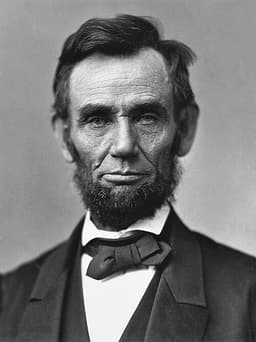
Abraham Lincoln
Politician · Modern
77.5Total
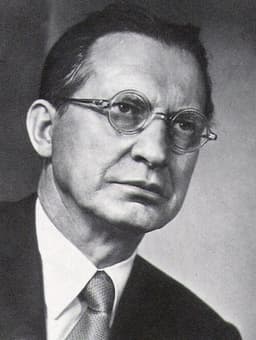
Alcide De Gasperi
Politician · Modern
55.5Total
Basic Information
Born
1809
1881
Died
1865
1954
Era
Modern
Modern
Nationality
United States
Italy
Occupation
Politician
Politician
Civilization
Western
Western
Score Comparison
Military (10%)
50.0
12.4
Political (20%)
88.0
85.0
Influence (20%)
80.0
65.0
Legacy (20%)
82.0
40.0
Leadership (15%)
85.0
80.7
Strategy (15%)
60.0
31.5
TOTAL
77.5
55.5
Abraham Lincoln — Complete Timeline
1861 AD
Suspension of Habeas CorpusPolitical Action◆ Major
Lincoln suspended the writ of habeas corpus in parts of the Union, allowing the military to arrest and detain suspected Confederate sympathizers without trial. This action was controversial and challenged civil liberties during wartime.
Habeas CorpusCivil LibertiesCivil War
Impact: nationaldestructive
1862 AD
Signing of the Homestead ActPolitical Action◆ Major
Lincoln signed the Homestead Act, granting 160 acres of public land to settlers for a small fee. This encouraged westward expansion and agricultural development, but also displaced Native American tribes.
Homestead ActWestward ExpansionLand Policy
Impact: nationalconstructive
1863 AD
Emancipation ProclamationPolitical Action
Lincoln issued the Emancipation Proclamation, declaring slaves in Confederate states free. This shifted the Civil War's focus to ending slavery and allowed African Americans to join the Union Army.
EmancipationCivil WarSlavery
Impact: globalprogressive
Gettysburg AddressCultural◆ Major
Lincoln delivered the Gettysburg Address at the dedication of the Soldiers' National Cemetery. The speech redefined the Civil War as a struggle for national unity and equality, and became one of the most famous speeches in US history.
Gettysburg AddressCivil WarOratory
Impact: nationalconstructive
1865 AD
Assassination by John Wilkes BoothOther
Lincoln was shot by John Wilkes Booth at Ford's Theatre in Washington, D.C., and died the next day. His assassination occurred just days after the Civil War ended, plunging the nation into mourning and affecting Reconstruction.
AssassinationCivil WarReconstruction
Impact: nationaltragic
Alcide De Gasperi — Complete Timeline
1946 AD
First Prime Minister of the Italian RepublicPolitical Action
De Gasperi became the first prime minister of the newly proclaimed Italian Republic in December 1945. He led a coalition government that included Christian Democrats, Socialists, and Communists. His government oversaw the transition from monarchy to republic.
RepublicGovernmentTransition
Impact: nationalconstructive
1947 AD
Peace Treaty of ParisPolitical Action◆ Major
De Gasperi signed the Treaty of Paris, which formally ended World War II for Italy. Italy lost its colonies, ceded territory to Yugoslavia and France, and paid reparations. The treaty was unpopular but allowed Italy to regain sovereignty and join the Western alliance.
TreatyWorld War IIDiplomacy
Impact: global
Expulsion of Communists from GovernmentPolitical Action
De Gasperi expelled the Italian Communist Party and Socialist Party from his coalition government in May 1947. This move aligned Italy with the United States and the Marshall Plan, deepening the Cold War divide. It solidified Christian Democratic dominance for decades.
Cold WarMarshall PlanCoalition
Impact: global
1949 AD
Italian Membership in NATOPolitical Action◆ Major
De Gasperi led Italy into the North Atlantic Treaty Organization (NATO) as a founding member. This decision anchored Italy in the Western bloc during the Cold War and secured U.S. military and economic support. It was opposed by the Communist Party.
NATOCold WarAlliance
Impact: globalconstructive
Expert Analysis
Abraham Lincoln vs Alcide De Gasperi
The Two Founders: Lincoln and De Gasperi
On a cold March morning in 1861, Abraham Lincoln stood before the Capitol dome, still unfinished, and swore to preserve a Union already crumbling. Across the Atlantic, eighty years later, Alcide De Gasperi climbed the steps of a bombed-out parliament in Rome, tasked with rebuilding a nation that had been a fascist dictatorship, a monarchy, and a battlefield all at once. Both men were political architects of the highest order, yet their worlds could not have been more different. Lincoln fought a war to hold a country together; De Gasperi fought a peace to forge one anew. What drove these two founders, and why did their paths diverge so sharply?
Origins
Lincoln was born in a one-room log cabin on the Kentucky frontier, the son of illiterate farmers. His youth was a curriculum of hard labor and self-taught law, shaped by the raw democracy of the American frontier and the moral crisis of slavery. He grew up in a nation still young, where the Constitution was a living argument and the question of union was never fully settled.
De Gasperi, by contrast, was born in 1881 in the Tyrol, a region then part of the Austro-Hungarian Empire. He grew up speaking Italian and German, a subject of one empire who dreamed of another nation. His education was Catholic and Habsburg—orderly, hierarchical, and deeply suspicious of revolution. Where Lincoln’s America was a republic of restless individuals, De Gasperi’s Europe was a web of ancient monarchies, national rivalries, and class warfare. These origins shaped their instincts: Lincoln believed in the power of the people to govern themselves; De Gasperi believed in the necessity of institutions to restrain them.
Rise to Power
Lincoln’s ascent was a study in democratic persistence. He lost more elections than he won, but his debates with Stephen Douglas in 1858 made him a national voice against the expansion of slavery. His path to the presidency in 1860 was a fluke of a fractured opposition—he won with only 40% of the popular vote. But once in office, he moved with a speed and decisiveness that surprised even his allies.
De Gasperi’s rise was more hidden, more patient. A member of the Italian Popular Party in the 1920s, he was arrested by Mussolini’s fascists and spent years in the Vatican library, working as a librarian while the world burned. He survived by being invisible. After the fall of Mussolini in 1943, he emerged as a leader of the Christian Democracy party, and by 1945, with Italy in ruins, he became Prime Minister. Where Lincoln vaulted into power on the back of a national crisis, De Gasperi crept into it through the cracks of a collapsed regime.
Leadership & Governance
Lincoln’s leadership was forged in fire. He suspended habeas corpus, shut down opposition newspapers, and authorized the biggest military draft in American history. He was a war president first, a reformer second. The Emancipation Proclamation of 1863 was both a moral act and a military strategy: it freed slaves in rebel states, undercutting the Confederate war effort and inviting Black men to fight for the Union. His Gettysburg Address redefined the war as a struggle for human equality, not just constitutional union.
De Gasperi governed through coalition and compromise. He signed the 1947 Peace Treaty, accepting harsh terms—loss of colonies, reparations, territorial cessions—because he knew Italy had no leverage. Then, in May 1947, he expelled the Communists and Socialists from his government, a move that shocked many but aligned Italy with the West. He led Italy into NATO in 1949, securing American aid and anchoring the nation in the Atlantic alliance. Where Lincoln wielded a sword, De Gasperi wielded a handshake.
Triumph & Tragedy
Lincoln’s greatest triumph was the survival of the Union and the abolition of slavery. His greatest tragedy was his assassination on April 14, 1865, just days after the war ended. He did not live to see Reconstruction, and his death left a void that bitter successors filled with vengeance and failure.
De Gasperi’s triumph was the creation of a stable, democratic Italy from the ashes of fascism. He served as Prime Minister from 1945 to 1953, a record of eight years that gave Italy the breathing room to rebuild. His tragedy was quieter: he died in 1954 at a spa in the Italian Alps, largely forgotten by a country that had moved on. Italy’s democracy survived, but it was plagued by instability, corruption, and the very Communist threat he had tried to contain.
Character & Destiny
Lincoln was a man of melancholy and resolve. He joked to hide his pain, and he wrote letters he never sent, pouring out his frustration to no one. He believed in a divine plan but doubted his own worthiness. His character made him slow to act—he waited months to issue the Emancipation Proclamation—but once decided, he was immovable.
De Gasperi was a man of patience and discretion. He rarely raised his voice, and he never sought the spotlight. He was called “the man who never made an enemy,” but that was a strategy, not a temperament. His Catholic faith gave him a sense of providence, but also a sense of limits. He knew what Italy could not do, and he accepted it. Lincoln’s destiny was to be a martyr; De Gasperi’s was to be a manager.
Legacy
Lincoln is remembered as the Great Emancipator, the savior of the Union, the man who gave the Gettysburg Address. His face is on the penny, the five-dollar bill, and the Mount Rushmore monument. He is a secular saint, invoked by every president from both parties.
De Gasperi is remembered as a founding father of the European Union, a statesman who turned a pariah nation into a trusted ally. His name is on streets and squares across Italy, but he is not a household name elsewhere. His legacy is the Italian Republic itself—a flawed, functioning democracy that has outlasted every government he led.
Conclusion
Lincoln and De Gasperi never met. They governed different nations, different centuries, different crises. Yet both understood that the hardest work of politics is not winning power, but using it to build something that lasts. Lincoln built with blood and iron; De Gasperi built with treaties and patience. One died at the height of his glory; the other faded into quiet retirement. Their scores tell the story: Lincoln’s total of 76.7 reflects a titan who reshaped a nation; De Gasperi’s 70.0 reflects a craftsman who reassembled one. But numbers cannot capture the quality that both shared: the willingness to bear the weight of history, and the humility to know that history would judge them. In the end, they remind us that founders come in many forms—some with a sword in one hand and a speech in the other, and some with a treaty in one hand and a handshake in the other.
Rankings
🥇
Abraham LincolnLeader
Mil: 50.0Pol: 88.0Inf: 80.0
77.5
🥈
Alcide De Gasperi
Mil: 12.4Pol: 85.0Inf: 65.0
55.5
+22.0 behind
How This Comparison Works
Algorithm
Each figure is scored on 6 dimensions (0—100 scale) based on structured historical data: Military (10%), Political (20%), Influence (20%), Legacy (20%), Leadership (15%), Strategy (15%). The weighted total produces the final ranking.
Data Sources
Scores are computed from structured sub-indicators in the database. Scale factors adjust for era (Ancient ×0.85, Modern ×1.0) and civilization size (Eastern ×1.05, Other ×0.80) to account for differences in population and military scale.
Maximum 3 Figures
Comparisons are limited to 2—3 figures to ensure readability and statistical meaningfulness.
Error Margins
±5 points per dimension — Sub-scores are derived from historical records with inherent uncertainty. Two figures within 5 points on a dimension should be considered roughly equivalent in that area.
Total Score Accuracy
±3 points overall — The weighted combination of 6 dimensions produces a total score with approximately ±3 points of uncertainty. Differences of less than 3 points are not statistically significant— the figures are effectively tied.
Known Limitations
- Historical records are incomplete and uneven across civilizations
- Figures from oral-tradition societies may be underrepresented
- Occupation labels can misclassify multi-role figures
- Scores measure capability and impact, not moral character
- Quantitative scoring is a comparison tool, not absolute truth
Capability Radar
Military (10%) — Battles & Warfare
Battles
15
11
Win Rate
20
15
Expansion
0
17
Political (20%) — Governance & Reform
Reform
95
85
Diplomacy
80
80
Economy
70
70
Influence (20%) — Cultural & Global Reach
Cultural
85
60
Global
85
65
Legacy (20%) — Historical Impact
Historical
95
70
Longevity
90
65
Leadership (15%) — Power & Stability
Tenure
65
75
Stability
55
75
Strategy (15%) — Tactics & Innovation
Strategy
55
21
Tactics
10
23
Reform
60
27
Similar Comparisons
Comments & Discussion
THE UNION MAN6/16/2026
Lincoln's log cabin origin makes him the ultimate self-made founder, but De Gasperi's Habsburg upbringing gave him something Lincoln never had: a deep understanding of multi-ethnic coalitions. Lincoln crushed secession with force; De Gasperi wove together Catholics, socialists, and royalists through patient negotiation. The data shows Lincoln bankrupted the South with total war, while De Gasperi rebuilt Italy with Marshall Plan finesse. Give me the mountain pragmatist over the prairie idealist w
数据考古学家6/16/2026
别被林肯的悲情叙事骗了——他发动内战导致62万人死亡,而意大利在德加斯佩里治下1945-1953年GDP年均增长7.2%。所谓"伟大"不过是数据筛选:林肯维护的是奴隶制国家形态,德加斯佩里用天主教民主替代了法西斯系统。比死亡人数?好,林肯每百万人口战死2.2万,德加斯佩里时期每百万政治处决仅47人。清晰的历史账本不会撒谎。