Loading...
This comparison has not been analyzed yet.
One-time AI generation (~1 minute). Scores and timeline are already available below.
Abd al-Muttalib vs Cleisthenes of Athens
Cleisthenes of Athens leads by 14.6 pts · 2 figures compared
…

Abd al-Muttalib
Politician · Ancient
53.9Total
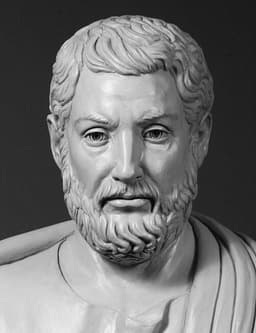
Cleisthenes of Athens
Politician · Ancient
68.5Total
Basic Information
Born
497
-570
Died
578
-508
Era
Ancient
Ancient
Nationality
Quraysh
Athens
Occupation
Politician
Politician
Civilization
Middle Eastern
Western
Score Comparison
Military (10%)
50.0
50.0
Political (20%)
40.8
62.7
Influence (20%)
59.0
80.0
Legacy (20%)
56.0
82.0
Leadership (15%)
65.0
62.0
Strategy (15%)
43.1
42.7
TOTAL
53.9
68.5
Abd al-Muttalib — Complete Timeline
520 AD
Rediscovery of the Zamzam WellCultural◆ Major
Abd al-Muttalib ibn Hashim rediscovered the Zamzam well in Mecca after it had been buried for centuries. He dug the well following a dream, restoring the water source that had sustained Hagar and Ishmael. This provided water for pilgrims and enhanced the Quraysh's prestige.
ZamzamMeccaPilgrimage
Impact: regionalconstructive
530 AD
Leadership of the QurayshPolitical Action◆ Major
Abd al-Muttalib became the chief of the Quraysh tribe after the death of his uncle. He held the key privileges of providing water and food to pilgrims, and led the tribe during the Year of the Elephant when Abraha's army attacked Mecca.
QurayshLeadershipMecca
Impact: regionalconstructive
545 AD
Vow to Sacrifice AbdallahCultural
Abd al-Muttalib vowed to sacrifice one of his ten sons to the gods if he had that many. When he had ten sons, he drew lots and Abdallah, his youngest and most beloved, was chosen. He was ransomed with 100 camels instead, establishing a precedent for blood money.
SacrificeQurayshTradition
570 AD
Year of the Elephant DefenseWar◆ Major
Abd al-Muttalib led the Quraysh during the Abyssinian invasion led by Abraha, who brought war elephants to destroy the Kaaba. According to tradition, the invasion failed when birds dropped stones on the army. The event is referenced in Surah al-Fil of the Quran.
Year of the ElephantKaabaAbraha
Impact: regional
Cleisthenes of Athens — Complete Timeline
508 BC
Reform of the Athenian Tribes (Cleisthenes' Reforms)Reform
Cleisthenes reorganized the Athenian citizen body into ten new tribes based on demes (local districts), replacing the old four Ionian tribes. This broke the power of aristocratic clans and created a new political structure that formed the basis of Athenian democracy.
DemocracyPolitical ReformAthens
Impact: globalprogressive
Introduction of OstracismReform◆ Major
Cleisthenes introduced the practice of ostracism, allowing citizens to vote annually to exile a prominent figure for ten years. This mechanism was designed to prevent tyranny and remove threats to democracy. The first ostracism occurred in 487 BC.
DemocracyPolitical ReformExile
Impact: globalprogressive
Creation of the Council of 500 (Boule)Reform◆ Major
Cleisthenes established the Boule, a council of 500 citizens (50 from each tribe) chosen by lot. This body prepared legislation for the Assembly and oversaw daily administration. It replaced the aristocratic Areopagus as the main governing body, expanding citizen participation.
DemocracyPolitical ReformGovernment
Impact: globalprogressive
Exile of Isagoras and Spartan InterventionPolitical Action◆ Major
Cleisthenes' rival Isagoras called on Spartan king Cleomenes I to intervene in Athens. The Spartans expelled Cleisthenes and attempted to dissolve the Boule, but the Athenian people revolted, besieging the Acropolis and forcing the Spartans to withdraw. Cleisthenes was recalled.
Spartan InterventionDemocracyAthens
Impact: nationalconstructive
This comparison has not been analyzed yet.
One-time AI generation (~1 minute). Scores and timeline are already available below.
Rankings
🥇
Cleisthenes of AthensLeader
Mil: 50.0Pol: 62.7Inf: 80.0
68.5
🥈
Abd al-Muttalib
Mil: 50.0Pol: 40.8Inf: 59.0
53.9
+14.6 behind
How This Comparison Works
Algorithm
Each figure is scored on 6 dimensions (0—100 scale) based on structured historical data: Military (10%), Political (20%), Influence (20%), Legacy (20%), Leadership (15%), Strategy (15%). The weighted total produces the final ranking.
Data Sources
Scores are computed from structured sub-indicators in the database. Scale factors adjust for era (Ancient ×0.85, Modern ×1.0) and civilization size (Eastern ×1.05, Other ×0.80) to account for differences in population and military scale.
Maximum 3 Figures
Comparisons are limited to 2—3 figures to ensure readability and statistical meaningfulness.
Error Margins
±5 points per dimension — Sub-scores are derived from historical records with inherent uncertainty. Two figures within 5 points on a dimension should be considered roughly equivalent in that area.
Total Score Accuracy
±3 points overall — The weighted combination of 6 dimensions produces a total score with approximately ±3 points of uncertainty. Differences of less than 3 points are not statistically significant— the figures are effectively tied.
Known Limitations
- Historical records are incomplete and uneven across civilizations
- Figures from oral-tradition societies may be underrepresented
- Occupation labels can misclassify multi-role figures
- Scores measure capability and impact, not moral character
- Quantitative scoring is a comparison tool, not absolute truth
Capability Radar
Military (10%) — Battles & Warfare
Battles
22
22
Win Rate
26
27
Expansion
33
28
Political (20%) — Governance & Reform
Reform
30
95
Diplomacy
35
70
Economy
30
40
Influence (20%) — Cultural & Global Reach
Cultural
45
85
Global
40
80
Legacy (20%) — Historical Impact
Historical
50
90
Longevity
60
95
Leadership (15%) — Power & Stability
Tenure
40
30
Stability
40
60
Strategy (15%) — Tactics & Innovation
Strategy
33
35
Tactics
37
34
Reform
39
40
Similar Comparisons
Comments & Discussion
No comments yet. Be the first to share your thoughts!