Loading...
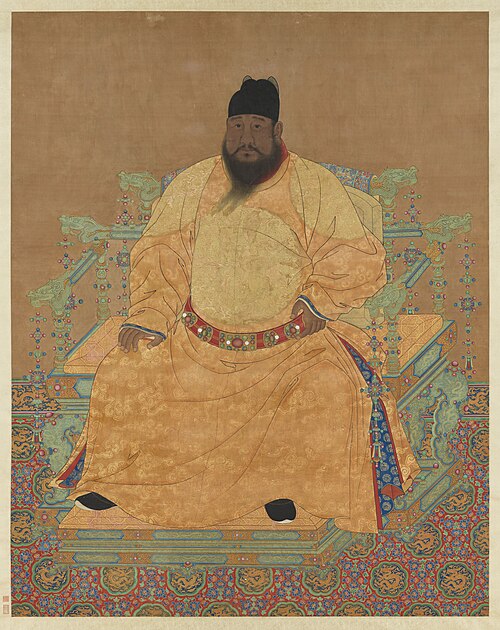
Zhu Zhanji
MedievalEmperorChina1399 — 1435
Xuande Emperor, patron of arts and an able administrator.
Compare Zhu Zhanji with another historical figure:
Quick Facts
Born
1399
Died
1435
Country
China
Era
Medieval
Occupation
Emperor
Score Overview
Military (10%)50
Political (20%)59
Influence (20%)72
Legacy (20%)58
Leadership (15%)80
Strategy (15%)58
Total Score64.1
Zhu Zhanji — Complete Timeline
1425 AD
Accession as Xuande EmperorPolitical Action◆ Major
Zhu Zhanji ascended the Ming throne as the Xuande Emperor after the sudden death of his father, the Hongxi Emperor. His reign continued the shift toward civilian governance and cultural patronage, marking a period of stability.
Ming DynastySuccessionStability
Impact: nationalconstructive
1426 AD
Suppression of the Rebellion of Zhu GaoxuWar◆ Major
The Xuande Emperor personally led a campaign against his uncle, Zhu Gaoxu, who rebelled in Shandong. The rebellion was quickly crushed, and Zhu Gaoxu was executed, consolidating the emperor's authority and deterring future princely revolts.
RebellionMing DynastyCivil War
Impact: national
Reform of the Grand SecretariatReform◆ Major
The Xuande Emperor formalized the role of the Grand Secretariat, appointing scholar-officials like Yang Shiqi and Yang Rong as senior advisors. This institutionalized a cabinet system that improved administrative efficiency and reduced eunuch influence.
Government ReformGrand SecretariatBureaucracy
Impact: nationalconstructive
Patronage of the Arts and PorcelainCultural◆ Major
The Xuande Emperor became a renowned patron of painting, calligraphy, and ceramics. He personally oversaw the production of Xuande porcelain at Jingdezhen, which became highly prized for its quality and design, influencing Chinese art for centuries.
ArtPorcelainCultural Patronage
Impact: globalconstructive
1430 AD
Continued Suspension of Maritime ExpeditionsPolitical Action◆ Major
The Xuande Emperor maintained his father's policy of suspending Zheng He's treasure fleet voyages, though he authorized a final expedition in 1430-1433. This decision cemented the end of China's era of naval exploration and shifted focus to land borders.
Maritime PolicyZheng HeIsolation
Impact: global
1435 AD
Death and Succession of Zhu QizhenOther◆ Major
The Xuande Emperor died at age 36, likely from illness, after a reign of ten years. He was succeeded by his young son Zhu Qizhen, whose minority led to a regency and later the Tumu Crisis, undoing much of Xuande's stability.
DeathSuccessionMing Dynasty
Impact: nationaltragic
Detailed Scores
▶View all detailed scores
Military
Strategy
7
Tactics
7
Battles
7
Army Scale
6
War Impact
7
Political
Governance
6
Reform
7
Stability
6
Policy
7
Power
7
Influence
History
9
Global
8
Culture
8
Ideology
9
Legacy
8
People often compare with
See how Zhu Zhanji stacks up against other historical figures