Loading...
Manuel I of Portugal vs Zhu Zhanji
Manuel I of Portugal leads by 0.9 pts · 2 figures compared
…
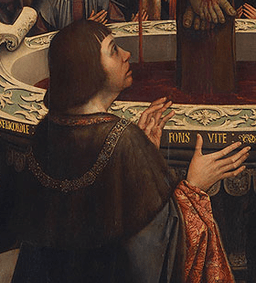
Manuel I of Portugal
Emperor · Medieval
65.0Total
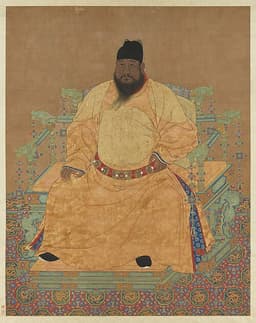
Zhu Zhanji
Emperor · Medieval
64.1Total
Basic Information
Born
1469
1399
Died
1521
1435
Era
Medieval
Medieval
Nationality
Portugal
China
Occupation
Emperor
Emperor
Civilization
Western
Eastern
Score Comparison
Military (10%)
47.5
50.0
Political (20%)
70.3
59.3
Influence (20%)
72.0
72.0
Legacy (20%)
58.0
58.0
Leadership (15%)
80.0
79.8
Strategy (15%)
51.7
57.5
TOTAL
65.0
64.1
Manuel I of Portugal — Complete Timeline
1496 AD
Expulsion of the Jews from PortugalPolitical Action◆ Major
Manuel I ordered the expulsion of Jews from Portugal, but later forced them to convert to Christianity rather than leave. This created a large population of New Christians (conversos) and led to ongoing religious tensions and persecution.
Religious PersecutionJewish HistoryInquisition
Impact: nationaldestructive
1498 AD
Voyage of Vasco da Gama to IndiaInvention
Manuel I sponsored Vasco da Gama's expedition that reached Calicut in India, establishing the first direct sea route from Europe to Asia. This opened the spice trade to Portugal and broke the Venetian monopoly on Asian goods.
Age of DiscoveryNavigationSpice Trade
Impact: globalconstructive
1500 AD
Discovery of BrazilInvention
Pedro Álvares Cabral's fleet, sent by Manuel I to India, made landfall on the coast of Brazil. Manuel I claimed the territory for Portugal, initiating colonization and the exploitation of brazilwood, which later expanded into a major colony.
Age of DiscoveryColonizationBrazil
Impact: global
1501 AD
Construction of the Jerónimos MonasteryCultural◆ Major
Manuel I commissioned the Jer
ArchitectureManueline StyleHeritage
Impact: nationalconstructive
1502 AD
Second India Armada and Battle of CalicutWar◆ Major
Manuel I sent a second fleet to India under Vasco da Gama, who bombarded Calicut and established Portuguese dominance in the Indian Ocean. This aggressive policy secured trading posts and forced local rulers to accept Portuguese terms.
Age of DiscoveryNaval WarfareSpice Trade
Impact: globaldestructive
1510 AD
Conquest of GoaWar◆ Major
Manuel I's governor Afonso de Albuquerque captured Goa from the Sultan of Bijapur. The city became the capital of Portuguese India, a strategic naval base, and a center for trade and missionary activity in Asia.
Portuguese IndiaColonial ConquestNaval Base
Impact: global
Zhu Zhanji — Complete Timeline
1425 AD
Accession as Xuande EmperorPolitical Action◆ Major
Zhu Zhanji ascended the Ming throne as the Xuande Emperor after the sudden death of his father, the Hongxi Emperor. His reign continued the shift toward civilian governance and cultural patronage, marking a period of stability.
Ming DynastySuccessionStability
Impact: nationalconstructive
1426 AD
Suppression of the Rebellion of Zhu GaoxuWar◆ Major
The Xuande Emperor personally led a campaign against his uncle, Zhu Gaoxu, who rebelled in Shandong. The rebellion was quickly crushed, and Zhu Gaoxu was executed, consolidating the emperor's authority and deterring future princely revolts.
RebellionMing DynastyCivil War
Impact: national
Reform of the Grand SecretariatReform◆ Major
The Xuande Emperor formalized the role of the Grand Secretariat, appointing scholar-officials like Yang Shiqi and Yang Rong as senior advisors. This institutionalized a cabinet system that improved administrative efficiency and reduced eunuch influence.
Government ReformGrand SecretariatBureaucracy
Impact: nationalconstructive
Patronage of the Arts and PorcelainCultural◆ Major
The Xuande Emperor became a renowned patron of painting, calligraphy, and ceramics. He personally oversaw the production of Xuande porcelain at Jingdezhen, which became highly prized for its quality and design, influencing Chinese art for centuries.
ArtPorcelainCultural Patronage
Impact: globalconstructive
1430 AD
Continued Suspension of Maritime ExpeditionsPolitical Action◆ Major
The Xuande Emperor maintained his father's policy of suspending Zheng He's treasure fleet voyages, though he authorized a final expedition in 1430-1433. This decision cemented the end of China's era of naval exploration and shifted focus to land borders.
Maritime PolicyZheng HeIsolation
Impact: global
1435 AD
Death and Succession of Zhu QizhenOther◆ Major
The Xuande Emperor died at age 36, likely from illness, after a reign of ten years. He was succeeded by his young son Zhu Qizhen, whose minority led to a regency and later the Tumu Crisis, undoing much of Xuande's stability.
DeathSuccessionMing Dynasty
Impact: nationaltragic
Expert Analysis
Origins
Manuel I of Portugal was born in 1469 in Alcochete, the ninth child of Infante Fernando, Duke of Viseu, and Beatriz of Portugal. His early life was shaped by the court of his cousin, King John II, and he received a traditional noble education focused on horsemanship and military training. Manuel's unexpected rise to the throne in 1495 after the death of John II's heir and the king himself positioned him as a fortunate but relatively untested ruler. His background in the court of an explorer-king instilled in him a vision of maritime expansion.
Zhu Zhanji, born in 1399 in Beijing, was the grandson of the Yongle Emperor and son of the Hongxi Emperor. He grew up in the Ming imperial palace, receiving a Confucian education under renowned tutors. His grandfather personally oversaw his training in statecraft and military affairs, and he accompanied Yongle on campaigns against the Mongols. This early exposure to governance and warfare prepared him for the throne, unlike Manuel's unexpected ascent.
Rise to Power
Manuel I ascended the Portuguese throne in October 1495 after the death of King John II, who had no legitimate heirs. Manuel was John's cousin and had been a loyal courtier. His rise was smooth, but he inherited a kingdom already committed to exploration, with Bartolomeu Dias having rounded the Cape of Good Hope in 1488. Manuel's key decision was to continue and intensify these efforts, sponsoring Vasco da Gama's expedition in 1497. The successful return of da Gama in 1499, having reached India, marked Manuel's turning point, bringing enormous wealth and prestige.
Zhu Zhanji became the Xuande Emperor in 1425 after his father's sudden death. His accession was unchallenged, but his uncle Zhu Gaoxu rebelled in 1426. Zhu Zhanji personally led a campaign against him, besieging his fortress in Shandong. The rebellion was crushed within months, and Zhu Gaoxu was executed. This early victory solidified his authority and demonstrated his military capability, scoring a 50.0 in military compared to Manuel's 47.5. Unlike Manuel, whose rise relied on his predecessor's death, Zhu Zhanji actively seized control.
Leadership & Governance
Manuel I governed as an absolute monarch, centralizing power and using the wealth from overseas trade to strengthen the crown. He created a network of feitorias (trading posts) across Africa, Asia, and Brazil, and appointed strong governors like Afonso de Albuquerque. His political score of 70.3 reflects his effective management of the empire, but his religious policies, such as the forced conversion of Jews in 1497, alienated a significant population. He also pursued a costly policy of military expansion in Morocco, which drained resources.
Zhu Zhanji, scoring 59.3 in political, was a more restrained ruler. He reformed the Grand Secretariat, empowering scholar-officials like Yang Shiqi and Yang Rong, and reduced the power of eunuchs. He suspended the maritime expeditions of Zheng He, focusing on internal stability and agriculture. His leadership style was hands-on, personally reviewing cases and promoting meritocracy. His patronage of the arts, especially Xuande porcelain, fostered cultural flourishing. However, his policy of maritime isolation limited China's global influence, contrasting with Manuel's outward expansion.
Triumph & Tragedy
Manuel's greatest triumph was the establishment of the Portuguese Estado da Índia, which gave Portugal control over the Indian Ocean spice trade. The discovery of Brazil in 1500 added a vast territory. His sponsorship of da Gama and Cabral led to a global empire. However, his tragedy was the expulsion of Jews, which caused economic harm and a loss of skilled people. The massacre of Jews in Lisbon in 1506 reflected the social turmoil. Additionally, his aggressive policies in Morocco and India overextended Portugal's resources, leading to later decline.
Zhu Zhanji's triumph was the suppression of his uncle's rebellion and the stabilization of the Ming dynasty. His patronage left a lasting artistic legacy, with Xuande porcelain highly prized. He also reformed the government, reducing corruption. His tragedy was the continued suspension of Zheng He's voyages, which ended China's maritime exploration. The final expedition in 1430-1433 was small, and after his death, the treasure fleets were scrapped. This isolationist turn limited China's influence, scoring 72.0 in influence, equal to Manuel, but in different spheres.
Character & Destiny
Manuel I was pragmatic and ambitious, but also religiously intolerant. His nickname 'the Fortunate' reflects the luck of his reign, but his decisions were calculated. He supported exploration for profit and prestige, but his forced conversions created lasting social problems. His leadership score of 80.0 indicates effective command, but his strategy score of 51.7 suggests overreach. Historical assessments note his role in creating a global empire but criticize his religious policies.
Zhu Zhanji was cultured and decisive, earning the posthumous title 'Xuande' meaning 'Proclamation of Virtue'. He balanced military action with cultural patronage. His leadership score of 79.8 is slightly lower than Manuel's, but his strategy score of 57.5 is higher. He is remembered as a wise Confucian ruler who prioritized stability over expansion. His character shaped a reign of consolidation rather than exploration.
Legacy
Manuel I's legacy is the Portuguese Empire, which lasted centuries. The sea route to India changed global trade, and Brazil became a major colony. His support for exploration scored 72.0 in influence, but his legacy score of 58.0 reflects the mixed outcomes, including the Inquisition. The Manueline style in architecture symbolizes his era.
Zhu Zhanji's legacy is the Xuande porcelain, which remains iconic. His administrative reforms influenced Ming governance, and his reign is seen as a golden age of culture. However, his maritime policy set back Chinese exploration. His legacy score is also 58.0, tied with Manuel, but his influence (72.0) is similar.
Conclusion
Manuel I had a greater impact on world history. His sponsorship of da Gama and Cabral reshaped global trade routes and initiated European colonialism. While Zhu Zhanji's cultural contributions are significant, they were largely internal. Manuel's actions led to the globalization of the 16th century, a transformation that Zhu Zhanji's policies actively avoided. With a total score of 65.0 against 64.1, Manuel edges ahead, but the gap is narrow. His empire's reach across continents outweighs Zhu Zhanji's domestic achievements. Therefore, Manuel I of Portugal had the greater historical impact.
Rankings
🥇
Manuel I of PortugalLeader
Mil: 47.5Pol: 70.3Inf: 72.0
65.0
🥈
Zhu Zhanji
Mil: 50.0Pol: 59.3Inf: 72.0
64.1
+0.9 behind
How This Comparison Works
Algorithm
Each figure is scored on 6 dimensions (0—100 scale) based on structured historical data: Military (10%), Political (20%), Influence (20%), Legacy (20%), Leadership (15%), Strategy (15%). The weighted total produces the final ranking.
Data Sources
Scores are computed from structured sub-indicators in the database. Scale factors adjust for era (Ancient ×0.85, Modern ×1.0) and civilization size (Eastern ×1.05, Other ×0.80) to account for differences in population and military scale.
Maximum 3 Figures
Comparisons are limited to 2—3 figures to ensure readability and statistical meaningfulness.
Error Margins
±5 points per dimension — Sub-scores are derived from historical records with inherent uncertainty. Two figures within 5 points on a dimension should be considered roughly equivalent in that area.
Total Score Accuracy
±3 points overall — The weighted combination of 6 dimensions produces a total score with approximately ±3 points of uncertainty. Differences of less than 3 points are not statistically significant— the figures are effectively tied.
Known Limitations
- Historical records are incomplete and uneven across civilizations
- Figures from oral-tradition societies may be underrepresented
- Occupation labels can misclassify multi-role figures
- Scores measure capability and impact, not moral character
- Quantitative scoring is a comparison tool, not absolute truth
Capability Radar
Military (10%) — Battles & Warfare
Battles
30
55
Win Rate
40
60
Expansion
85
45
Political (20%) — Governance & Reform
Reform
70
70
Diplomacy
75
75
Economy
80
80
Influence (20%) — Cultural & Global Reach
Cultural
65
80
Global
70
55
Legacy (20%) — Historical Impact
Historical
75
65
Longevity
60
60
Leadership (15%) — Power & Stability
Tenure
85
65
Stability
70
85
Strategy (15%) — Tactics & Innovation
Strategy
50
55
Tactics
20
50
Reform
40
40
Similar Comparisons
Comments & Discussion
No comments yet. Be the first to share your thoughts!