Loading...
Al-Muqtafi vs Zhu Zhanji
Zhu Zhanji leads by 13.5 pts · 2 figures compared
…
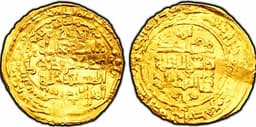
Al-Muqtafi
Emperor · Medieval
50.6Total
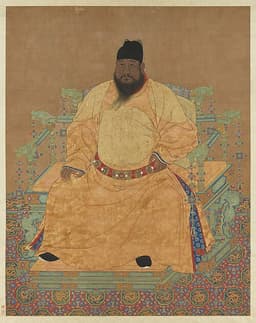
Zhu Zhanji
Emperor · Medieval
64.1Total
Basic Information
Born
1096
1399
Died
1160
1435
Era
Medieval
Medieval
Nationality
Abbasid Caliphate
China
Occupation
Emperor
Emperor
Civilization
Middle Eastern
Eastern
Score Comparison
Military (10%)
55.0
50.0
Political (20%)
68.0
59.3
Influence (20%)
52.5
72.0
Legacy (20%)
45.8
58.0
Leadership (15%)
40.0
79.8
Strategy (15%)
43.3
57.5
TOTAL
50.6
64.1
Al-Muqtafi — Complete Timeline
1136 AD
Reassertion of Caliphal AuthorityPolitical Action
Upon becoming caliph, Al-Muqtafi began to reassert caliphal authority over Baghdad. He expelled Seljuk officials from the city and appointed his own viziers, marking a reversal of decades of Seljuk domination.
IndependenceSeljuk DeclineBaghdad
Impact: regionalconstructive
1140 AD
Reform of the ArmyReform◆ Major
Al-Muqtafi reformed the caliphal army by recruiting new troops and reducing reliance on Seljuk mercenaries. He established a standing army loyal to the caliph, which enabled his military successes.
Military ReformArmyCaliphal Power
Impact: regionalconstructive
1146 AD
Defense of Baghdad Against SeljuksWar◆ Major
Al-Muqtafi successfully defended Baghdad against a Seljuk siege led by Sultan Mas'ud. The caliph's forces repelled the attack, solidifying his control over the city and demonstrating the caliphate's renewed military capability.
SiegeMilitary VictorySeljuk-Abbasid War
Impact: regionalconstructive
1150 AD
Expansion of Caliphal TerritoryWar◆ Major
Al-Muqtafi expanded caliphal territory by conquering several towns in Iraq, including Wasit and Kufa. These conquests restored the caliphate's territorial base and increased its revenue and prestige.
Territorial ExpansionMilitary CampaignIraq
Impact: regionalconstructive
Zhu Zhanji — Complete Timeline
1425 AD
Accession as Xuande EmperorPolitical Action◆ Major
Zhu Zhanji ascended the Ming throne as the Xuande Emperor after the sudden death of his father, the Hongxi Emperor. His reign continued the shift toward civilian governance and cultural patronage, marking a period of stability.
Ming DynastySuccessionStability
Impact: nationalconstructive
1426 AD
Suppression of the Rebellion of Zhu GaoxuWar◆ Major
The Xuande Emperor personally led a campaign against his uncle, Zhu Gaoxu, who rebelled in Shandong. The rebellion was quickly crushed, and Zhu Gaoxu was executed, consolidating the emperor's authority and deterring future princely revolts.
RebellionMing DynastyCivil War
Impact: national
Reform of the Grand SecretariatReform◆ Major
The Xuande Emperor formalized the role of the Grand Secretariat, appointing scholar-officials like Yang Shiqi and Yang Rong as senior advisors. This institutionalized a cabinet system that improved administrative efficiency and reduced eunuch influence.
Government ReformGrand SecretariatBureaucracy
Impact: nationalconstructive
Patronage of the Arts and PorcelainCultural◆ Major
The Xuande Emperor became a renowned patron of painting, calligraphy, and ceramics. He personally oversaw the production of Xuande porcelain at Jingdezhen, which became highly prized for its quality and design, influencing Chinese art for centuries.
ArtPorcelainCultural Patronage
Impact: globalconstructive
1430 AD
Continued Suspension of Maritime ExpeditionsPolitical Action◆ Major
The Xuande Emperor maintained his father's policy of suspending Zheng He's treasure fleet voyages, though he authorized a final expedition in 1430-1433. This decision cemented the end of China's era of naval exploration and shifted focus to land borders.
Maritime PolicyZheng HeIsolation
Impact: global
1435 AD
Death and Succession of Zhu QizhenOther◆ Major
The Xuande Emperor died at age 36, likely from illness, after a reign of ten years. He was succeeded by his young son Zhu Qizhen, whose minority led to a regency and later the Tumu Crisis, undoing much of Xuande's stability.
DeathSuccessionMing Dynasty
Impact: nationaltragic
Expert Analysis
Origins
Al-Muqtafi (1096-1160) was born into the Abbasid Caliphate in Baghdad, the son of Caliph Al-Mustazhir. His early life was overshadowed by Seljuk dominance; the caliphate had been a puppet state for decades. He received a traditional Islamic education but little military training, as the caliphs were figureheads. Zhu Zhanji (1398-1435), the Xuande Emperor, was born in Beijing as the grandson of the Yongle Emperor, the Ming dynasty's most expansionist ruler. He grew up in a court steeped in Confucian scholarship and military campaigns, witnessing his grandfather's northern expeditions and his father's brief reign. His education emphasized both classical texts and practical governance.
Rise to Power
Al-Muqtafi became caliph in 1136 after the death of his predecessor, but his authority was nominal. The turning point came in 1140 when he began expelling Seljuk officials from Baghdad, appointing his own viziers. He faced a major Seljuk siege in 1157 led by Sultan Mas'ud, which he successfully repelled by mobilizing a newly loyal army. This victory allowed him to consolidate control over the city and its environs. Zhu Zhanji ascended the throne in 1425 upon his father's sudden death. He immediately faced a rebellion from his uncle Zhu Gaoxu in 1426, which he personally led a campaign to suppress. The rebellion was crushed within months, and Zhu Gaoxu was executed. This swift action solidified Zhu Zhanji's authority and demonstrated his military capability.
Leadership & Governance
Al-Muqtafi focused on restoring caliphal autonomy. He reformed the army by recruiting new troops, reducing reliance on Seljuk mercenaries, and establishing a standing force loyal to him. He also expanded territory by conquering towns like Wasit and Kufa, but his influence remained limited to Iraq. His political score of 68.0 reflects his ability to navigate a fractured political landscape, but his leadership score of 40.0 indicates he lacked broader strategic vision. Zhu Zhanji, with a leadership score of 79.8, excelled in governance. He formalized the Grand Secretariat, appointing capable scholar-officials like Yang Shiqi and Yang Rong as advisors. He promoted meritocracy, reduced corruption, and focused on domestic stability. His patronage of the arts, especially Xuande porcelain, elevated Ming culture, but he continued his father's suspension of maritime expeditions, ending Zheng He's voyages after a final 1430-1433 mission.
Triumph & Tragedy
Al-Muqtafi's greatest triumph was restoring caliphal authority in Baghdad after decades of Seljuk control. His defense of the city in 1157 was a decisive victory. However, his territorial gains were modest, and he failed to revive the caliphate's former glory. His legacy score of 45.8 reflects this limited impact. Zhu Zhanji's triumphs included suppressing the rebellion, stabilizing the Ming dynasty, and fostering a golden age of arts and culture. His administration improved efficiency and reduced tensions. Yet his tragedy was the discontinuation of Zheng He's expeditions, which ended China's naval exploration. This decision, driven by cost and Confucian conservatism, limited China's global influence. His military score of 50.0 is lower than his political score, showing he prioritized domestic governance over expansion.
Character & Destiny
Al-Muqtafi was determined but cautious, focusing on immediate survival rather than long-term revival. His personality score cannot be quantified, but his decisions show a reactive rather than proactive style. He relied on building a loyal army but did not pursue alliances or broader reforms. Zhu Zhanji was confident and cultured, with a strong sense of duty. He balanced Confucian ideals with practical rule, often personally leading campaigns. His character shaped a reign of stability but also missed opportunities, like maritime exploration. Historians view him as an able administrator but not a visionary.
Legacy
Al-Muqtafi's legacy is as a restorer of caliphal power, albeit temporary. His reforms enabled later caliphs to maintain independence for another century, but his influence score of 52.5 shows his impact was regional. Zhu Zhanji's legacy is more enduring: the Ming dynasty's golden age of arts, the solidification of the Grand Secretariat, and the Xuande porcelain that remains iconic. His legacy score of 58.0 reflects his cultural and administrative contributions. However, his decision to end maritime expeditions had long-term consequences, leaving China isolated.
Conclusion
Zhu Zhanji had greater impact than Al-Muqtafi. He scored 64.1 overall compared to Al-Muqtafi's 50.6, a gap of 13.5 points. Al-Muqtafi's achievements were immediate but limited to Baghdad, while Zhu Zhanji's governance shaped Ming China for decades. His cultural patronage and administrative reforms left a lasting mark, whereas Al-Muqtafi's restoration was fleeting. Zhu Zhanji's leadership score of 79.8 far exceeds Al-Muqtafi's 40.0, underscoring his superior ability to manage a large empire. While Al-Muqtafi deserves credit for defying the Seljuks, Zhu Zhanji's broader influence and lasting legacy make him the more consequential figure.
Rankings
🥇
Zhu ZhanjiLeader
Mil: 50.0Pol: 59.3Inf: 72.0
64.1
🥈
Al-Muqtafi
Mil: 55.0Pol: 68.0Inf: 52.5
50.6
+13.5 behind
How This Comparison Works
Algorithm
Each figure is scored on 6 dimensions (0—100 scale) based on structured historical data: Military (10%), Political (20%), Influence (20%), Legacy (20%), Leadership (15%), Strategy (15%). The weighted total produces the final ranking.
Data Sources
Scores are computed from structured sub-indicators in the database. Scale factors adjust for era (Ancient ×0.85, Modern ×1.0) and civilization size (Eastern ×1.05, Other ×0.80) to account for differences in population and military scale.
Maximum 3 Figures
Comparisons are limited to 2—3 figures to ensure readability and statistical meaningfulness.
Error Margins
±5 points per dimension — Sub-scores are derived from historical records with inherent uncertainty. Two figures within 5 points on a dimension should be considered roughly equivalent in that area.
Total Score Accuracy
±3 points overall — The weighted combination of 6 dimensions produces a total score with approximately ±3 points of uncertainty. Differences of less than 3 points are not statistically significant— the figures are effectively tied.
Known Limitations
- Historical records are incomplete and uneven across civilizations
- Figures from oral-tradition societies may be underrepresented
- Occupation labels can misclassify multi-role figures
- Scores measure capability and impact, not moral character
- Quantitative scoring is a comparison tool, not absolute truth
Capability Radar
Military (10%) — Battles & Warfare
Battles
30
55
Win Rate
35
60
Expansion
25
45
Political (20%) — Governance & Reform
Reform
55
70
Diplomacy
50
75
Economy
45
80
Influence (20%) — Cultural & Global Reach
Cultural
30
80
Global
25
55
Legacy (20%) — Historical Impact
Historical
40
65
Longevity
35
60
Leadership (15%) — Power & Stability
Tenure
60
65
Stability
55
85
Strategy (15%) — Tactics & Innovation
Strategy
35
55
Tactics
30
50
Reform
40
40
Similar Comparisons
Comments & Discussion
No comments yet. Be the first to share your thoughts!