Loading...
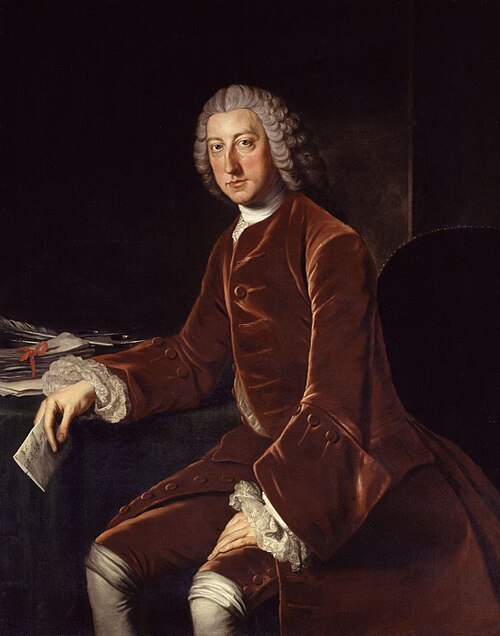
William Pitt the Elder
ModernPoliticianUnited Kingdom1708 — 1778
Great Commoner who led Britain to victory in the Seven Years War.
Compare William Pitt the Elder with another historical figure:
Quick Facts
Born
1708
Died
1778
Country
United Kingdom
Era
Modern
Occupation
Politician
Score Overview
Military (10%)67
Political (20%)72
Influence (20%)68
Legacy (20%)68
Leadership (15%)80
Strategy (15%)67
Total Score70.2
William Pitt the Elder — Complete Timeline
1756 AD
Led Britain in Seven Years' WarWar
William Pitt the Elder served as Secretary of State from 1756 to 1761, directing British strategy in the Seven Years' War. His policies focused on naval supremacy and colonial campaigns, leading to victories in Canada, India, and the Caribbean.
Seven Years' WarColonial EmpireMilitary Strategy
Impact: global
1759 AD
Conquest of QuebecWar◆ Major
Under Pitt's direction, British forces under General James Wolfe captured Quebec City on September 13, 1759, after the Battle of the Plains of Abraham. This victory secured British control over Canada and marked a turning point in the Seven Years' War.
Seven Years' WarCanadaMilitary Victory
Impact: global
1766 AD
Became Prime MinisterPolitical Action
Pitt was appointed Prime Minister on July 30, 1766, forming a government. However, his health declined and he was elevated to the House of Lords as Earl of Chatham, which weakened his political base. His second ministry was less effective than his wartime leadership.
Prime MinisterGovernment18th Century
Impact: national
Opposed American TaxationPolitical Action◆ Major
Pitt argued for the repeal of the Stamp Act in 1766, asserting that Parliament had no right to tax the American colonies without representation. His speech in the Commons helped secure repeal, though he maintained Parliament's authority to legislate for the colonies.
American ColoniesTaxationParliamentary Debate
Impact: global
Detailed Scores
▶View all detailed scores
Military
Strategy
7
Tactics
7
Battles
7
Army Scale
6
War Impact
7
Political
Governance
7
Reform
7
Stability
7
Policy
7
Power
8
Influence
History
9
Global
8
Culture
9
Ideology
9
Legacy
9
People often compare with
See how William Pitt the Elder stacks up against other historical figures
Popular Comparisons
William Pitt the Elder vs Mustafa Kemal Ataturk
vs Mustafa Kemal Ataturk80
William Pitt the Elder vs Mao Zedong
vs Mao Zedong79
William Pitt the Elder vs Abraham Lincoln
vs Abraham Lincoln78
William Pitt the Elder vs George Washington
vs George Washington77
William Pitt the Elder vs Ito Hirobumi
vs Ito Hirobumi74
William Pitt the Elder vs Winston Churchill
vs Winston Churchill72