Loading...
Mao Zedong vs William Pitt the Elder
Mao Zedong leads by 9.2 pts · 2 figures compared
…
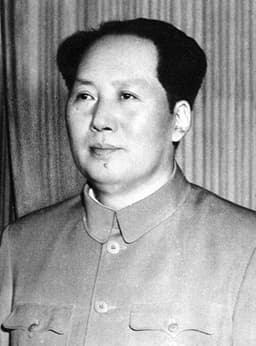
Mao Zedong
Politician · Modern
79.4Total
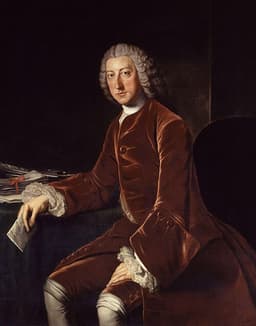
William Pitt the Elder
Politician · Modern
70.2Total
Basic Information
Born
1893
1708
Died
1976
1778
Era
Modern
Modern
Nationality
China
United Kingdom
Occupation
Politician
Politician
Civilization
Eastern
Western
Score Comparison
Military (10%)
75.0
67.3
Political (20%)
88.0
72.0
Influence (20%)
85.0
68.0
Legacy (20%)
70.0
68.0
Leadership (15%)
85.0
80.0
Strategy (15%)
72.0
67.2
TOTAL
79.4
70.2
Mao Zedong — Complete Timeline
1934 AD
Long MarchWar
Mao Zedong led the Chinese Red Army on a strategic retreat from Nationalist forces, covering approximately 6,000 miles over 370 days. The march solidified Mao's leadership within the Chinese Communist Party and became a foundational myth of the Communist revolution.
Chinese Civil WarCommunist RevolutionRetreat
Impact: national
1949 AD
Proclamation of the People's Republic of ChinaPolitical Action
Mao Zedong declared the founding of the People's Republic of China from Tiananmen Gate in Beijing. This ended the Chinese Civil War and established Communist rule over mainland China, with Mao as Chairman of the Central People's Government.
Founding of PRCCommunist VictoryRevolution
Impact: global
1958 AD
Great Leap ForwardReform◆ Major
Mao launched a campaign to rapidly industrialize China and collectivize agriculture. The policy led to widespread mismanagement, resulting in a famine that caused an estimated 15-45 million deaths between 1959 and 1961.
FamineIndustrializationCollectivization
Impact: nationaldestructive
1960 AD
Sino-Soviet SplitPolitical Action◆ Major
Mao's ideological differences with Soviet leader Nikita Khrushchev led to a breakdown in relations between China and the Soviet Union. The split ended the Sino-Soviet alliance and reshaped global Cold War dynamics, with China pursuing an independent path.
Cold WarIdeological ConflictAlliance Breakdown
Impact: global
1966 AD
Cultural RevolutionPolitical Action
Mao initiated a sociopolitical movement to purge capitalist and traditional elements from Chinese society. The Red Guard youth groups attacked intellectuals and officials, leading to widespread violence, destruction of cultural artifacts, and an estimated 1-2 million deaths.
Political PurgeSocial UpheavalRed Guard
Impact: nationaldestructive
1971 AD
Ping-Pong DiplomacyCultural◆ Major
Mao approved an invitation for the U.S. table tennis team to visit China, initiating a thaw in Sino-American relations. This cultural exchange paved the way for President Nixon's visit to China in 1972 and the eventual normalization of diplomatic ties.
DiplomacyU.S.-China RelationsCultural Exchange
Impact: globalconstructive
William Pitt the Elder — Complete Timeline
1756 AD
Led Britain in Seven Years' WarWar
William Pitt the Elder served as Secretary of State from 1756 to 1761, directing British strategy in the Seven Years' War. His policies focused on naval supremacy and colonial campaigns, leading to victories in Canada, India, and the Caribbean.
Seven Years' WarColonial EmpireMilitary Strategy
Impact: global
1759 AD
Conquest of QuebecWar◆ Major
Under Pitt's direction, British forces under General James Wolfe captured Quebec City on September 13, 1759, after the Battle of the Plains of Abraham. This victory secured British control over Canada and marked a turning point in the Seven Years' War.
Seven Years' WarCanadaMilitary Victory
Impact: global
1766 AD
Became Prime MinisterPolitical Action
Pitt was appointed Prime Minister on July 30, 1766, forming a government. However, his health declined and he was elevated to the House of Lords as Earl of Chatham, which weakened his political base. His second ministry was less effective than his wartime leadership.
Prime MinisterGovernment18th Century
Impact: national
Opposed American TaxationPolitical Action◆ Major
Pitt argued for the repeal of the Stamp Act in 1766, asserting that Parliament had no right to tax the American colonies without representation. His speech in the Commons helped secure repeal, though he maintained Parliament's authority to legislate for the colonies.
American ColoniesTaxationParliamentary Debate
Impact: global
Expert Analysis
Mao Zedong vs William Pitt the Elder
# The Great Commoner and the Great Helmsman
On a September morning in 1759, a British general named James Wolfe lay dying on the Plains of Abraham, having just secured Quebec for the empire. Half a world away and nearly two centuries later, another leader—Mao Zedong—would stand atop Tiananmen Gate in Beijing, proclaiming a new China. Between these two moments lies a profound question: what separates the statesman who expands an empire from the revolutionary who remakes a civilization? William Pitt the Elder and Mao Zedong never met, never corresponded, yet their lives trace the arc of how power is won, wielded, and remembered.
Origins
William Pitt was born in 1708 into the English gentry, the grandson of a governor of Madras who had amassed a fortune in India. His family was wealthy but not aristocratic—a crucial distinction in a society where birth still determined destiny. Pitt suffered from gout and periodic bouts of mental anguish, ailments that would shadow him all his life. He was educated at Eton and Oxford, then entered Parliament in 1735 as a member for the family-controlled pocket borough of Old Sarum. His world was one of inherited privilege, parliamentary maneuver, and imperial ambition.
Mao Zedong emerged from a very different soil. Born in 1893 in the village of Shaoshan, Hunan Province, he was the son of a prosperous peasant farmer who beat him and a devout Buddhist mother who sheltered him. China was then collapsing under the weight of the Qing Dynasty, foreign humiliation, and internal decay. Mao read the Chinese classics but also devoured translations of Western philosophy, from Rousseau to Darwin. Where Pitt inherited a system he sought to lead, Mao inherited a civilization in ruins that he sought to destroy and rebuild.
Rise to Power
Pitt’s ascent was the story of a man using oratory to overcome pedigree. In the House of Commons, he became known as “the Great Commoner,” a voice for the nation against the aristocratic factions that dominated government. He railed against the corruption of Prime Minister Robert Walpole and the Hanoverian kings who seemed indifferent to British interests. His moment came in 1756, when Britain was losing the Seven Years’ War. King George II reluctantly appointed Pitt as Secretary of State, effectively giving him control of war strategy. Pitt did not seize power; he was summoned by necessity.
Mao’s rise was forged in fire and blood. He was a founding member of the Chinese Communist Party in 1921, but spent years on the margins, outmaneuvered by rivals like Wang Ming and the Soviet-backed leadership. His turning point came during the Long March of 1934–1935, a 6,000-mile retreat from Nationalist encirclement. Along the way, Mao consolidated his authority at the Zunyi Conference, emerging as the party’s undisputed leader. Where Pitt rose through eloquence and parliamentary influence, Mao rose through survival, guerrilla warfare, and the ruthless elimination of opponents.
Leadership & Governance
Pitt’s genius was strategic and logistical. He understood that the Seven Years’ War was not a European conflict with colonial sideshows but a global struggle for empire. He poured resources into the Royal Navy, financed Prussian allies on the continent, and sent expeditions to capture French outposts in Canada, India, and the Caribbean. His leadership style was hands-on and visionary; he chose commanders like Wolfe and Amherst, then gave them clear objectives and trusted them to execute. The conquest of Quebec in 1759 was his masterpiece—a bold amphibious assault up the St. Lawrence that ended French rule in North America.
Mao’s governance was ideological and transformative—and catastrophically so. After proclaiming the People’s Republic in 1949, he launched the Great Leap Forward in 1958, a crash industrialization program that collectivized agriculture and demanded backyard steel furnaces. The result was the deadliest famine in human history, with estimates of 20 to 45 million deaths. Mao refused to acknowledge the disaster, blaming bad weather and sabotage. In 1966, he unleashed the Cultural Revolution, mobilizing student Red Guards to purge “bourgeois” elements from society, destroying countless lives, artifacts, and institutions. Yet Mao also achieved genuine breakthroughs: land reform that broke the power of the landlord class, mass literacy campaigns, and the expulsion of foreign influence. His greatest diplomatic coup came in 1971 with Ping-Pong Diplomacy, using an American table tennis team’s visit to thaw relations with the United States—a move that reshaped global geopolitics.
Triumph & Tragedy
Pitt’s triumph was the Peace of Paris in 1763, which confirmed Britain as the world’s dominant empire. Canada, Florida, and India were now British. Yet his tragedy was personal and political. The same man who had prosecuted the war so brilliantly opposed taxing the American colonies to pay for it. In 1766, he became Prime Minister but was already broken in health—gout, mania, and the weight of expectation. He was elevated to the House of Lords as Earl of Chatham, a move that betrayed his identity as the Great Commoner. He died in 1778, during the American Revolution, having watched his empire begin to fracture.
Mao’s triumph was the creation of a unified, independent China—no longer the “sick man of Asia.” He had defeated the Nationalists, the Japanese, and the Soviets in ideological battle. Yet his tragedy was the cost of that unity. The Great Leap Forward and Cultural Revolution left tens of millions dead, a generation traumatized, and an economy in ruins. He died in 1976, having achieved his revolutionary goals but leaving a nation impoverished and uncertain.
Character & Destiny
Pitt was a man of principle and passion, prone to dramatic oratory and dramatic collapses. He believed in the moral purpose of British power—that empire was a force for liberty and commerce. This conviction drove his war strategy but also his opposition to taxing the colonies. He could not reconcile his vision of empire with the coercion required to sustain it. His character was ultimately tragic: a great man undone by the contradictions of his own ideals.
Mao was a man of iron will and boundless ambition, a poet who wrote of struggle as a creative force. He believed that revolution was permanent, that conflict purified and progress required destruction. This conviction drove his greatest achievements and his greatest horrors. He was willing to sacrifice millions for the sake of an idea. His character was terrifying in its consistency: a visionary who saw human beings as raw material for history’s furnace.
Legacy
Pitt’s legacy is the British Empire at its zenith—the maps painted red, the naval supremacy, the global English-speaking world. He is remembered as a war leader, a constitutional statesman, and a defender of colonial rights. His name adorns cities, counties, and a university. Yet his empire is gone, and his principles seem distant.
Mao’s legacy is more ambiguous and more present. He is the founding father of modern China, a figure still revered in official memory, his portrait hanging on Tiananmen. Yet the reforms of Deng Xiaoping that lifted hundreds of millions from poverty were a repudiation of Mao’s economic policies. The Chinese Communist Party maintains his cult while quietly abandoning his programs. He is both the architect of China’s revival and the author of its greatest suffering.
Conclusion
What drove the different outcomes? Pitt operated within a system that constrained him—Parliament, the Crown, the rule of law. He could expand an empire but not remake a society. Mao operated without such constraints—he was the system. He could remake a society but only by destroying it first. One was a statesman of limits, the other a revolutionary of absolutes. Both were great men in the sense that they shaped history on a vast scale. But greatness, as their stories remind us, is not the same as goodness. The difference between them is the difference between leading a nation and consuming it.
Rankings
🥇
Mao ZedongLeader
Mil: 75.0Pol: 88.0Inf: 85.0
79.4
🥈
William Pitt the Elder
Mil: 67.3Pol: 72.0Inf: 68.0
70.2
+9.2 behind
How This Comparison Works
Algorithm
Each figure is scored on 6 dimensions (0—100 scale) based on structured historical data: Military (10%), Political (20%), Influence (20%), Legacy (20%), Leadership (15%), Strategy (15%). The weighted total produces the final ranking.
Data Sources
Scores are computed from structured sub-indicators in the database. Scale factors adjust for era (Ancient ×0.85, Modern ×1.0) and civilization size (Eastern ×1.05, Other ×0.80) to account for differences in population and military scale.
Maximum 3 Figures
Comparisons are limited to 2—3 figures to ensure readability and statistical meaningfulness.
Error Margins
±5 points per dimension — Sub-scores are derived from historical records with inherent uncertainty. Two figures within 5 points on a dimension should be considered roughly equivalent in that area.
Total Score Accuracy
±3 points overall — The weighted combination of 6 dimensions produces a total score with approximately ±3 points of uncertainty. Differences of less than 3 points are not statistically significant— the figures are effectively tied.
Known Limitations
- Historical records are incomplete and uneven across civilizations
- Figures from oral-tradition societies may be underrepresented
- Occupation labels can misclassify multi-role figures
- Scores measure capability and impact, not moral character
- Quantitative scoring is a comparison tool, not absolute truth
Capability Radar
Military (10%) — Battles & Warfare
Battles
85
60
Win Rate
80
75
Expansion
85
80
Political (20%) — Governance & Reform
Reform
95
75
Diplomacy
80
80
Economy
70
70
Influence (20%) — Cultural & Global Reach
Cultural
90
60
Global
90
75
Legacy (20%) — Historical Impact
Historical
95
80
Longevity
85
70
Leadership (15%) — Power & Stability
Tenure
95
70
Stability
60
65
Strategy (15%) — Tactics & Innovation
Strategy
85
85
Tactics
75
65
Reform
90
70
Similar Comparisons
Comments & Discussion
大战略家小棋手6/16/2026
皮特是大战略家?他不过是在七年战争里捡了普鲁士腓特烈的漏子。真正把战略变成现实的是毛泽东:长征、游击战、土地改革——每一步都是生死棋局。皮特在地图上画线,毛泽东在泥泞里走路。跨时代比较?皮特在他那个局里也不算真正的棋手。
PITT'S PISTOL6/16/2026
Calling Pitt a "great commoner" is historical sugarcoating—he bought his seat at Old Sarum like a piece of furniture. Meanwhile, Mao actually lived the peasant revolution he preached. Pitt expanded an empire from a London drawing room; Mao remade a civilization knee-deep in rice paddies. One inherited power, the other seized it through blood and soil. Don't romanticize.
DATA_OR_BUST6/16/2026
Show me the GDP charts before you compare them. Pitt's England had a population of 6 million and global trade routes; Mao inherited 540 million starving people and a shattered economy. Pitt didn't lift a single peasant from poverty—he taxed them to fund wars. Mao industrialized China in 30 years. The metrics don't lie: one managed decline, the other built from zero.
经典学者大祭司6/16/2026
把皮特和毛泽东放在一起比较,本身就是对历史的侮辱。皮特是托利党体系的工具,毛泽东是推翻帝制的革命者。一个是帝国螺丝钉,一个是文明重塑者。从个体价值来看,皮特甚至不是他那个时代最伟大的英国人——亚当·斯密和休谟都更有影响力。毛泽东改变了一个民族的命运坐标。
REVISIONIST_RANT6/16/2026
Everyone glosses over Pitt's "madness" like it's a footnote—it was periodic psychosis that shut down government for months. Mao's "madness" was the Cultural Revolution, which he chose. Pitt's breakdowns were private weakness; Mao's were public policy. That's not a comparison—it's a category error. One was a sick man running an empire; the other was a visionary who engineered chaos.