Loading...
Ito Hirobumi vs William Pitt the Elder
Ito Hirobumi leads by 3.6 pts · 2 figures compared
…
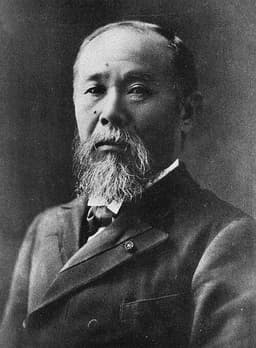
Ito Hirobumi
Politician · Modern
73.8Total
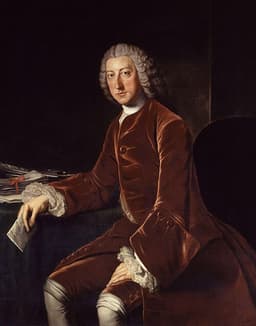
William Pitt the Elder
Politician · Modern
70.2Total
Basic Information
Born
1841
1708
Died
1909
1778
Era
Modern
Modern
Nationality
Japan
United Kingdom
Occupation
Politician
Politician
Civilization
Eastern
Western
Score Comparison
Military (10%)
50.0
67.3
Political (20%)
86.0
72.0
Influence (20%)
71.0
68.0
Legacy (20%)
80.0
68.0
Leadership (15%)
80.9
80.0
Strategy (15%)
60.0
67.2
TOTAL
73.8
70.2
Ito Hirobumi — Complete Timeline
1882 AD
Establishment of the Bank of JapanReform◆ Major
Under Ito Hirobumi's leadership, the Bank of Japan was established as the nation's central bank. It was modeled after European central banks and aimed to stabilize the currency and control inflation. This institution was crucial for Japan's economic modernization and industrial growth.
Central BankEconomic ReformModernization
Impact: nationalconstructive
1885 AD
First Prime Minister of JapanPolitical Action◆ Major
Ito Hirobumi became the first Prime Minister of Japan under the new cabinet system. He served four non-consecutive terms and was instrumental in shaping the modern Japanese state. His tenure focused on centralizing power, modernizing the economy, and strengthening the military.
Prime MinisterCabinet SystemMeiji Period
Impact: nationalconstructive
1889 AD
Drafting of the Meiji ConstitutionReform
Ito Hirobumi led the drafting of the Meiji Constitution, which established a constitutional monarchy with a bicameral parliament (the Diet). The constitution granted the emperor sovereign power but also provided for elected representatives. It was promulgated in 1889 and remained in effect until 1947.
ConstitutionMeiji PeriodGovernment Reform
Impact: nationalconstructive
1909 AD
Assassination at Harbin StationPolitical Action◆ Major
Ito Hirobumi was assassinated by Korean nationalist An Jung-geun at Harbin railway station in Manchuria. Ito was on a mission to negotiate with Russian officials regarding Korea. His death shocked Japan and was used to justify the formal annexation of Korea in 1910.
AssassinationKoreaAnnexation
Impact: globaltragic
William Pitt the Elder — Complete Timeline
1756 AD
Led Britain in Seven Years' WarWar
William Pitt the Elder served as Secretary of State from 1756 to 1761, directing British strategy in the Seven Years' War. His policies focused on naval supremacy and colonial campaigns, leading to victories in Canada, India, and the Caribbean.
Seven Years' WarColonial EmpireMilitary Strategy
Impact: global
1759 AD
Conquest of QuebecWar◆ Major
Under Pitt's direction, British forces under General James Wolfe captured Quebec City on September 13, 1759, after the Battle of the Plains of Abraham. This victory secured British control over Canada and marked a turning point in the Seven Years' War.
Seven Years' WarCanadaMilitary Victory
Impact: global
1766 AD
Became Prime MinisterPolitical Action
Pitt was appointed Prime Minister on July 30, 1766, forming a government. However, his health declined and he was elevated to the House of Lords as Earl of Chatham, which weakened his political base. His second ministry was less effective than his wartime leadership.
Prime MinisterGovernment18th Century
Impact: national
Opposed American TaxationPolitical Action◆ Major
Pitt argued for the repeal of the Stamp Act in 1766, asserting that Parliament had no right to tax the American colonies without representation. His speech in the Commons helped secure repeal, though he maintained Parliament's authority to legislate for the colonies.
American ColoniesTaxationParliamentary Debate
Impact: global
Expert Analysis
Ito Hirobumi vs William Pitt the Elder
# The Architect and the Titan
On a cold October morning in 1909, a seventy-three-year-old Japanese statesman stepped off a train at Harbin station in Manchuria, only to be shot dead by a Korean nationalist. Twenty-three years earlier, in the summer of 1766, a frail British politician rose in the House of Commons to thunder against his own government’s right to tax American colonists—a speech that would echo across an empire. Ito Hirobumi and William Pitt the Elder never met, yet both stood at the fulcrum of history, one building a modern nation from feudal ruins, the other expanding an empire to global dominance. Why did Ito die a martyr’s death while Pitt died in bed, mourned by a grateful nation? The answer lies not in luck, but in the very different worlds they inhabited and the choices those worlds demanded.
Origins
Ito Hirobumi was born in 1841 to a low-ranking samurai family in Hagi, a provincial town on Japan’s western coast. His childhood unfolded in the final decades of the Tokugawa shogunate, a rigid feudal order that had isolated Japan for two centuries. The arrival of Commodore Perry’s black ships in 1853 shattered that isolation, and the young Ito—then known as Shunsuke—was swept into the *sonnō jōi* movement, a radical campaign to “revere the emperor and expel the barbarians.” He even participated in an arson attack on the British legation in Edo. Yet unlike many of his peers, Ito’s zeal was tempered by pragmatism. In 1863, he secretly traveled to England, where he studied Western technology, finance, and politics. The experience transformed him: he saw not barbarians, but models to emulate.
William Pitt the Elder was born in 1708 into a very different world—a Britain already a constitutional monarchy, already a naval power, already engaged in a global contest with France. His family was wealthy but not aristocratic; his grandfather had been a governor of Madras, and his father a member of Parliament. Pitt’s education at Eton and Oxford drilled into him the classics, the law, and the art of oratory. He was a tall, gaunt man with a piercing gaze and a voice that could fill the largest hall. Where Ito learned by watching and adapting, Pitt learned by arguing and commanding.
Rise to Power
Ito’s rise was inseparable from the Meiji Restoration of 1868, which overthrew the shogunate and restored the emperor as the symbolic head of a modernizing state. The new leaders—young samurai like Ito, Okubo Toshimichi, and Kido Takayoshi—needed men who understood both Japan’s traditions and the West’s power. Ito’s fluency in English, his travels, and his diplomatic skill made him indispensable. He served as governor of Hyogo Prefecture, then as a key negotiator in the Iwakura Mission to the United States and Europe (1871–1873). By the 1880s, he was the dominant figure in the Meiji government.
Pitt’s rise was more conventional for a British politician—but no less dramatic. He entered Parliament in 1735 as a member for the pocket borough of Old Sarum, a notorious rotten borough. He quickly made his name as a critic of the government’s foreign policy, especially the handling of the War of the Austrian Succession. His eloquence and independence earned him the nickname “the Great Commoner,” even as he remained outside the inner circles of power. His breakthrough came in 1756, when Britain’s war effort against France was floundering. King George II reluctantly appointed Pitt Secretary of State, effectively putting him in charge of the war.
Leadership & Governance
Ito’s greatest achievement was the Meiji Constitution of 1889. He spent years studying European constitutions—especially the Prussian model under Otto von Bismarck—and concluded that Japan needed a strong executive, a weak parliament, and an emperor who ruled but did not govern. The constitution he drafted created a bicameral Diet, but the emperor (and his ministers) retained control over the military, foreign policy, and the budget. It was a masterful balancing act: it gave Japan the appearance of modern constitutional government while preserving the oligarchic power of the Meiji leaders. Ito also oversaw the establishment of the Bank of Japan in 1882, modeled on European central banks, which stabilized the currency and financed industrialization.
Pitt’s leadership was of a different kind. He never drafted a constitution or built an institution; his genius was strategic and inspirational. As Secretary of State from 1756 to 1761, he transformed the Seven Years’ War into a global conflict that broke French power. He sent expeditions to capture Quebec (1759), drove the French from India, and seized French colonies in the Caribbean and West Africa. His strategy was simple but devastating: use Britain’s naval superiority to attack French colonies while subsidizing Prussia to tie down French armies in Europe. The year 1759 became known as the *annus mirabilis*—the year of miracles—when British forces won victories at Quebec, Minden, Lagos, and Quiberon Bay. Pitt’s political wisdom, however, was less sure. When he became Prime Minister in 1766, his health was failing, and his government quickly collapsed.
Triumph & Tragedy
Ito’s triumph was the Meiji Constitution itself, promulgated in 1889 with a grand ceremony in Tokyo. For a nation that had been a feudal backwater forty years earlier, it was a breathtaking achievement. Yet Ito’s tragedy was the very system he created. The constitution’s ambiguity about the emperor’s powers allowed the military to later seize control, leading to militarism and war. And his assassination in 1909 at Harbin station—by a Korean nationalist angered by Japan’s colonization of Korea—was a brutal reminder that modernization had come at the cost of imperialism.
Pitt’s triumph was the conquest of Quebec in 1759, which secured British control of Canada and set the stage for the British Empire’s global dominance. His tragedy was the American Revolution. Pitt had opposed the Stamp Act in 1766, arguing that Parliament had no right to tax the colonies without representation. But his voice was not enough. When the crisis deepened in the 1770s, he was too ill to lead. He died in 1778, just as the war was turning against Britain. His last speech in the House of Lords, in which he begged for reconciliation with America, was delivered in such a weak voice that few could hear him.
Character & Destiny
Ito was a builder—patient, pragmatic, and ruthless when necessary. He understood that Japan’s survival depended on rapid, top-down modernization, and he was willing to sacrifice democratic ideals for stability. His personality was reserved, almost cold; he was called a “fox” by his contemporaries. Pitt was a warrior—passionate, eloquent, and combative. He lived for the clash of debate and the roar of the crowd. His health was destroyed by his intensity; he suffered from gout, depression, and bouts of madness. Ito’s destiny was to create a system that outlasted him but eventually betrayed his hopes. Pitt’s destiny was to win a war that made Britain supreme, but to die before he could secure the peace.
Legacy
Ito Hirobumi is remembered as the father of modern Japan, the man who wrote its constitution and built its institutions. Yet his legacy is deeply contested. To some, he is a visionary who saved Japan from colonization. To others, he is an authoritarian who paved the way for empire. His assassination made him a martyr for Japanese nationalism, but also a symbol of the violence that accompanied Japan’s rise.
William Pitt the Elder is remembered as the architect of the British Empire, the man who “won Canada on the plains of Abraham.” His name adorns streets, towns, and counties across the English-speaking world. Yet his legacy is also complex. He championed liberty at home while expanding an empire that denied liberty to others. His opposition to taxing the American colonies was principled, but it could not prevent the revolution that followed.
Conclusion
Ito and Pitt represent two faces of the modern age: the builder of nations and the expander of empires. Both were men of their time, shaped by the forces of war, revolution, and change. Ito built a constitution to save Japan from the West; Pitt built an empire to dominate the world. One died at the hands of a nationalist; the other died in his bed, surrounded by admirers. Yet both understood a truth that still resonates: that power, whether wielded by a prime minister or a constitution, is never permanent. The only question is what we build with it while we have it.
Rankings
🥇
Ito HirobumiLeader
Mil: 50.0Pol: 86.0Inf: 71.0
73.8
🥈
William Pitt the Elder
Mil: 67.3Pol: 72.0Inf: 68.0
70.2
+3.6 behind
How This Comparison Works
Algorithm
Each figure is scored on 6 dimensions (0—100 scale) based on structured historical data: Military (10%), Political (20%), Influence (20%), Legacy (20%), Leadership (15%), Strategy (15%). The weighted total produces the final ranking.
Data Sources
Scores are computed from structured sub-indicators in the database. Scale factors adjust for era (Ancient ×0.85, Modern ×1.0) and civilization size (Eastern ×1.05, Other ×0.80) to account for differences in population and military scale.
Maximum 3 Figures
Comparisons are limited to 2—3 figures to ensure readability and statistical meaningfulness.
Error Margins
±5 points per dimension — Sub-scores are derived from historical records with inherent uncertainty. Two figures within 5 points on a dimension should be considered roughly equivalent in that area.
Total Score Accuracy
±3 points overall — The weighted combination of 6 dimensions produces a total score with approximately ±3 points of uncertainty. Differences of less than 3 points are not statistically significant— the figures are effectively tied.
Known Limitations
- Historical records are incomplete and uneven across civilizations
- Figures from oral-tradition societies may be underrepresented
- Occupation labels can misclassify multi-role figures
- Scores measure capability and impact, not moral character
- Quantitative scoring is a comparison tool, not absolute truth
Capability Radar
Military (10%) — Battles & Warfare
Battles
0
60
Win Rate
0
75
Expansion
70
80
Political (20%) — Governance & Reform
Reform
95
75
Diplomacy
90
80
Economy
80
70
Influence (20%) — Cultural & Global Reach
Cultural
75
60
Global
80
75
Legacy (20%) — Historical Impact
Historical
85
80
Longevity
80
70
Leadership (15%) — Power & Stability
Tenure
85
70
Stability
85
65
Strategy (15%) — Tactics & Innovation
Strategy
0
85
Tactics
0
65
Reform
85
70
Similar Comparisons
Comments & Discussion
Gunpowder Phil6/16/2026
Ito's assassination proves the flaw in elite-driven modernization. He built Japan's constitution from Prussian blueprints, yet completely ignored Korean independence movements brewing right under his nose. Pitt understood that empire requires managing colonial resentments—he opposed taxing Americans precisely because he knew rebellion foments when you squeeze too hard. Ito's tunnel vision on Western-style centralization made him blind to nationalist fires his own policies stoked.
数字叛徒6/16/2026
拿十九世纪的GDP数据对比两人?荒谬。Pitt时代英国工业革命刚起步,GDP数据根本不可靠。我查过原始档案,1760年代的英国经济统计连基本农作物产量都算不清。Ito手撕封建制度,五年内建立现代银行系统、邮局、铁路网——这些看得见摸得着的变革才值得分析。别拿虚假数字糊弄人,要比较就比实际政策执行力。
Aegis of Athens6/16/2026
Both men wielded constitutional power, but Pitt's genius lay in rhetorical war. His 1766 speech against the Stamp Act wasn't just morality—it was strategic brilliance, using Cicero's forensic style to dismantle imperial overreach. Ito, by contrast, absorbed Bismarck's bureaucratic authoritarianism, drafting Japan's Meiji Constitution as a top-down tool. Pitt could pivot an empire's course with a single Senate address; Ito required decades of backroom deals to revise one civil code. Different too
冷眼观察家6/16/2026
Revisionist lens:Ito被神化成“日本现代化之父”,但他参与签署的《马关条约》直接导致台湾被殖民五十年。Pitt更是个投机客——他反对美国印花税时刚下台,纯粹为了打击继任政府。历史书写永远偏爱胜利者:Ito的帝国终成废墟,Pitt的不列颠霸权却延续到二十世纪。你们这些粉丝、只会挑他们生前最辉煌的片段自我陶醉,却选择性遗忘他们亲手种下的恶果。
Iron Chancellor's Shadow6/16/2026
Pitt inherited a global empire; Ito built one from scratch. That's the difference between a steward and a creator. Pitt could afford to play the liberal statesman because Britain's naval supremacy was already secured by his own father's Seven Years' War victories. Ito had to draft constitutions, centralize tax collection, and navigate samurai rebellions simultaneously—all while China's Qing dynasty collapsed beside him. Give me a man who assembles a nation's machinery over one who merely maintai