Loading...
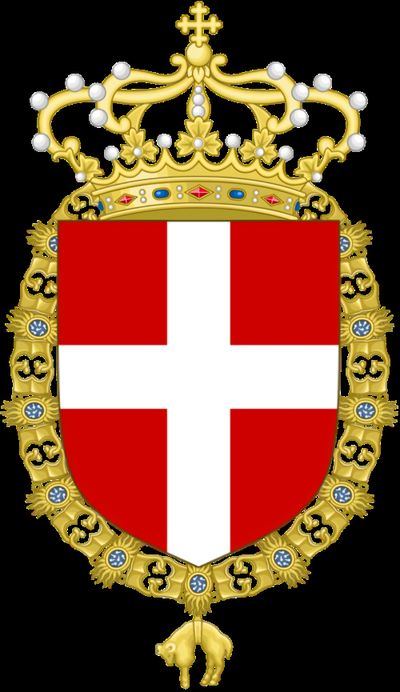
Victor Emmanuel II
ModernEmperorItaly1820 — 1878
First king of a unified Italy.
Compare Victor Emmanuel II with another historical figure:
Quick Facts
Born
1820
Died
1878
Country
Italy
Era
Modern
Occupation
Emperor
Score Overview
Military (10%)48
Political (20%)78
Influence (20%)57
Legacy (20%)52
Leadership (15%)78
Strategy (15%)60
Total Score61.3
Victor Emmanuel II — Complete Timeline
1848 AD
Promulgation of the Statuto AlbertinoReform◆ Major
As King of Sardinia, Victor Emmanuel II retained the Statuto Albertino, a constitution granted by his father. This constitution became the legal foundation of the Kingdom of Italy, establishing a constitutional monarchy with a parliamentary system.
ConstitutionMonarchyReform
Impact: nationalconstructive
1855 AD
Alliance with France in the Crimean WarWar◆ Major
Victor Emmanuel II sent Sardinian troops to fight alongside France and Britain in the Crimean War. This participation elevated Sardinia's diplomatic standing, leading to French support for Italian unification in the subsequent Plombi
Crimean WarDiplomacyItalian Unification
Impact: regionalconstructive
1861 AD
Proclaimed King of ItalyPolitical Action
Victor Emmanuel II was proclaimed King of Italy by the first Italian Parliament in Turin. This event formally unified most of the Italian peninsula under the House of Savoy, with the exception of Venetia and Rome, marking the birth of the Kingdom of Italy.
Italian UnificationRisorgimentoKingship
Impact: nationalconstructive
1866 AD
Annexation of VenetiaWar◆ Major
Following the Austro-Prussian War, Italy, allied with Prussia, annexed Venetia from Austria. Victor Emmanuel II's forces suffered defeats on land but gained the territory through the Treaty of Vienna, completing a key step in unification.
Italian UnificationVenetiaAnnexation
Impact: nationalconstructive
1870 AD
Capture of RomeWar
Italian troops under Victor Emmanuel II breached the Porta Pia in Rome, completing the unification of Italy. The Papal States were annexed, and Rome became the capital of the Kingdom of Italy, ending the temporal power of the Pope.
Italian UnificationRomePapal States
Impact: nationalconstructive
1878 AD
Death and LegacyOther◆ Major
Victor Emmanuel II died in Rome, having unified Italy under his rule. His death marked the end of the founding era of the Kingdom of Italy, and he was buried in the Pantheon, becoming a symbol of Italian unification.
DeathLegacyItalian Unification
Impact: national
Detailed Scores
▶View all detailed scores
Military
Strategy
7
Tactics
6
Battles
6
Army Scale
6
War Impact
7
Political
Governance
8
Reform
8
Stability
8
Policy
8
Power
9
Influence
History
9
Global
8
Culture
8
Ideology
9
Legacy
8
People often compare with
See how Victor Emmanuel II stacks up against other historical figures
Popular Comparisons
Victor Emmanuel II vs Rama I
vs Rama I68
Victor Emmanuel II vs Henri Christophe
vs Henri Christophe59
Victor Emmanuel II vs Juan Carlos I of Spain
vs Juan Carlos I of Spain57
Victor Emmanuel II vs Emperor Pedro I of Brazil
vs Emperor Pedro I of Brazil56
Victor Emmanuel II vs Wilhelmina of the Netherlands
vs Wilhelmina of the Netherlands54
Victor Emmanuel II vs Mahmud I
vs Mahmud I53