Loading...
This comparison has not been analyzed yet.
One-time AI generation (~1 minute). Scores and timeline are already available below.
Mahmud I vs Victor Emmanuel II
Victor Emmanuel II leads by 8.2 pts · 2 figures compared
…

Mahmud I
Emperor · Modern
53.1Total
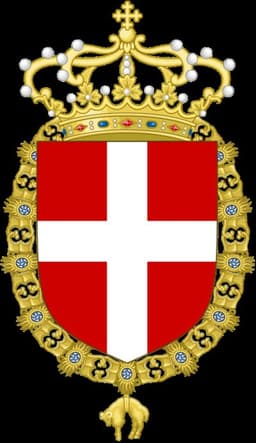
Victor Emmanuel II
Emperor · Modern
61.3Total
Basic Information
Born
1696
1820
Died
1754
1878
Era
Modern
Modern
Nationality
Ottoman Empire
Italy
Occupation
Emperor
Emperor
Civilization
Middle Eastern
Western
Score Comparison
Military (10%)
50.0
47.5
Political (20%)
68.0
78.0
Influence (20%)
51.8
56.7
Legacy (20%)
42.5
52.0
Leadership (15%)
72.0
78.0
Strategy (15%)
35.7
60.0
TOTAL
53.1
61.3
Mahmud I — Complete Timeline
1731 AD
Suppressed the Patrona Halil RevoltPolitical Action◆ Major
Mahmud I ordered the execution of Patrona Halil and his followers, ending the revolt that had overthrown Ahmed III. He restored order by executing the rebel leaders and placating the Janissaries, stabilizing the empire after the Tulip Era crisis.
Revolt SuppressionPatrona HalilStabilization
Impact: nationalconstructive
1737 AD
War with Russia and the Siege of OchakovWar
Mahmud I's empire fought a war with Russia and Austria. The Ottoman army successfully defended Ochakov against Russian attacks in 1737, but the war ended with the Treaty of Ni
Russo-Turkish WarOchakovTreaty of Niš
Impact: regional
1739 AD
Treaty of BelgradePolitical Action◆ Major
Mahmud I signed the Treaty of Belgrade with the Habsburgs, ending the Austro-Russian-Turkish War (1735-1739). The treaty returned Belgrade and northern Serbia to the Ottomans, a rare territorial gain in the 18th century.
Peace TreatyBelgradeHabsburgs
Impact: regionalconstructive
1740 AD
Reform of the Janissary CorpsReform
Mahmud I attempted to reform the Janissary corps by introducing new training and equipment, including modern firearms. However, the reforms were limited due to Janissary resistance, and the corps remained a conservative force.
Military ReformJanissariesModernization
Impact: nationalprogressive
Peaceful Reign and Economic RecoveryOther
After the Treaty of Belgrade, Mahmud I's reign entered a period of peace. He focused on rebuilding the economy and infrastructure, repairing mosques and fortifications. This stability allowed the empire to recover from the Tulip Era's excesses.
PeaceEconomic RecoveryInfrastructure
Impact: nationalconstructive
Victor Emmanuel II — Complete Timeline
1848 AD
Promulgation of the Statuto AlbertinoReform◆ Major
As King of Sardinia, Victor Emmanuel II retained the Statuto Albertino, a constitution granted by his father. This constitution became the legal foundation of the Kingdom of Italy, establishing a constitutional monarchy with a parliamentary system.
ConstitutionMonarchyReform
Impact: nationalconstructive
1855 AD
Alliance with France in the Crimean WarWar◆ Major
Victor Emmanuel II sent Sardinian troops to fight alongside France and Britain in the Crimean War. This participation elevated Sardinia's diplomatic standing, leading to French support for Italian unification in the subsequent Plombi
Crimean WarDiplomacyItalian Unification
Impact: regionalconstructive
1861 AD
Proclaimed King of ItalyPolitical Action
Victor Emmanuel II was proclaimed King of Italy by the first Italian Parliament in Turin. This event formally unified most of the Italian peninsula under the House of Savoy, with the exception of Venetia and Rome, marking the birth of the Kingdom of Italy.
Italian UnificationRisorgimentoKingship
Impact: nationalconstructive
1866 AD
Annexation of VenetiaWar◆ Major
Following the Austro-Prussian War, Italy, allied with Prussia, annexed Venetia from Austria. Victor Emmanuel II's forces suffered defeats on land but gained the territory through the Treaty of Vienna, completing a key step in unification.
Italian UnificationVenetiaAnnexation
Impact: nationalconstructive
1870 AD
Capture of RomeWar
Italian troops under Victor Emmanuel II breached the Porta Pia in Rome, completing the unification of Italy. The Papal States were annexed, and Rome became the capital of the Kingdom of Italy, ending the temporal power of the Pope.
Italian UnificationRomePapal States
Impact: nationalconstructive
1878 AD
Death and LegacyOther◆ Major
Victor Emmanuel II died in Rome, having unified Italy under his rule. His death marked the end of the founding era of the Kingdom of Italy, and he was buried in the Pantheon, becoming a symbol of Italian unification.
DeathLegacyItalian Unification
Impact: national
This comparison has not been analyzed yet.
One-time AI generation (~1 minute). Scores and timeline are already available below.
Rankings
🥇
Victor Emmanuel IILeader
Mil: 47.5Pol: 78.0Inf: 56.7
61.3
🥈
Mahmud I
Mil: 50.0Pol: 68.0Inf: 51.8
53.1
+8.2 behind
How This Comparison Works
Algorithm
Each figure is scored on 6 dimensions (0—100 scale) based on structured historical data: Military (10%), Political (20%), Influence (20%), Legacy (20%), Leadership (15%), Strategy (15%). The weighted total produces the final ranking.
Data Sources
Scores are computed from structured sub-indicators in the database. Scale factors adjust for era (Ancient ×0.85, Modern ×1.0) and civilization size (Eastern ×1.05, Other ×0.80) to account for differences in population and military scale.
Maximum 3 Figures
Comparisons are limited to 2—3 figures to ensure readability and statistical meaningfulness.
Error Margins
±5 points per dimension — Sub-scores are derived from historical records with inherent uncertainty. Two figures within 5 points on a dimension should be considered roughly equivalent in that area.
Total Score Accuracy
±3 points overall — The weighted combination of 6 dimensions produces a total score with approximately ±3 points of uncertainty. Differences of less than 3 points are not statistically significant— the figures are effectively tied.
Known Limitations
- Historical records are incomplete and uneven across civilizations
- Figures from oral-tradition societies may be underrepresented
- Occupation labels can misclassify multi-role figures
- Scores measure capability and impact, not moral character
- Quantitative scoring is a comparison tool, not absolute truth
Capability Radar
Military (10%) — Battles & Warfare
Battles
20
45
Win Rate
25
55
Expansion
10
65
Political (20%) — Governance & Reform
Reform
40
75
Diplomacy
55
80
Economy
45
60
Influence (20%) — Cultural & Global Reach
Cultural
30
65
Global
20
60
Legacy (20%) — Historical Impact
Historical
35
70
Longevity
30
65
Leadership (15%) — Power & Stability
Tenure
60
70
Stability
65
55
Strategy (15%) — Tactics & Innovation
Strategy
25
60
Tactics
20
40
Reform
15
50
Similar Comparisons
Comments & Discussion
No comments yet. Be the first to share your thoughts!