Loading...
Victor Emmanuel II vs Wilhelmina of the Netherlands
Victor Emmanuel II leads by 7.2 pts · 2 figures compared
…
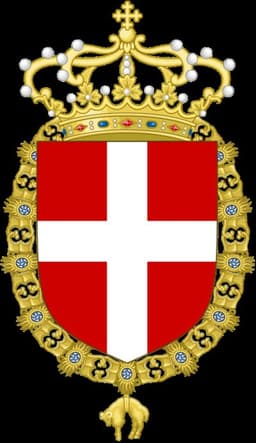
Victor Emmanuel II
Emperor · Modern
61.3Total

Wilhelmina of the Netherlands
Emperor · Modern
54.1Total
Basic Information
Born
1820
1880
Died
1878
1962
Era
Modern
Modern
Nationality
Italy
Netherlands
Occupation
Emperor
Emperor
Civilization
Western
Western
Score Comparison
Military (10%)
47.5
17.8
Political (20%)
78.0
68.0
Influence (20%)
56.7
56.4
Legacy (20%)
52.0
47.5
Leadership (15%)
78.0
68.4
Strategy (15%)
60.0
58.6
TOTAL
61.3
54.1
Victor Emmanuel II — Complete Timeline
1848 AD
Promulgation of the Statuto AlbertinoReform◆ Major
As King of Sardinia, Victor Emmanuel II retained the Statuto Albertino, a constitution granted by his father. This constitution became the legal foundation of the Kingdom of Italy, establishing a constitutional monarchy with a parliamentary system.
ConstitutionMonarchyReform
Impact: nationalconstructive
1855 AD
Alliance with France in the Crimean WarWar◆ Major
Victor Emmanuel II sent Sardinian troops to fight alongside France and Britain in the Crimean War. This participation elevated Sardinia's diplomatic standing, leading to French support for Italian unification in the subsequent Plombi
Crimean WarDiplomacyItalian Unification
Impact: regionalconstructive
1861 AD
Proclaimed King of ItalyPolitical Action
Victor Emmanuel II was proclaimed King of Italy by the first Italian Parliament in Turin. This event formally unified most of the Italian peninsula under the House of Savoy, with the exception of Venetia and Rome, marking the birth of the Kingdom of Italy.
Italian UnificationRisorgimentoKingship
Impact: nationalconstructive
1866 AD
Annexation of VenetiaWar◆ Major
Following the Austro-Prussian War, Italy, allied with Prussia, annexed Venetia from Austria. Victor Emmanuel II's forces suffered defeats on land but gained the territory through the Treaty of Vienna, completing a key step in unification.
Italian UnificationVenetiaAnnexation
Impact: nationalconstructive
1870 AD
Capture of RomeWar
Italian troops under Victor Emmanuel II breached the Porta Pia in Rome, completing the unification of Italy. The Papal States were annexed, and Rome became the capital of the Kingdom of Italy, ending the temporal power of the Pope.
Italian UnificationRomePapal States
Impact: nationalconstructive
1878 AD
Death and LegacyOther◆ Major
Victor Emmanuel II died in Rome, having unified Italy under his rule. His death marked the end of the founding era of the Kingdom of Italy, and he was buried in the Pantheon, becoming a symbol of Italian unification.
DeathLegacyItalian Unification
Impact: national
Wilhelmina of the Netherlands — Complete Timeline
1890 AD
Accession as Queen WilhelminaPolitical Action◆ Major
Wilhelmina became queen of the Netherlands at age 10 after her father William III's death. Her mother Emma served as regent until 1898, when Wilhelmina was inaugurated at age 18.
AccessionMonarchyRegency
Impact: national
1914 AD
Dutch Neutrality in World War IWar◆ Major
Wilhelmina maintained Dutch neutrality throughout World War I, despite pressure from both Allied and Central Powers. The Netherlands remained neutral but faced economic hardship and refugee crises.
World War INeutralityDiplomacy
Impact: regional
1940 AD
German Invasion of the Netherlands (1940)War
Germany invaded the Netherlands on May 10, 1940. Wilhelmina fled to London with her government, establishing a government-in-exile. The Dutch army surrendered after five days, but the queen continued the fight from abroad.
World War IIInvasionExile
Impact: globaltragic
Leadership of the Government-in-ExilePolitical Action◆ Major
From London, Wilhelmina led the Dutch government-in-exile, broadcasting radio messages to occupied Netherlands. She became a symbol of resistance, maintaining Dutch sovereignty and coordinating with Allied forces.
World War IIExileResistance
Impact: nationalconstructive
1945 AD
Return to the Netherlands and ReconstructionPolitical Action◆ Major
Wilhelmina returned to the Netherlands in May 1945 after liberation. She oversaw post-war reconstruction, including the restoration of infrastructure, the economy, and the political system.
World War IIReconstructionReturn
Impact: nationalconstructive
1948 AD
Abdication in Favor of JulianaPolitical Action◆ Major
Wilhelmina abdicated the throne on September 4, 1948, after 58 years of reign. She cited health reasons and a desire to pass responsibility to her daughter Juliana, marking the first Dutch abdication in centuries.
AbdicationSuccessionMonarchy
Impact: national
Expert Analysis
Origins
Victor Emmanuel II (1820-1878) was born into the House of Savoy, ruling over Sardinia-Piedmont. His father, Charles Albert, granted the Statuto Albertino constitution in 1848, which Victor Emmanuel retained. He received military training but was more inclined toward constitutional monarchy. Wilhelmina (1880-1962) became queen at age 10 after her father William III's death; her mother Emma served as regent until 1898. Wilhelmina was educated privately, with a strong sense of duty and independence shaped by her early assumption of monarchy.
Rise to Power
Victor Emmanuel ascended the Sardinian throne in 1849 after his father's abdication following defeat by Austria. He maintained the Statuto Albertino, positioning Sardinia as a liberal state. Key turning point: allying with France and Britain in the Crimean War (1854-1856), which elevated Sardinia's diplomatic status. He then supported Cavour's unification efforts, leading to the proclamation of the Kingdom of Italy in 1861. Wilhelmina became queen in 1890 but was inaugurated in 1898 at age 18. She maintained Dutch neutrality in World War I (1914-1918), a major test of her political acumen. Her real rise came during World War II, when she fled to London after the German invasion in 1940, becoming the symbol of Dutch resistance.
Leadership & Governance
Victor Emmanuel II scored 78.0 in political leadership. He was a constitutional monarch but often intervened in political decisions. He supported Cavour's policies but also hindered them at times, such as his reluctance to cede Nice and Savoy to France. He was more a figurehead than a strategist, scoring 60.0 in strategy. Wilhelmina scored 68.4 in leadership. She was more hands-on, especially during WWII. She broadcast radio messages to occupied Netherlands, maintaining morale. She also insisted on a more democratic post-war order, leading to constitutional reforms. However, she was criticized for her authoritarian tendencies before the war, such as her influence on government appointments.
Triumph & Tragedy
Victor Emmanuel's greatest triumph was the unification of Italy, completed with the Capture of Rome in 1870. He annexed Venetia in 1866 despite military setbacks. His greatest failure was his inability to integrate the Papal States smoothly, leading to the Roman Question, a rift with the Catholic Church that lasted decades. Wilhelmina's triumph was leading the Dutch government-in-exile and returning in 1945 to oversee reconstruction. Her failure was her aloofness and the controversy over the so-called 'Royal Question' after the war, which questioned her role in the 1940 surrender and led to her abdication in 1948.
Character & Destiny
Victor Emmanuel was pragmatic, sometimes indecisive, and focused on expanding Savoy power. His character allowed him to work with Cavour but also caused friction. His death in 1878 left a unified but fragile state. Wilhelmina was strong-willed, stubborn, and deeply religious. Her character made her a resilient wartime leader but also contributed to post-war conflicts with her government. She abdicated in 1948, giving way to her daughter Juliana.
Legacy
Victor Emmanuel's legacy is the unification of Italy, though his role is often overshadowed by Cavour and Garibaldi. His political score of 78.0 reflects his importance as a symbol of unity. The Statuto Albertino remained the basis of Italian law until 1948. Wilhelmina's legacy is her wartime leadership; she is remembered as 'the mother of the resistance.' Her influence score of 56.4 reflects her symbolic role. She also pushed for colonial reforms in the Dutch East Indies, but decolonization occurred after her reign.
Conclusion
Victor Emmanuel II had greater impact, with a total score of 61.3 vs Wilhelmina's 54.1. His role in Italian unification fundamentally reshaped Europe, while Wilhelmina's impact was more confined to Dutch wartime morale and post-war reconstruction. Despite his lower military score (47.5), his political and leadership scores (78.0 each) drove nation-building. Wilhelmina's leadership (68.4) was significant but in a narrower context. Therefore, Victor Emmanuel II's legacy is more transformative.
Rankings
🥇
Victor Emmanuel IILeader
Mil: 47.5Pol: 78.0Inf: 56.7
61.3
🥈
Wilhelmina of the Netherlands
Mil: 17.8Pol: 68.0Inf: 56.4
54.1
+7.2 behind
How This Comparison Works
Algorithm
Each figure is scored on 6 dimensions (0—100 scale) based on structured historical data: Military (10%), Political (20%), Influence (20%), Legacy (20%), Leadership (15%), Strategy (15%). The weighted total produces the final ranking.
Data Sources
Scores are computed from structured sub-indicators in the database. Scale factors adjust for era (Ancient ×0.85, Modern ×1.0) and civilization size (Eastern ×1.05, Other ×0.80) to account for differences in population and military scale.
Maximum 3 Figures
Comparisons are limited to 2—3 figures to ensure readability and statistical meaningfulness.
Error Margins
±5 points per dimension — Sub-scores are derived from historical records with inherent uncertainty. Two figures within 5 points on a dimension should be considered roughly equivalent in that area.
Total Score Accuracy
±3 points overall — The weighted combination of 6 dimensions produces a total score with approximately ±3 points of uncertainty. Differences of less than 3 points are not statistically significant— the figures are effectively tied.
Known Limitations
- Historical records are incomplete and uneven across civilizations
- Figures from oral-tradition societies may be underrepresented
- Occupation labels can misclassify multi-role figures
- Scores measure capability and impact, not moral character
- Quantitative scoring is a comparison tool, not absolute truth
Capability Radar
Military (10%) — Battles & Warfare
Battles
45
34
Win Rate
55
40
Expansion
65
44
Political (20%) — Governance & Reform
Reform
75
40
Diplomacy
80
65
Economy
60
45
Influence (20%) — Cultural & Global Reach
Cultural
65
30
Global
60
50
Legacy (20%) — Historical Impact
Historical
70
55
Longevity
65
40
Leadership (15%) — Power & Stability
Tenure
70
58
Stability
55
55
Strategy (15%) — Tactics & Innovation
Strategy
60
47
Tactics
40
46
Reform
50
50
Similar Comparisons
Comments & Discussion
No comments yet. Be the first to share your thoughts!