Loading...
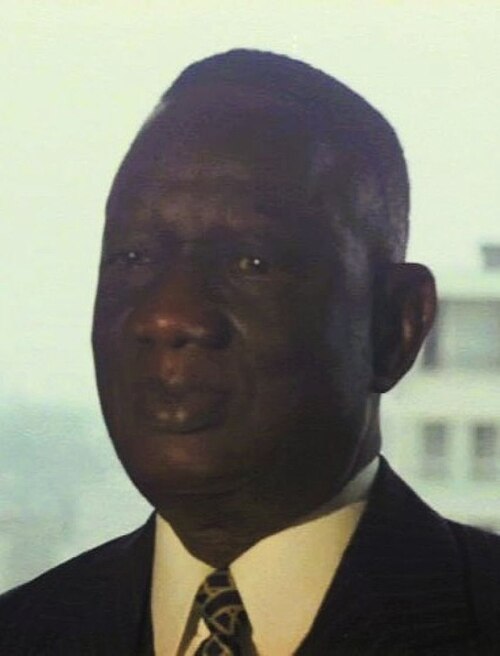
Siaka Stevens
ModernPoliticianSierra Leone1905 — 1988
Long-serving president of Sierra Leone.
Compare Siaka Stevens with another historical figure:
Quick Facts
Born
1905
Died
1988
Country
Sierra Leone
Era
Modern
Occupation
Politician
Score Overview
Military (10%)50
Political (20%)47
Influence (20%)52
Legacy (20%)43
Leadership (15%)65
Strategy (15%)40
Total Score49.5
Siaka Stevens — Complete Timeline
1967 AD
Became Prime Minister of Sierra LeonePolitical Action◆ Major
Siaka Stevens was appointed Prime Minister after his All People's Congress party won the 1967 general election. However, he was overthrown in a military coup within hours of taking office, forcing him into exile in Guinea.
ElectionCoupExile
Impact: national
1968 AD
Returned to Power and Became PresidentPolitical Action◆ Major
After a counter-coup, Stevens returned from exile and assumed the presidency. He consolidated power by declaring a one-party state in 1978, banning opposition parties, and centralizing control over the government and economy.
One-Party StateAuthoritarianismPresidency
Impact: nationaldestructive
1971 AD
Survived Multiple Coup AttemptsPolitical Action
Stevens faced several coup attempts, including a 1971 plot led by Brigadier John Bangura. He responded by purging the military, executing plotters, and relying on a paramilitary force and loyal army units to maintain his rule.
Coup AttemptRepressionMilitary
Impact: nationaldestructive
1980 AD
Implemented Economic DeclineReform◆ Major
Under Stevens' rule, Sierra Leone's economy deteriorated due to corruption, mismanagement, and declining diamond revenues. He nationalized industries and expanded the public sector, but living standards fell, and the country became heavily indebted.
Economic DeclineCorruptionMismanagement
Impact: nationaldestructive
1985 AD
Retired from PresidencyPolitical Action◆ Major
Stevens voluntarily stepped down as president, handing power to his chosen successor, Joseph Momoh. His retirement was rare in African politics at the time, but he left behind a weakened state and a legacy of authoritarian rule.
RetirementSuccessionLegacy
Impact: national
Detailed Scores
▶View all detailed scores
Military
Strategy
6
Tactics
5
Battles
6
Army Scale
5
War Impact
6
Political
Governance
7
Reform
7
Stability
7
Policy
7
Power
8
Influence
History
9
Global
8
Culture
8
Ideology
9
Legacy
8
People often compare with
See how Siaka Stevens stacks up against other historical figures
Popular Comparisons
Siaka Stevens vs Jordi Pujol
vs Jordi Pujol58
Siaka Stevens vs Janos Kadar
vs Janos Kadar57
Siaka Stevens vs Yan Xishan
vs Yan Xishan56
Siaka Stevens vs Henry Bennet
vs Henry Bennet55
Siaka Stevens vs Leopoldo Calvo-Sotelo
vs Leopoldo Calvo-Sotelo54
Siaka Stevens vs Mingju
vs Mingju53