Loading...
Jordi Pujol vs Siaka Stevens
Jordi Pujol leads by 8.5 pts · 2 figures compared
…

Jordi Pujol
Politician · Modern
58.0Total
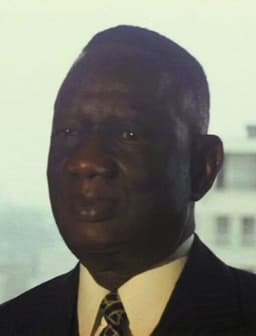
Siaka Stevens
Politician · Modern
49.5Total
Basic Information
Born
1930
1905
Died
—
1988
Era
Modern
Modern
Nationality
Spain
Sierra Leone
Occupation
Politician
Politician
Civilization
Western
Other
Score Comparison
Military (10%)
47.4
50.0
Political (20%)
60.0
46.6
Influence (20%)
60.0
51.8
Legacy (20%)
54.0
43.3
Leadership (15%)
78.0
65.0
Strategy (15%)
40.7
39.5
TOTAL
58.0
49.5
Jordi Pujol — Complete Timeline
1960 AD
Imprisoned by the Franco regimePolitical Action
Pujol was arrested and imprisoned for his involvement in Catalan nationalist activities, including organizing a protest during a Francoist event. He served several months in prison.
Francoist RepressionCatalan NationalismImprisonment
Impact: regionaltragic
1974 AD
Founded Convergència Democràtica de Catalunya (CDC)Political Action
Pujol founded the CDC, a Catalan nationalist party. It became the dominant political force in Catalonia for decades, advocating for greater autonomy and cultural recognition.
Catalan NationalismCDCParty Foundation
Impact: regionalconstructive
1979 AD
Led the campaign for the Statute of Autonomy of CataloniaPolitical Action◆ Major
Pujol was a key figure in negotiating and campaigning for the 1979 Statute of Autonomy, which granted Catalonia significant self-government powers. The statute was approved by referendum.
Catalan AutonomyStatuteNegotiation
Impact: regionalconstructive
1980 AD
Elected President of the Generalitat de CatalunyaPolitical Action
Pujol was elected President of the Generalitat de Catalunya, the regional government, after the first democratic elections since the Franco era. He served for 23 consecutive years, until 2003.
Catalan GovernmentAutonomyDemocracy
Impact: regionalconstructive
Siaka Stevens — Complete Timeline
1967 AD
Became Prime Minister of Sierra LeonePolitical Action◆ Major
Siaka Stevens was appointed Prime Minister after his All People's Congress party won the 1967 general election. However, he was overthrown in a military coup within hours of taking office, forcing him into exile in Guinea.
ElectionCoupExile
Impact: national
1968 AD
Returned to Power and Became PresidentPolitical Action◆ Major
After a counter-coup, Stevens returned from exile and assumed the presidency. He consolidated power by declaring a one-party state in 1978, banning opposition parties, and centralizing control over the government and economy.
One-Party StateAuthoritarianismPresidency
Impact: nationaldestructive
1971 AD
Survived Multiple Coup AttemptsPolitical Action
Stevens faced several coup attempts, including a 1971 plot led by Brigadier John Bangura. He responded by purging the military, executing plotters, and relying on a paramilitary force and loyal army units to maintain his rule.
Coup AttemptRepressionMilitary
Impact: nationaldestructive
1980 AD
Implemented Economic DeclineReform◆ Major
Under Stevens' rule, Sierra Leone's economy deteriorated due to corruption, mismanagement, and declining diamond revenues. He nationalized industries and expanded the public sector, but living standards fell, and the country became heavily indebted.
Economic DeclineCorruptionMismanagement
Impact: nationaldestructive
1985 AD
Retired from PresidencyPolitical Action◆ Major
Stevens voluntarily stepped down as president, handing power to his chosen successor, Joseph Momoh. His retirement was rare in African politics at the time, but he left behind a weakened state and a legacy of authoritarian rule.
RetirementSuccessionLegacy
Impact: national
Expert Analysis
Origins
Jordi Pujol i Soley was born on June 9, 1930, in Barcelona, Spain, into a middle-class Catalan nationalist family. His father, Florenci Pujol, was a lawyer and activist. Pujol studied medicine at the University of Barcelona but was drawn to politics. His formative years were marked by the Franco dictatorship's suppression of Catalan identity. He became involved in clandestine cultural and political activities, founding the magazine *Cavall Fort* and later the *Convergència Democràtica de Catalunya* (CDC) in 1974.
Siaka Probyn Stevens was born on August 24, 1905, in Moyamba, Sierra Leone, to a Limba family. He received a Western education at the Albert Academy and later worked as a railway policeman and trade unionist. Stevens rose through the labor movement, leading a major strike in 1950. He entered politics in the 1950s, co-founding the All People's Congress (APC) in 1960, advocating for independence and workers' rights.
Rise to Power
Pujol's rise was gradual. After Franco's death in 1975, Spain transitioned to democracy. Pujol's CDC, part of the *Convergència i Unió* (CiU) coalition, won the first Catalan parliamentary elections in 1980. He became President of the Generalitat de Catalunya on April 24, 1980, a position he held for 23 years until 2003. Key allies included President Adolfo Suárez, who supported autonomy, and opponents ranged from Spanish centralists to leftist parties.
Stevens' path was more turbulent. After the APC won the 1967 general election, Stevens was sworn in as Prime Minister on March 21, 1967, but was overthrown in a military coup hours later. He returned to power after a counter-coup in 1968. In 1971, he declared Sierra Leone a republic and became president. He survived several coup attempts, including a 1971 plot by Brigadier John Bangura. By 1978, Stevens declared a one-party state, banning opposition.
Leadership & Governance
Pujol's leadership style was pragmatic and consensus-oriented. He focused on building Catalan institutions, including the autonomous police force (Mossos d'Esquadra) and a public broadcasting network. His governance score of 78.0 reflects his ability to manage coalitions and negotiate with Madrid. He gradually increased Catalonia's self-rule, securing fiscal transfers and cultural recognition. However, critics note his tolerance of corruption within CiU.
Stevens ruled as a strongman, centralizing power through patronage and coercion. He established a one-party state in 1978, with a leadership score of 65.0. His economic policies were disastrous: nationalization, mismanagement of diamond revenues, and corruption led to economic decline. He dismantled democratic institutions, purged the military, and used a private security force. His rule scored 46.6 in political acumen, lower than Pujol's 60.0.
Triumph & Tragedy
Pujol's greatest success was the consolidation of Catalan autonomy, symbolized by the 1979 Statute of Autonomy and later reforms. He also presided over economic modernization and cultural revival. His tragedy was the gradual erosion of public trust due to corruption scandals, such as the *Palau de la Música* case, which tarnished his legacy after retirement.
Stevens' triumph was his political survival and peaceful retirement in 1985, a rarity in African politics. He handed power to Joseph Momoh. However, his tragedy was the destruction of Sierra Leone's economy and institutions. By 1985, the country was one of the poorest in the world, with crumbling infrastructure and high debt. His legacy includes sowing seeds for the civil war that erupted in 1991.
Character & Destiny
Pujol was disciplined, strategic, and patient. He scored 40.7 in strategy, reflecting his long-term vision for Catalan autonomy. He was a master of incrementalism, avoiding direct confrontation with Madrid. His character shaped his destiny: his cautious approach preserved gains but limited radical change.
Stevens was cunning, ruthless, and opportunistic. With a strategy score of 39.5, he focused on short-term power consolidation. His paranoia led to purges and a cult of personality. His character ensured his survival but doomed his country.
Legacy
Pujol's legacy is mixed. He is credited with restoring Catalan identity and institutions, but his later years were marred by corruption. His influence score of 60.0 reflects his role in shaping modern Catalonia. The autonomy model he built influenced other Spanish regions and inspired Catalan independence movements.
Stevens left a negative legacy. His rule is associated with economic collapse, corruption, and authoritarianism. His legacy score of 43.3 is low. Sierra Leone's post-war recovery has been slow, and Stevens is often blamed for the country's instability.
Conclusion
Jordi Pujol had a greater impact. His leadership score of 78.0 vs. Stevens' 65.0, and political score of 60.0 vs. 46.6, reflect his more effective governance. While both left flawed legacies, Pujol built durable institutions that empowered Catalonia, whereas Stevens dismantled them. Pujol's total score of 58.0 surpasses Stevens' 49.5, and his positive contributions to regional autonomy outweigh Stevens' destructive rule. The data supports Pujol as the more significant figure.
Rankings
🥇
Jordi PujolLeader
Mil: 47.4Pol: 60.0Inf: 60.0
58.0
🥈
Siaka Stevens
Mil: 50.0Pol: 46.6Inf: 51.8
49.5
+8.5 behind
How This Comparison Works
Algorithm
Each figure is scored on 6 dimensions (0—100 scale) based on structured historical data: Military (10%), Political (20%), Influence (20%), Legacy (20%), Leadership (15%), Strategy (15%). The weighted total produces the final ranking.
Data Sources
Scores are computed from structured sub-indicators in the database. Scale factors adjust for era (Ancient ×0.85, Modern ×1.0) and civilization size (Eastern ×1.05, Other ×0.80) to account for differences in population and military scale.
Maximum 3 Figures
Comparisons are limited to 2—3 figures to ensure readability and statistical meaningfulness.
Error Margins
±5 points per dimension — Sub-scores are derived from historical records with inherent uncertainty. Two figures within 5 points on a dimension should be considered roughly equivalent in that area.
Total Score Accuracy
±3 points overall — The weighted combination of 6 dimensions produces a total score with approximately ±3 points of uncertainty. Differences of less than 3 points are not statistically significant— the figures are effectively tied.
Known Limitations
- Historical records are incomplete and uneven across civilizations
- Figures from oral-tradition societies may be underrepresented
- Occupation labels can misclassify multi-role figures
- Scores measure capability and impact, not moral character
- Quantitative scoring is a comparison tool, not absolute truth
Capability Radar
Military (10%) — Battles & Warfare
Battles
30
22
Win Rate
33
27
Expansion
37
27
Political (20%) — Governance & Reform
Reform
60
40
Diplomacy
70
45
Economy
65
30
Influence (20%) — Cultural & Global Reach
Cultural
55
30
Global
45
20
Legacy (20%) — Historical Impact
Historical
60
35
Longevity
55
25
Leadership (15%) — Power & Stability
Tenure
85
60
Stability
75
20
Strategy (15%) — Tactics & Innovation
Strategy
35
33
Tactics
40
36
Reform
42
35
Similar Comparisons
Comments & Discussion
No comments yet. Be the first to share your thoughts!