Loading...
Mingju vs Siaka Stevens
Mingju leads by 3.1 pts · 2 figures compared
…
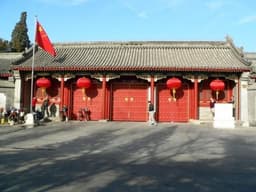
Mingju
Politician · Modern
52.6Total
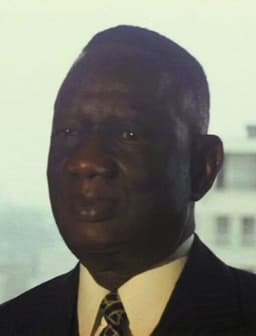
Siaka Stevens
Politician · Modern
49.5Total
Basic Information
Born
1635
1905
Died
1708
1988
Era
Modern
Modern
Nationality
China
Sierra Leone
Occupation
Politician
Politician
Civilization
Eastern
Other
Score Comparison
Military (10%)
14.5
50.0
Political (20%)
68.0
46.6
Influence (20%)
51.8
51.8
Legacy (20%)
45.0
43.3
Leadership (15%)
72.0
65.0
Strategy (15%)
59.5
39.5
TOTAL
52.6
49.5
Mingju — Complete Timeline
1677 AD
Appointed Grand SecretaryPolitical Action◆ Major
Mingju was appointed Grand Secretary of the Qing Empire, serving under the Kangxi Emperor. He became a key figure in the central government, overseeing administrative reforms and military logistics during the early Qing period.
AppointmentGovernmentKangxi Era
Impact: national
1681 AD
Led Suppression of the Revolt of the Three FeudatoriesWar◆ Major
Mingju played a key role in planning and coordinating the Qing military campaign to suppress the Revolt of the Three Feudatories, a rebellion by southern warlords. The campaign succeeded in 1681, consolidating Qing control over southern China.
RebellionMilitary CampaignQing Consolidation
Impact: national
1688 AD
Dismissed from OfficePolitical Action◆ Major
Mingju was dismissed from his position as Grand Secretary following accusations of corruption and factionalism. His removal was part of the Kangxi Emperor's efforts to curb the power of influential officials and reduce bureaucratic corruption.
PurgeCorruptionDownfall
Impact: nationaldestructive
Siaka Stevens — Complete Timeline
1967 AD
Became Prime Minister of Sierra LeonePolitical Action◆ Major
Siaka Stevens was appointed Prime Minister after his All People's Congress party won the 1967 general election. However, he was overthrown in a military coup within hours of taking office, forcing him into exile in Guinea.
ElectionCoupExile
Impact: national
1968 AD
Returned to Power and Became PresidentPolitical Action◆ Major
After a counter-coup, Stevens returned from exile and assumed the presidency. He consolidated power by declaring a one-party state in 1978, banning opposition parties, and centralizing control over the government and economy.
One-Party StateAuthoritarianismPresidency
Impact: nationaldestructive
1971 AD
Survived Multiple Coup AttemptsPolitical Action
Stevens faced several coup attempts, including a 1971 plot led by Brigadier John Bangura. He responded by purging the military, executing plotters, and relying on a paramilitary force and loyal army units to maintain his rule.
Coup AttemptRepressionMilitary
Impact: nationaldestructive
1980 AD
Implemented Economic DeclineReform◆ Major
Under Stevens' rule, Sierra Leone's economy deteriorated due to corruption, mismanagement, and declining diamond revenues. He nationalized industries and expanded the public sector, but living standards fell, and the country became heavily indebted.
Economic DeclineCorruptionMismanagement
Impact: nationaldestructive
1985 AD
Retired from PresidencyPolitical Action◆ Major
Stevens voluntarily stepped down as president, handing power to his chosen successor, Joseph Momoh. His retirement was rare in African politics at the time, but he left behind a weakened state and a legacy of authoritarian rule.
RetirementSuccessionLegacy
Impact: national
Expert Analysis
Origins
Mingju (1635–1708) was born into the Manchu elite of the Qing dynasty. His father was a high-ranking official, and Mingju received a Confucian education, passing the imperial examinations to enter the bureaucracy. He rose through the ranks due to his administrative skills and patronage.
Siaka Stevens (1905–1988) was born in Moyamba, Sierra Leone, then a British colony. He worked as a railway policeman and trade unionist, later studying law in the UK. His early career was shaped by labor activism and anti-colonial politics, joining the Sierra Leone People's Party (SLPP) before founding the All People's Congress (APC) in 1960.
Rise to Power
Mingju's rise accelerated under the Kangxi Emperor. He was appointed to the Grand Secretariat in 1673, becoming a Grand Secretary in 1677. His key turning point was the Revolt of the Three Feudatories (1673–1681), where he advocated for military suppression and helped coordinate logistics, earning the emperor's trust.
Stevens became Prime Minister after the 1967 elections, but was overthrown in a coup within days. After a counter-coup in 1968, he returned and consolidated power, becoming President in 1971. He declared a one-party state in 1978, eliminating political opposition.
Leadership & Governance
Mingju's leadership was characterized by bureaucratic efficiency and factional politics. He oversaw tax reforms and infrastructure projects, but his factionalism led to corruption. The Kangxi Emperor valued his competence but eventually dismissed him for corruption in 1688.
Stevens ruled through patronage and coercion. He nationalized industries, including diamond mining, but mismanagement led to economic decline. He purged the military after coup attempts, executing rivals. His governance scores 65.0 in leadership, lower than Mingju's 72.0.
Triumph & Tragedy
Mingju's greatest success was his role in suppressing the Three Feudatories, securing Qing control. His failure was his dismissal for corruption, which tarnished his career but allowed the Kangxi Emperor to centralize power.
Stevens' triumph was surviving multiple coups and retiring voluntarily, a rarity in African politics. His tragedy was the economic collapse of Sierra Leone; diamond revenues fell, and debt increased. His political score of 46.6 reflects the instability.
Character & Destiny
Mingju was ambitious and shrewd, but his greed led to his downfall. The Kangxi Emperor, a strong ruler, could not tolerate unchecked corruption. Stevens was resilient and pragmatic, but his authoritarianism and economic mismanagement left a mixed legacy.
Legacy
Mingju is remembered as a capable but corrupt official. His reforms were short-lived, but his role in the Three Feudatories contributed to Qing stability. He scores 45.0 in legacy.
Stevens' legacy is his establishment of one-party rule and economic decline. He is criticized for corruption, but his peaceful transition of power is noted. His legacy score is 43.3.
Conclusion
Mingju had a greater impact on Qing China's stability during a critical period, while Stevens' impact on Sierra Leone was largely negative. With a total score of 52.6 vs 49.5, Mingju's political and leadership scores outweigh Stevens' military score. Mingju's contributions to imperial consolidation were more consequential for a major power.
Rankings
🥇
MingjuLeader
Mil: 14.5Pol: 68.0Inf: 51.8
52.6
🥈
Siaka Stevens
Mil: 50.0Pol: 46.6Inf: 51.8
49.5
+3.1 behind
How This Comparison Works
Algorithm
Each figure is scored on 6 dimensions (0—100 scale) based on structured historical data: Military (10%), Political (20%), Influence (20%), Legacy (20%), Leadership (15%), Strategy (15%). The weighted total produces the final ranking.
Data Sources
Scores are computed from structured sub-indicators in the database. Scale factors adjust for era (Ancient ×0.85, Modern ×1.0) and civilization size (Eastern ×1.05, Other ×0.80) to account for differences in population and military scale.
Maximum 3 Figures
Comparisons are limited to 2—3 figures to ensure readability and statistical meaningfulness.
Error Margins
±5 points per dimension — Sub-scores are derived from historical records with inherent uncertainty. Two figures within 5 points on a dimension should be considered roughly equivalent in that area.
Total Score Accuracy
±3 points overall — The weighted combination of 6 dimensions produces a total score with approximately ±3 points of uncertainty. Differences of less than 3 points are not statistically significant— the figures are effectively tied.
Known Limitations
- Historical records are incomplete and uneven across civilizations
- Figures from oral-tradition societies may be underrepresented
- Occupation labels can misclassify multi-role figures
- Scores measure capability and impact, not moral character
- Quantitative scoring is a comparison tool, not absolute truth
Capability Radar
Military (10%) — Battles & Warfare
Battles
54
22
Win Rate
56
27
Expansion
59
27
Political (20%) — Governance & Reform
Reform
55
40
Diplomacy
60
45
Economy
50
30
Influence (20%) — Cultural & Global Reach
Cultural
30
30
Global
20
20
Legacy (20%) — Historical Impact
Historical
40
35
Longevity
30
25
Leadership (15%) — Power & Stability
Tenure
65
60
Stability
55
20
Strategy (15%) — Tactics & Innovation
Strategy
60
33
Tactics
62
36
Reform
64
35
Similar Comparisons
Comments & Discussion
No comments yet. Be the first to share your thoughts!