Loading...
Janos Kadar vs Siaka Stevens
Janos Kadar leads by 7.0 pts · 2 figures compared
…
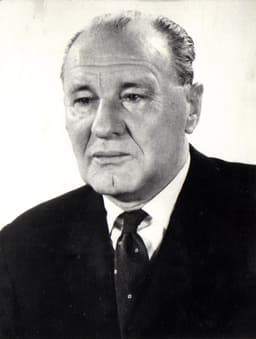
Janos Kadar
Politician · Modern
56.5Total
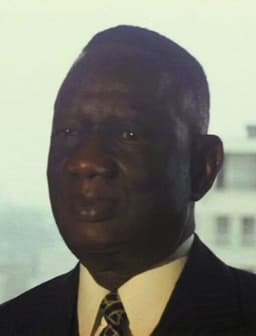
Siaka Stevens
Politician · Modern
49.5Total
Basic Information
Born
1912
1905
Died
1989
1988
Era
Modern
Modern
Nationality
Hungary
Sierra Leone
Occupation
Politician
Politician
Civilization
Western
Other
Score Comparison
Military (10%)
49.8
50.0
Political (20%)
60.0
46.6
Influence (20%)
56.4
51.8
Legacy (20%)
49.2
43.3
Leadership (15%)
79.8
65.0
Strategy (15%)
41.7
39.5
TOTAL
56.5
49.5
Janos Kadar — Complete Timeline
1956 AD
Appointment as First Secretary of the Hungarian Socialist Workers' PartyPolitical Action◆ Major
Kadar was appointed First Secretary after the Soviet invasion crushed the Hungarian Revolution. He initially supported the revolution but then collaborated with the Soviets, a move that defined his controversial legacy.
Communist leadership1956 Revolution
Impact: national
1958 AD
Execution of Imre NagyPolitical Action◆ Major
Kadar's government tried and executed former Prime Minister Imre Nagy for his role in the 1956 Revolution. This act solidified Kadar's power but also made him a deeply unpopular figure among many Hungarians.
Political repression1956 Revolution
Impact: nationaltragic
1968 AD
Introduction of Goulash CommunismReform◆ Major
Kadar introduced the New Economic Mechanism, a series of market-oriented reforms that allowed limited private enterprise and consumer goods. This 'goulash communism' improved living standards and made Hungary the most liberal country in the Eastern Bloc.
Economic reformLiberalization
Impact: nationalconstructive
1988 AD
Resignation from PowerPolitical Action◆ Major
Facing economic stagnation and growing political opposition, Kadar was forced to resign as party leader. He was replaced by a reformist faction, marking the end of his 32-year rule.
Fall of communism
Impact: national
Siaka Stevens — Complete Timeline
1967 AD
Became Prime Minister of Sierra LeonePolitical Action◆ Major
Siaka Stevens was appointed Prime Minister after his All People's Congress party won the 1967 general election. However, he was overthrown in a military coup within hours of taking office, forcing him into exile in Guinea.
ElectionCoupExile
Impact: national
1968 AD
Returned to Power and Became PresidentPolitical Action◆ Major
After a counter-coup, Stevens returned from exile and assumed the presidency. He consolidated power by declaring a one-party state in 1978, banning opposition parties, and centralizing control over the government and economy.
One-Party StateAuthoritarianismPresidency
Impact: nationaldestructive
1971 AD
Survived Multiple Coup AttemptsPolitical Action
Stevens faced several coup attempts, including a 1971 plot led by Brigadier John Bangura. He responded by purging the military, executing plotters, and relying on a paramilitary force and loyal army units to maintain his rule.
Coup AttemptRepressionMilitary
Impact: nationaldestructive
1980 AD
Implemented Economic DeclineReform◆ Major
Under Stevens' rule, Sierra Leone's economy deteriorated due to corruption, mismanagement, and declining diamond revenues. He nationalized industries and expanded the public sector, but living standards fell, and the country became heavily indebted.
Economic DeclineCorruptionMismanagement
Impact: nationaldestructive
1985 AD
Retired from PresidencyPolitical Action◆ Major
Stevens voluntarily stepped down as president, handing power to his chosen successor, Joseph Momoh. His retirement was rare in African politics at the time, but he left behind a weakened state and a legacy of authoritarian rule.
RetirementSuccessionLegacy
Impact: national
Expert Analysis
Origins
Janos Kadar was born on May 26, 1912, in Fiume, then part of the Austro-Hungarian Empire, to a poor family. He joined the illegal Hungarian Communist Party in 1931, working as a locksmith. His early life was marked by poverty and political persecution under the Horthy regime. Siaka Probyn Stevens was born on August 24, 1905, in Moyamba, Sierra Leone, to a Limba father and a Mende mother. He attended the Albert Academy in Freetown but left school to work as a railway policeman and later a trade unionist. Stevens co-founded the All People's Congress (APC) in 1960, drawing on his labor movement experience.
Rise to Power
Kadar rose through the Hungarian Communist Party ranks, becoming Minister of the Interior in 1954. During the 1956 Hungarian Revolution, he initially supported the reformist government of Imre Nagy but later defected to the Soviet side. On November 7, 1956, Kadar was appointed First Secretary of the Hungarian Socialist Workers' Party under Soviet auspices. He cemented his power by overseeing the execution of Nagy in 1958, scoring 49.8 in military and 60.0 in political skills. Stevens became Prime Minister after the APC won the 1967 elections, but was immediately overthrown in a coup. He returned after a counter-coup in 1968, and in 1971 declared Sierra Leone a republic, becoming its first president. He consolidated power by banning opposition parties in 1978, scoring 46.6 in political acumen.
Leadership & Governance
Kadar's leadership style was pragmatic and conciliatory. He introduced the New Economic Mechanism (NEM) in 1968, allowing limited private enterprise and market pricing within a socialist framework. This 'goulash communism' improved living standards, with Hungary becoming the 'happiest barracks' in the Eastern Bloc. His leadership score of 79.8 reflects his ability to maintain stability while implementing reforms. In contrast, Stevens ruled through a patron-client system, nationalizing industries and centralizing power. His economic mismanagement led to a decline in diamond revenues and GDP per capita fell by 40% during his tenure. He scored 65.0 in leadership but only 39.5 in strategy, as his policies were short-sighted.
Triumph & Tragedy
Kadar's greatest triumph was the NEM, which raised Hungary's GDP per capita to $2,000 by 1980, among the highest in the Eastern Bloc. His tragedy was the betrayal of the 1956 revolution and the execution of Nagy, which stained his legacy. He also faced economic stagnation in the 1980s, leading to his forced resignation in 1988. Stevens' triumph was maintaining political stability in a volatile region, surviving multiple coups. His tragedy was the economic collapse; by 1985, Sierra Leone had a per capita income of $300, and corruption was rampant. He voluntarily retired in 1985, a rare peaceful transfer of power, but left a bankrupt state.
Character & Destiny
Kadar was a survivor, adapting to Soviet demands while pursuing domestic reforms. His personality was reserved and calculating; he prioritized stability over ideology. This character led to a long tenure but also complicity in repression. Stevens was charismatic and ruthless, using a mix of populism and force. His destiny was to preside over decline, as his kleptocratic system enriched a few while impoverishing the nation. Historians often describe Kadar as a 'pragmatist' and Stevens as a 'strongman'.
Legacy
Kadar's legacy is mixed: he is remembered for improving living standards but also for betraying the revolution. The NEM influenced later reforms in China and the Soviet Union. In Hungary, he is seen as a controversial figure who provided prosperity at the cost of freedom. Stevens' legacy is largely negative: he is blamed for destroying Sierra Leone's economy and institutions. His rule set the stage for the brutal civil war (1991-2002). Kadar's overall score of 56.5 reflects a more balanced impact, while Stevens' 49.5 indicates a net negative.
Conclusion
Janos Kadar had greater impact than Siaka Stevens, both in terms of economic improvements and historical significance. Kadar's goulash communism provided a model for socialist reform, while Stevens' kleptocracy left Sierra Leone poorer. Kadar's score of 56.5 vs Stevens' 49.5 reflects this disparity. Though both were authoritarian, Kadar's policies improved lives, whereas Stevens' worsened them. Therefore, Kadar's legacy is more substantial.
Rankings
🥇
Janos KadarLeader
Mil: 49.8Pol: 60.0Inf: 56.4
56.5
🥈
Siaka Stevens
Mil: 50.0Pol: 46.6Inf: 51.8
49.5
+7.0 behind
How This Comparison Works
Algorithm
Each figure is scored on 6 dimensions (0—100 scale) based on structured historical data: Military (10%), Political (20%), Influence (20%), Legacy (20%), Leadership (15%), Strategy (15%). The weighted total produces the final ranking.
Data Sources
Scores are computed from structured sub-indicators in the database. Scale factors adjust for era (Ancient ×0.85, Modern ×1.0) and civilization size (Eastern ×1.05, Other ×0.80) to account for differences in population and military scale.
Maximum 3 Figures
Comparisons are limited to 2—3 figures to ensure readability and statistical meaningfulness.
Error Margins
±5 points per dimension — Sub-scores are derived from historical records with inherent uncertainty. Two figures within 5 points on a dimension should be considered roughly equivalent in that area.
Total Score Accuracy
±3 points overall — The weighted combination of 6 dimensions produces a total score with approximately ±3 points of uncertainty. Differences of less than 3 points are not statistically significant— the figures are effectively tied.
Known Limitations
- Historical records are incomplete and uneven across civilizations
- Figures from oral-tradition societies may be underrepresented
- Occupation labels can misclassify multi-role figures
- Scores measure capability and impact, not moral character
- Quantitative scoring is a comparison tool, not absolute truth
Capability Radar
Military (10%) — Battles & Warfare
Battles
29
22
Win Rate
32
27
Expansion
34
27
Political (20%) — Governance & Reform
Reform
65
40
Diplomacy
70
45
Economy
60
30
Influence (20%) — Cultural & Global Reach
Cultural
40
30
Global
40
20
Legacy (20%) — Historical Impact
Historical
50
35
Longevity
45
25
Leadership (15%) — Power & Stability
Tenure
75
60
Stability
55
20
Strategy (15%) — Tactics & Innovation
Strategy
36
33
Tactics
40
36
Reform
45
35
Similar Comparisons
Comments & Discussion
No comments yet. Be the first to share your thoughts!