Loading...
Ardashir I vs Qin Shi Huang
Qin Shi Huang leads by 9.6 pts · 2 figures compared
…

Ardashir I
Emperor · Ancient
75.6Total
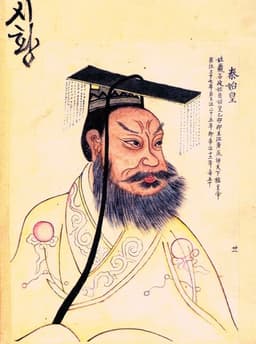
Qin Shi Huang
Emperor · Ancient
85.2Total
Basic Information
Born
180
-259
Died
242
-210
Era
Ancient
Ancient
Nationality
Sassanid Empire
China
Occupation
Emperor
Emperor
Civilization
Middle Eastern
Eastern
Score Comparison
Military (10%)
65.0
80.0
Political (20%)
78.0
90.0
Influence (20%)
82.0
85.0
Legacy (20%)
72.0
90.0
Leadership (15%)
78.0
78.0
Strategy (15%)
72.0
82.0
TOTAL
75.6
85.2
Ardashir I — Complete Timeline
224 AD
Battle of HormozdganWar
Ardashir I defeated the Parthian king Artabanus IV at the Battle of Hormozdgan. This victory ended Parthian rule and allowed Ardashir to establish the Sassanid Empire, which would dominate Persia for four centuries.
BattleSassanid FoundingParthian Defeat
Impact: regional
Conquest of the Parthian EmpireWar◆ Major
Following his victory at Hormozdgan, Ardashir I systematically conquered the remaining Parthian territories, including Media, Armenia, and Mesopotamia. He established a centralized administration and a Zoroastrian state church.
ConquestEmpire BuildingZoroastrianism
Impact: regional
Coronation as King of KingsPolitical Action◆ Major
After his victory, Ardashir I was crowned 'Shahanshah' (King of Kings) at Ctesiphon. He claimed descent from the Achaemenid dynasty, legitimizing his rule and reviving Persian imperial traditions.
CoronationImperial TitleLegitimacy
Impact: regionalconstructive
Qin Shi Huang — Complete Timeline
246 BC
Construction of the Mausoleum and Terracotta ArmyOther◆ Major
Qin Shi Huang commissioned a vast mausoleum complex near Xi'an, guarded by thousands of life-sized terracotta soldiers, horses, and chariots. The project employed hundreds of thousands of workers and reflected his obsession with immortality and imperial power.
Impact: global
230 BC
Conquest of the Six Warring StatesWar
From 230 to 221 BCE, Ying Zheng led the Qin state in a series of campaigns that conquered the Han, Zhao, Wei, Chu, Yan, and Qi states. This unified China under a single ruler for the first time, ending the Warring States period.
Impact: global
221 BC
Standardization of Writing, Currency, and MeasurementsReform◆ Major
Qin Shi Huang ordered the standardization of Chinese script, currency, and weights and measures across the unified empire. This facilitated administration, trade, and cultural integration, laying a foundation for future dynasties.
Impact: globalconstructive
Proclamation of the Qin DynastyPolitical Action
After conquering the last independent state, Ying Zheng declared himself Shi Huangdi (First Emperor), founding the Qin Dynasty. He adopted a new title to signify his supreme authority and initiated centralized imperial rule.
Impact: global
214 BC
Initiation of the Great Wall ConstructionOther◆ Major
Qin Shi Huang ordered the connection and extension of existing northern fortifications to create a unified defensive wall against nomadic Xiongnu raids. This project involved massive conscripted labor and became the precursor to the later Great Wall.
Impact: regional
213 BC
Burning of Books and Burying of ScholarsPolitical Action◆ Major
On the advice of Li Si, Qin Shi Huang ordered the burning of historical records and philosophical texts not aligned with Legalist doctrine. He also had 460 Confucian scholars buried alive to suppress dissent and consolidate ideological control.
Impact: nationaldestructive
Expert Analysis
Origins
Qin Shi Huang (259–210 BC), born Ying Zheng, was the son of King Zhuangxiang of Qin and a former concubine. He ascended the throne at age 13, inheriting a state already primed for conquest through Legalist reforms. His background was one of privilege but also political intrigue, with his mother's lover Lü Buwei serving as regent. Ardashir I (180–242 AD) was a vassal king under the Parthian Arsacids, ruling the region of Persis (modern Fars). He claimed descent from the legendary Kayanian kings and the Achaemenid legacy, positioning himself as a restorer of Persian glory. His origins were more obscure, but he leveraged local support and Zoroastrian priesthood to challenge the declining Parthian Empire.
Rise to Power
Qin Shi Huang's rise was methodical and ruthless. He eliminated rivals like Lü Buwei and his mother's lover Lao Ai, then launched a series of campaigns (230–221 BC) to conquer the six other Warring States: Han, Zhao, Wei, Chu, Yan, and Qi. His success relied on Legalist philosophy, efficient bureaucracy, and advanced military technology like crossbows and cavalry. Ardashir I's rise was more gradual. He consolidated power in Persis, then led a rebellion against the Parthian king Artabanus IV. The decisive Battle of Hormozdgan (224 AD) saw Ardashir defeat and kill Artabanus, after which he crowned himself King of Kings in 226 AD. He then spent years subduing Parthian loyalists and expanding into Mesopotamia.
Leadership & Governance
Qin Shi Huang's leadership was centralized and authoritarian. He divided China into 36 commanderies, appointed officials based on merit, standardized writing (small seal script), currency (banliang coins), and measurements. He built a network of roads and canals, and linked existing walls to form the Great Wall. However, his regime was harsh: he burned books and buried scholars alive (213–210 BC) to suppress dissent. Ardashir I's governance fused Persian and Hellenistic elements. He established a feudal-like system with vassal kings, promoted Zoroastrianism as state religion, and built the city of Firuzabad. He minted silver coins and encouraged trade along the Silk Road. Both rulers used religion to legitimize rule: Qin Shi Huang claimed the Mandate of Heaven, while Ardashir I linked his dynasty to Zoroastrian prophecy.
Triumph & Tragedy
Qin Shi Huang's greatest triumph was unifying China after centuries of war. He also expanded south to modern Vietnam. Yet his tragedy lay in his obsession with immortality: he consumed mercury pills, which likely killed him in 210 BC. His dynasty collapsed within four years of his death due to revolts and infighting. Ardashir I's triumph was founding the Sassanid Empire, which lasted over 400 years. He revived Persian power and challenged Rome. His tragedy was less personal: he died naturally around 242 AD, but the empire faced later threats from Rome and nomadic invasions. Still, his legacy was more enduring.
Character & Destiny
Qin Shi Huang was paranoid, megalomaniacal, and driven—a workaholic who personally reviewed 120 pounds of documents daily. He believed in Legalist philosophy that humans are inherently evil and need strict laws. His destiny was to be both unifier and tyrant. Ardashir I was pragmatic, religious, and ambitious. He saw himself as fulfilling Zoroastrian prophecy of a savior-king. His destiny was to restore Persian glory. Both were visionary builders, but Qin Shi Huang's character was more extreme, leading to a shorter-lived dynasty.
Legacy
Qin Shi Huang's legacy is immense—he gave China its name, standardized its civilization, and set a precedent for imperial unity. The Great Wall remains a symbol. However, his ruthlessness (book burning) tarnishes his image. Ardashir I's Sassanid Empire revived Persian identity, Zoroastrianism, and challenged Rome. It influenced later Islamic caliphates. Both are remembered as founders, but Qin Shi Huang's impact on China is more profound globally.
Conclusion
Qin Shi Huang scores higher overall due to his monumental unification and standardization of China (M=80, P=90, I=85, L=90, D=78, S=82, T=85) vs Ardashir I (M=65, P=78, I=82, L=72, D=78, S=72, T=76). The 9.6-point gap reflects Qin's greater territorial scale, innovation, and lasting cultural impact. Ardashir was a skilled founder, but his empire, while enduring, did not reshape the world as dramatically. Qin Shi Huang is the superior empire builder.
Rankings
🥇
Qin Shi HuangLeader
Mil: 80.0Pol: 90.0Inf: 85.0
85.2
🥈
Ardashir I
Mil: 65.0Pol: 78.0Inf: 82.0
75.6
+9.6 behind
How This Comparison Works
Algorithm
Each figure is scored on 6 dimensions (0—100 scale) based on structured historical data: Military (10%), Political (20%), Influence (20%), Legacy (20%), Leadership (15%), Strategy (15%). The weighted total produces the final ranking.
Data Sources
Scores are computed from structured sub-indicators in the database. Scale factors adjust for era (Ancient ×0.85, Modern ×1.0) and civilization size (Eastern ×1.05, Other ×0.80) to account for differences in population and military scale.
Maximum 3 Figures
Comparisons are limited to 2—3 figures to ensure readability and statistical meaningfulness.
Error Margins
±5 points per dimension — Sub-scores are derived from historical records with inherent uncertainty. Two figures within 5 points on a dimension should be considered roughly equivalent in that area.
Total Score Accuracy
±3 points overall — The weighted combination of 6 dimensions produces a total score with approximately ±3 points of uncertainty. Differences of less than 3 points are not statistically significant— the figures are effectively tied.
Known Limitations
- Historical records are incomplete and uneven across civilizations
- Figures from oral-tradition societies may be underrepresented
- Occupation labels can misclassify multi-role figures
- Scores measure capability and impact, not moral character
- Quantitative scoring is a comparison tool, not absolute truth
Capability Radar
Military (10%) — Battles & Warfare
Battles
85
85
Win Rate
90
90
Expansion
85
90
Political (20%) — Governance & Reform
Reform
90
95
Diplomacy
75
75
Economy
80
90
Influence (20%) — Cultural & Global Reach
Cultural
80
95
Global
80
85
Legacy (20%) — Historical Impact
Historical
85
95
Longevity
85
95
Leadership (15%) — Power & Stability
Tenure
80
70
Stability
85
65
Strategy (15%) — Tactics & Innovation
Strategy
85
85
Tactics
80
80
Reform
90
95
Similar Comparisons
Comments & Discussion
No comments yet. Be the first to share your thoughts!