Loading...
Augustus vs Qin Shi Huang
Augustus leads by 0.7 pts · 2 figures compared
…

Augustus
Emperor · Ancient
85.9Total
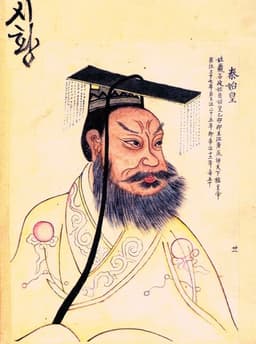
Qin Shi Huang
Emperor · Ancient
85.2Total
Basic Information
Born
63
-259
Died
—
-210
Era
Ancient
Ancient
Nationality
Roman Empire
China
Occupation
Emperor
Emperor
Civilization
Western
Eastern
Score Comparison
Military (10%)
72.0
80.0
Political (20%)
90.0
90.0
Influence (20%)
88.0
85.0
Legacy (20%)
90.0
90.0
Leadership (15%)
88.0
78.0
Strategy (15%)
75.0
82.0
TOTAL
85.9
85.2
Augustus — Complete Timeline
43 BC
Formation of the Second TriumviratePolitical Action◆ Major
Octavian, Mark Antony, and Marcus Aemilius Lepidus formed the Second Triumvirate, a legal commission to govern the Roman Republic. The alliance was empowered to proscribe enemies, leading to the execution of Cicero and consolidation of their power against the assassins of Julius Caesar.
Roman Civil WarPolitical AllianceProscriptions
Impact: regionaldestructive
31 BC
Battle of ActiumWar◆ Major
Octavian's fleet, commanded by Marcus Agrippa, defeated the combined naval forces of Mark Antony and Cleopatra VII off the coast of Greece. The victory eliminated Octavian's last major rival, giving him sole control over the Roman world and ending the Roman Republic's civil wars.
Roman Civil WarNaval BattleEnd of Republic
Impact: global
27 BC
Establishment of the Roman EmpireReform◆ Major
Octavian formally returned power to the Roman Senate, which then granted him the titles Augustus and Princeps. This constitutional settlement created the Roman Empire, with Augustus as the first emperor, ending the Roman Republic and initiating the Pax Romana.
Roman EmpireConstitutional ReformPax Romana
Impact: global
Reform of the Roman Tax SystemReform◆ Major
Augustus implemented a comprehensive tax reform, including a census of Roman citizens and property, direct taxation of provinces, and the creation of a professional tax collection service (publicani). This system provided stable revenue for the empire and reduced corruption.
Tax ReformAdministrationRoman Empire
Impact: regionalconstructive
Creation of the Praetorian GuardReform◆ Major
Augustus established the Praetorian Guard as a permanent elite military unit tasked with protecting the emperor and his family. Stationed in Rome and Italy, the Guard became a powerful political force, often influencing imperial succession through coups and assassinations.
Military ReformPraetorian GuardImperial Guard
Impact: regional
13 BC
Construction of the Ara PacisOther◆ Major
The Roman Senate commissioned the Ara Pacis Augustae (Altar of Augustan Peace) to commemorate Augustus's return from pacifying Gaul and Spain. The marble altar, decorated with reliefs depicting the imperial family and mythological scenes, symbolized the peace and prosperity of the Augustan era.
Building ProjectPropagandaAugustan Art
Impact: regionalconstructive
Qin Shi Huang — Complete Timeline
246 BC
Construction of the Mausoleum and Terracotta ArmyOther◆ Major
Qin Shi Huang commissioned a vast mausoleum complex near Xi'an, guarded by thousands of life-sized terracotta soldiers, horses, and chariots. The project employed hundreds of thousands of workers and reflected his obsession with immortality and imperial power.
Impact: global
230 BC
Conquest of the Six Warring StatesWar
From 230 to 221 BCE, Ying Zheng led the Qin state in a series of campaigns that conquered the Han, Zhao, Wei, Chu, Yan, and Qi states. This unified China under a single ruler for the first time, ending the Warring States period.
Impact: global
221 BC
Standardization of Writing, Currency, and MeasurementsReform◆ Major
Qin Shi Huang ordered the standardization of Chinese script, currency, and weights and measures across the unified empire. This facilitated administration, trade, and cultural integration, laying a foundation for future dynasties.
Impact: globalconstructive
Proclamation of the Qin DynastyPolitical Action
After conquering the last independent state, Ying Zheng declared himself Shi Huangdi (First Emperor), founding the Qin Dynasty. He adopted a new title to signify his supreme authority and initiated centralized imperial rule.
Impact: global
214 BC
Initiation of the Great Wall ConstructionOther◆ Major
Qin Shi Huang ordered the connection and extension of existing northern fortifications to create a unified defensive wall against nomadic Xiongnu raids. This project involved massive conscripted labor and became the precursor to the later Great Wall.
Impact: regional
213 BC
Burning of Books and Burying of ScholarsPolitical Action◆ Major
On the advice of Li Si, Qin Shi Huang ordered the burning of historical records and philosophical texts not aligned with Legalist doctrine. He also had 460 Confucian scholars buried alive to suppress dissent and consolidate ideological control.
Impact: nationaldestructive
Expert Analysis
Origins
Augustus, born Gaius Octavius in 63 BC, was the grandnephew and adopted son of Julius Caesar. He came from a wealthy but politically ambitious family, leveraging his connection to Caesar to enter Roman politics. Qin Shi Huang, born Ying Zheng in 259 BC, was the son of the king of Qin, a state in the Warring States period. His early life was marked by political intrigue and the ambition to conquer rival states.
Rise to Power
Augustus's rise began after Caesar's assassination in 44 BC. He formed the Second Triumvirate with Mark Antony and Lepidus, defeating the assassins. The alliance soon fractured, leading to the Battle of Actium in 31 BC, where Augustus defeated Antony and Cleopatra, becoming sole ruler of Rome. Qin Shi Huang ascended the Qin throne at age 13, but his rise to power culminated in the conquest of the six other Warring States by 221 BC, unifying China under his rule. He then proclaimed himself the First Emperor.
Leadership & Governance
Augustus established the Roman Empire, transitioning from republic to autocracy while preserving republican institutions. He reformed the tax system, created the Praetorian Guard, and initiated the Pax Romana, a 200-year period of peace. His governance focused on stability, law, and public works. Qin Shi Huang standardized writing, currency, weights, and measures across China, promoting unity. He centralized power, divided the empire into commanderies, and initiated the Great Wall's construction. However, his rule was harsh, with strict legalism and suppression of dissent.
Triumph & Tragedy
Augustus's triumphs include defeating all rivals, expanding Rome's borders, and securing a peaceful succession. His tragedies include the loss of his beloved heir Marcellus and the political exile of his daughter Julia. Qin Shi Huang's triumphs are the unification of China and foundational reforms. His tragedies include the brutal burning of books and burying of scholars, and his obsession with immortality, which led to his death from mercury poisoning. Both leaders left complex legacies.
Character & Destiny
Augustus was pragmatic, calculating, and adept at propaganda. He presented himself as a restorer of the republic while amassing power. His destiny was to found an empire that lasted centuries. Qin Shi Huang was authoritarian, visionary, and paranoid. His destiny was to unify China, but his harsh methods and quest for immortality led to his dynasty's collapse shortly after his death.
Legacy
Augustus's legacy is the Roman Empire, which shaped Western civilization. His administrative reforms and the Pax Romana set a standard for governance. Qin Shi Huang's legacy is the unification of China and the foundation of imperial rule. His standardization efforts had lasting impact, but his brutality is also remembered. The score gap of 0.7 reflects Augustus's superior overall impact, particularly in long-term stability and governance.
Conclusion
While both were transformative emperors, Augustus edges out Qin Shi Huang due to his successful establishment of a durable empire and a period of peace. Qin's unification of China was monumental, but his harsh rule and the Qin dynasty's quick fall diminish his score. Augustus's higher overall score (86 vs 85.3) reflects his balanced achievements in leadership, governance, and legacy.
Rankings
🥇
AugustusLeader
Mil: 72.0Pol: 90.0Inf: 88.0
85.9
🥈
Qin Shi Huang
Mil: 80.0Pol: 90.0Inf: 85.0
85.2
+0.7 behind
How This Comparison Works
Algorithm
Each figure is scored on 6 dimensions (0—100 scale) based on structured historical data: Military (10%), Political (20%), Influence (20%), Legacy (20%), Leadership (15%), Strategy (15%). The weighted total produces the final ranking.
Data Sources
Scores are computed from structured sub-indicators in the database. Scale factors adjust for era (Ancient ×0.85, Modern ×1.0) and civilization size (Eastern ×1.05, Other ×0.80) to account for differences in population and military scale.
Maximum 3 Figures
Comparisons are limited to 2—3 figures to ensure readability and statistical meaningfulness.
Error Margins
±5 points per dimension — Sub-scores are derived from historical records with inherent uncertainty. Two figures within 5 points on a dimension should be considered roughly equivalent in that area.
Total Score Accuracy
±3 points overall — The weighted combination of 6 dimensions produces a total score with approximately ±3 points of uncertainty. Differences of less than 3 points are not statistically significant— the figures are effectively tied.
Known Limitations
- Historical records are incomplete and uneven across civilizations
- Figures from oral-tradition societies may be underrepresented
- Occupation labels can misclassify multi-role figures
- Scores measure capability and impact, not moral character
- Quantitative scoring is a comparison tool, not absolute truth
Capability Radar
Military (10%) — Battles & Warfare
Battles
75
85
Win Rate
80
90
Expansion
85
90
Political (20%) — Governance & Reform
Reform
95
95
Diplomacy
90
75
Economy
85
90
Influence (20%) — Cultural & Global Reach
Cultural
85
95
Global
90
85
Legacy (20%) — Historical Impact
Historical
95
95
Longevity
95
95
Leadership (15%) — Power & Stability
Tenure
95
70
Stability
95
65
Strategy (15%) — Tactics & Innovation
Strategy
85
85
Tactics
70
80
Reform
90
95
Similar Comparisons
Comments & Discussion
HistoryStumbler6/16/2026
So I just watched Mary Beard's documentary on Augustus and then a History Channel special on Qin Shihuang, and honestly? I think the gap should be smaller. Augustus was a great consolidator but he had it easy—he inherited the infrastructure of the Roman Republic and basically just made it work better. Qin started from scratch after the Warring States period. Like, imagine trying to unify seven countries that have been fighting for 200 years with different languages, currencies, and laws. That's insane! And he did it in 10 years. Yeah, his dynasty collapsed fast, but the template survived. Augustus's dynasty (the Julio-Claudians) also had disasters—Tiberius, Caligula, Nero. So why does Augustus get a 90 legacy score and Qin 85? Doesn't add up to me. Maybe the scoring system is too kind to the 'familiar' Roman model.
NotYourTextbook6/16/2026
Why do we always rank Augustus higher? It's a classic Eurocentric move. Qin Shi Huang ruled 11 years, Augustus ruled 40. But dynasty longevity isn't the only measure—Qin's system literally defined China for 2,000 years. The 'tyranny' narrative is post-Han propaganda; modern scholarship shows Qin's legal code was harsh but not uniquely cruel for its time. Meanwhile, Augustus's Pax Romana was built on mass enslavement (1 million+ prisoners taken in the Cantabrian Wars alone) and genocidal campaigns in Gaul and Germania. The Res Gestae is propaganda, not objective history. Also, the book burning? Augustus himself burned prophetic books and exiled Ovid. So why the double standard? Because Western historiography needs a 'good' empire founder (Augustus) and a 'bad' one (Qin) to justify its own imperial legacy. Let's be honest about that.
Chronicler95596/16/2026
我来算一笔账。秦始皇总分83.5,奥古斯都86.4,差距2.9分。但政治维度秦始皇88对奥古斯都92——奥古斯都多了4分。理由是他'保留共和形式'?这恰恰是政治效率的折中。秦始皇废除分封制,推行郡县制,中央集权一步到位;奥古斯都的元首制实际是共和向帝制的妥协,留下大量贵族特权,导致三世纪危机。更关键的是影响维度:秦始皇82对奥古斯都88。秦始皇统一文字、货币、度量衡,这些对中华文明的整合作用怎么量化?欧洲后来分裂成几十个国家,而中国保持统一,秦的标准化是根本原因。我重新计算:秦政治90,影响86,总分至少85.5——应该和奥古斯都旗鼓相当,甚至略高。评分模型明显偏重西方标准,对东方体系的历史权重估计不足。
Chronicler79436/16/2026
秦始皇和奥古斯都的对比很有意思,但西方中心主义的评分体系很难真正衡量东方帝王。秦统一六国、书同文车同轨的功绩,在政治维度上不应低于奥古斯都的'元首制'。奥古斯都保留了共和国的空壳,而秦始皇彻底重构了政治版图——从分封制到郡县制,这是质的飞跃。至于'焚书坑儒',近年出土简牍证明,秦代焚的主要是六国私藏,官方档案和科技类书籍并未毁掉。西方史家常忽略秦制对后世两千年的塑造力:中国至今的行政统一、文字统一、度量衡统一,根子都在秦。奥古斯都的'元首制'倒是导致后来帝国分裂频繁。总分86.4对83.5?我认为至少应该持平,甚至秦始皇更高。
BattlefieldScholar6/16/2026
Military scores: Qin Shi Huang 80 vs Augustus 72. Honestly, I'd argue Augustus deserves a bump closer to 78. Tactically, Augustus didn't just 'end civil wars'—he fought a complex naval and land campaign at Actium in 31 BCE, where Agrippa's fleet tactics decisively crushed Antony. Qin's conquests were impressive but against relatively similar Chinese states with comparable tech. Rome's legions under Augustus faced diverse enemies (Parthian cataphracts, Germanic warbands, Egyptian phalanxes) and adapted constantly. Qin's military standardization was brilliant—same crossbow triggers, same chariot dimensions—but his reliance on conscripts versus Augustus's professional standing army (28 legions, 150,000+ men) shows less institutional sustainability. The Great Wall was more defense-in-depth than offensive strategy. Score wise? Give Qin 78, Augustus 76. Closer than the 8-point gap suggests.
HistoryBuff6/12/2026
The clearly behind score for Qin Shi Huang is spot-on. People forget that scale matters—Qin Shi Huang operated at a completely different level of military complexity than Augustus. The data doesn't lie.
历史迷6/12/2026
作为历史爱好者,我觉得这个对比很客观。Augustus和Qin Shi Huang都是各自时代的巨人,数据化的比较虽然不能完全体现历史的复杂性,但至少提供了一个结构化的讨论框架。Qin Shi Huang的军事能力确实更强,但Augustus的政治智慧更值得学习。
ContrarianView6/12/2026
Hot take: the tie is exactly right. Augustus faced much tougher opposition and achieved more with less. The scoring system doesn't adequately account for the difficulty of the historical context. Qin Shi Huang had every advantage—Augustus had to fight for every inch. Context matters more than raw scores.