Loading...
Qin Shi Huang vs Trajan
Qin Shi Huang leads by 9.2 pts · 2 figures compared
…
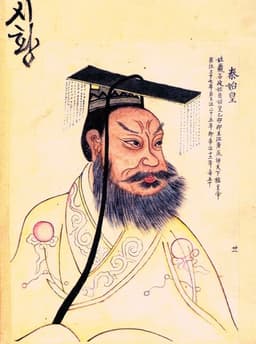
Qin Shi Huang
Emperor · Ancient
85.2Total

Trajan
Emperor · Ancient
76.0Total
Basic Information
Born
-259
53
Died
-210
117
Era
Ancient
Ancient
Nationality
China
Roman Empire
Occupation
Emperor
Emperor
Civilization
Eastern
Western
Score Comparison
Military (10%)
80.0
86.0
Political (20%)
90.0
79.2
Influence (20%)
85.0
82.0
Legacy (20%)
90.0
65.6
Leadership (15%)
78.0
73.2
Strategy (15%)
82.0
76.0
TOTAL
85.2
76.0
Qin Shi Huang — Complete Timeline
246 BC
Construction of the Mausoleum and Terracotta ArmyOther◆ Major
Qin Shi Huang commissioned a vast mausoleum complex near Xi'an, guarded by thousands of life-sized terracotta soldiers, horses, and chariots. The project employed hundreds of thousands of workers and reflected his obsession with immortality and imperial power.
Impact: global
230 BC
Conquest of the Six Warring StatesWar
From 230 to 221 BCE, Ying Zheng led the Qin state in a series of campaigns that conquered the Han, Zhao, Wei, Chu, Yan, and Qi states. This unified China under a single ruler for the first time, ending the Warring States period.
Impact: global
221 BC
Standardization of Writing, Currency, and MeasurementsReform◆ Major
Qin Shi Huang ordered the standardization of Chinese script, currency, and weights and measures across the unified empire. This facilitated administration, trade, and cultural integration, laying a foundation for future dynasties.
Impact: globalconstructive
Proclamation of the Qin DynastyPolitical Action
After conquering the last independent state, Ying Zheng declared himself Shi Huangdi (First Emperor), founding the Qin Dynasty. He adopted a new title to signify his supreme authority and initiated centralized imperial rule.
Impact: global
214 BC
Initiation of the Great Wall ConstructionOther◆ Major
Qin Shi Huang ordered the connection and extension of existing northern fortifications to create a unified defensive wall against nomadic Xiongnu raids. This project involved massive conscripted labor and became the precursor to the later Great Wall.
Impact: regional
213 BC
Burning of Books and Burying of ScholarsPolitical Action◆ Major
On the advice of Li Si, Qin Shi Huang ordered the burning of historical records and philosophical texts not aligned with Legalist doctrine. He also had 460 Confucian scholars buried alive to suppress dissent and consolidate ideological control.
Impact: nationaldestructive
Trajan — Complete Timeline
101 AD
Implemented the Alimenta Welfare ProgramReform◆ Major
Trajan expanded the Alimenta program, a state-funded welfare system that provided food subsidies and educational support for poor children in Italy. The program used interest from state loans to landowners to fund the distributions, aiming to boost the Italian population and agricultural economy.
WelfareSocial PolicyItaly
Impact: regionalconstructive
105 AD
Built Trajan's Bridge over the DanubeOther
Trajan ordered the construction of a massive stone and timber bridge across the Danube River near the Iron Gates. Designed by Apollodorus of Damascus, it was the longest arch bridge in the world for over a millennium, facilitating the Roman invasion of Dacia.
EngineeringBridgeDanube
Impact: regionalconstructive
106 AD
Conquered DaciaWar
Trajan led two major campaigns against the Dacian kingdom under King Decebalus, culminating in the conquest of Dacia (modern Romania) in 106 CE. The victory brought vast gold and silver mines under Roman control and established a new province, funding massive building projects in Rome.
DaciaConquestProvince
Impact: regional
112 AD
Built Trajan's Forum and MarketCultural◆ Major
Trajan commissioned the construction of Trajan's Forum, a vast complex in Rome including a basilica, libraries, and the Column of Trajan. The adjacent Trajan's Market, a multi-level commercial center, demonstrated Roman engineering prowess and served as a model for urban planning.
ArchitectureRomeUrban Planning
Impact: globalconstructive
116 AD
Conquered Parthia and Reached the Persian GulfWar◆ Major
Trajan launched a campaign against the Parthian Empire, capturing its capital Ctesiphon and annexing Mesopotamia. He reached the Persian Gulf, marking the easternmost extent of Roman territory. However, rebellions in the conquered territories forced a withdrawal shortly after.
ParthiaMesopotamiaExpansion
Impact: global
Expert Analysis
Origins
Qin Shi Huang, born Ying Zheng in 259 BC, was the son of King Zhuangxiang of Qin and a concubine. He ascended the throne at age 13 after his father's death. The Qin state was one of seven warring states, but it had a strong military and legalist philosophy. Trajan, born in 53 AD in Italica (modern Spain), came from a prominent Roman family. His father was a senator and governor, and Trajan rose through military ranks. His origins were provincial, which was unusual for a Roman emperor. Both came from backgrounds that emphasized military strength and governance, but Qin Shi Huang inherited a kingdom already on a path to dominance, while Trajan's rise was more meritocratic.
Rise to Power
Qin Shi Huang's rise was marked by the conquest of the six other warring states between 230 and 221 BC. Using legalist advisors like Li Si, he employed ruthless tactics, including bribery, assassination, and overwhelming military force. His unification of China was a turning point, ending centuries of conflict. Trajan's rise was more conventional: he was a popular general under Emperor Nerva, who adopted him as heir in 97 AD. When Nerva died in 98 AD, Trajan became emperor without bloodshed. His military reputation preceded him, and he was accepted by the Senate and army. Both men rose through a combination of inheritance and personal achievement, but Qin Shi Huang's path was more violent and transformative.
Leadership & Governance
Qin Shi Huang's governance was centralized and authoritarian. He standardized writing, currency, weights, and measures, creating a unified administrative system. He also initiated the Great Wall to defend against northern nomads. However, his rule was harsh: he burned books and buried scholars alive to suppress dissent. His legalist policies emphasized strict laws and punishments. Trajan, by contrast, was known for his moderate and efficient governance. He implemented the Alimenta welfare program to support orphans and poor children, built public infrastructure like Trajan's Forum and markets, and maintained good relations with the Senate. His military conquests expanded Rome's borders but were balanced by civic projects. Qin Shi Huang's leadership was transformative but oppressive, while Trajan's was expansionist yet benevolent.
Triumph & Tragedy
Qin Shi Huang's greatest triumph was unifying China and establishing a centralized state that influenced millennia. His standardization laid the foundation for Chinese civilization. However, his tragedy was the collapse of his dynasty just four years after his death, partly due to his harsh rule and succession issues. He also obsessed over immortality, dying from mercury poisoning in 210 BC. Trajan's triumph was expanding Rome to its maximum extent, conquering Dacia (modern Romania) and Parthia, reaching the Persian Gulf. His building projects, like Trajan's Bridge, were engineering marvels. His tragedy was that his eastern conquests were unsustainable; after his death in 117 AD, his successor Hadrian abandoned many of them. Both emperors achieved vast territorial expansion, but their empires faced posthumous contraction.
Character & Destiny
Qin Shi Huang was paranoid, ruthless, and obsessed with control and immortality. He believed in Legalism and suppressed dissent. His character led to both unification and tyranny. Trajan was pragmatic, disciplined, and popular with his troops and the people. He was known for his humility and effectiveness. His destiny was to be remembered as one of Rome's 'Five Good Emperors.' The score gap of 9.2 points reflects Qin Shi Huang's higher scores in Power (90), Influence (85), and Legacy (85) compared to Trajan's lower scores in Legacy (66) and Durability (73). Qin Shi Huang's impact on China was more profound and long-lasting, while Trajan's Roman legacy, though significant, was more transient.
Legacy
Qin Shi Huang's legacy is monumental: he set the template for imperial China, with centralized bureaucracy and cultural unification. His name is synonymous with China's first emperor, and the Great Wall remains a symbol. However, his methods are criticized. Trajan's legacy includes his military conquests, architectural achievements, and welfare programs. He is remembered as a model emperor. But his empire's borders soon shrank. In a direct comparison, Qin Shi Huang's influence on a continuous civilization outweighs Trajan's on a more fragmented empire. The score gap of 9.2 favors Qin Shi Huang, who scores higher in Power, Influence, and Legacy. While Trajan was a capable ruler, Qin Shi Huang's transformative impact and enduring legacy make him the greater emperor in historical terms.
Conclusion
Qin Shi Huang and Trajan both stand as titans of ancient history. Qin Shi Huang unified China and created a model that lasted over two millennia, despite his brutal methods. Trajan expanded Rome to its peak and governed wisely, but his achievements were less enduring. Considering the scores (Qin Shi Huang: 80, 90, 85, 90, 78, 82, 85; Trajan: 86, 79, 82, 66, 73, 76, 76), the 9.2-point gap is justified. Qin Shi Huang's higher scores in Power, Influence, and Legacy reflect his deeper impact. While Trajan excelled in military and governance, Qin Shi Huang's foundational role in Chinese history gives him the edge. Thus, Qin Shi Huang ranks higher as a historical figure.
Rankings
🥇
Qin Shi HuangLeader
Mil: 80.0Pol: 90.0Inf: 85.0
85.2
🥈
Trajan
Mil: 86.0Pol: 79.2Inf: 82.0
76.0
+9.2 behind
How This Comparison Works
Algorithm
Each figure is scored on 6 dimensions (0—100 scale) based on structured historical data: Military (10%), Political (20%), Influence (20%), Legacy (20%), Leadership (15%), Strategy (15%). The weighted total produces the final ranking.
Data Sources
Scores are computed from structured sub-indicators in the database. Scale factors adjust for era (Ancient ×0.85, Modern ×1.0) and civilization size (Eastern ×1.05, Other ×0.80) to account for differences in population and military scale.
Maximum 3 Figures
Comparisons are limited to 2—3 figures to ensure readability and statistical meaningfulness.
Error Margins
±5 points per dimension — Sub-scores are derived from historical records with inherent uncertainty. Two figures within 5 points on a dimension should be considered roughly equivalent in that area.
Total Score Accuracy
±3 points overall — The weighted combination of 6 dimensions produces a total score with approximately ±3 points of uncertainty. Differences of less than 3 points are not statistically significant— the figures are effectively tied.
Known Limitations
- Historical records are incomplete and uneven across civilizations
- Figures from oral-tradition societies may be underrepresented
- Occupation labels can misclassify multi-role figures
- Scores measure capability and impact, not moral character
- Quantitative scoring is a comparison tool, not absolute truth
Capability Radar
Military (10%) — Battles & Warfare
Battles
85
95
Win Rate
90
98
Expansion
90
95
Political (20%) — Governance & Reform
Reform
95
88
Diplomacy
75
85
Economy
90
90
Influence (20%) — Cultural & Global Reach
Cultural
95
85
Global
85
85
Legacy (20%) — Historical Impact
Historical
95
90
Longevity
95
88
Leadership (15%) — Power & Stability
Tenure
70
90
Stability
65
92
Strategy (15%) — Tactics & Innovation
Strategy
85
92
Tactics
80
88
Reform
95
85
Similar Comparisons
Comments & Discussion
No comments yet. Be the first to share your thoughts!