Loading...
Qin Shi Huang vs Theodosius I
Qin Shi Huang leads by 9.2 pts · 2 figures compared
…
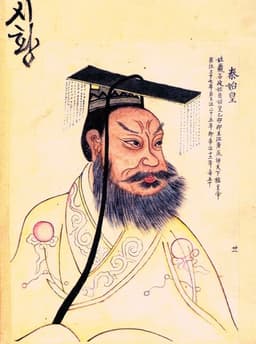
Qin Shi Huang
Emperor · Ancient
85.2Total

Theodosius I
Emperor · Ancient
76.0Total
Basic Information
Born
-259
347
Died
-210
395
Era
Ancient
Ancient
Nationality
China
Roman Empire
Occupation
Emperor
Emperor
Civilization
Eastern
Western
Score Comparison
Military (10%)
80.0
72.5
Political (20%)
90.0
65.0
Influence (20%)
85.0
85.0
Legacy (20%)
90.0
90.0
Leadership (15%)
78.0
68.0
Strategy (15%)
82.0
50.0
TOTAL
85.2
76.0
Qin Shi Huang — Complete Timeline
246 BC
Construction of the Mausoleum and Terracotta ArmyOther◆ Major
Qin Shi Huang commissioned a vast mausoleum complex near Xi'an, guarded by thousands of life-sized terracotta soldiers, horses, and chariots. The project employed hundreds of thousands of workers and reflected his obsession with immortality and imperial power.
Impact: global
230 BC
Conquest of the Six Warring StatesWar
From 230 to 221 BCE, Ying Zheng led the Qin state in a series of campaigns that conquered the Han, Zhao, Wei, Chu, Yan, and Qi states. This unified China under a single ruler for the first time, ending the Warring States period.
Impact: global
221 BC
Standardization of Writing, Currency, and MeasurementsReform◆ Major
Qin Shi Huang ordered the standardization of Chinese script, currency, and weights and measures across the unified empire. This facilitated administration, trade, and cultural integration, laying a foundation for future dynasties.
Impact: globalconstructive
Proclamation of the Qin DynastyPolitical Action
After conquering the last independent state, Ying Zheng declared himself Shi Huangdi (First Emperor), founding the Qin Dynasty. He adopted a new title to signify his supreme authority and initiated centralized imperial rule.
Impact: global
214 BC
Initiation of the Great Wall ConstructionOther◆ Major
Qin Shi Huang ordered the connection and extension of existing northern fortifications to create a unified defensive wall against nomadic Xiongnu raids. This project involved massive conscripted labor and became the precursor to the later Great Wall.
Impact: regional
213 BC
Burning of Books and Burying of ScholarsPolitical Action◆ Major
On the advice of Li Si, Qin Shi Huang ordered the burning of historical records and philosophical texts not aligned with Legalist doctrine. He also had 460 Confucian scholars buried alive to suppress dissent and consolidate ideological control.
Impact: nationaldestructive
Theodosius I — Complete Timeline
380 AD
Edict of ThessalonicaPolitical Action
Theodosius I issued the Edict of Thessalonica, declaring Nicene Christianity the official state religion of the Roman Empire. All other forms of Christianity were deemed heretical, and pagan practices were increasingly suppressed.
ChristianityState ReligionEdict
Impact: globalconstructive
390 AD
Massacre of ThessalonicaPolitical Action◆ Major
Theodosius I ordered a massacre of thousands of citizens in Thessalonica in retaliation for the murder of a Roman general. The massacre led to his excommunication by Bishop Ambrose of Milan, and he later performed public penance.
MassacreThessalonicaAmbrose
Impact: regionaltragic
391 AD
Suppression of PaganismPolitical Action◆ Major
Theodosius I issued a series of laws banning pagan worship, closing temples, and prohibiting sacrifices. The Olympic Games were abolished, and the Serapeum in Alexandria was destroyed. These actions accelerated the decline of paganism in the empire.
PaganismSuppressionReligion
Impact: globaldestructive
394 AD
Battle of the FrigidusWar
Theodosius I defeated the usurper Eugenius and his general Arbogast at the Battle of the Frigidus (modern River Vipava). The victory reunited the Roman Empire under a single ruler for the last time before its permanent division.
Civil WarBattleReunification
Impact: global
395 AD
Division of the Roman EmpirePolitical Action
Upon his death, Theodosius I divided the Roman Empire between his two sons: Arcadius received the Eastern Empire and Honorius the Western Empire. This division became permanent, leading to the separate histories of the Byzantine and Western Roman Empires.
DivisionSuccessionEast-West
Impact: global
Expert Analysis
Origins
Qin Shi Huang (259–210 BC), born Ying Zheng, ascended to the throne of the Qin state at age 13. He emerged from the chaotic Warring States period, where seven states vied for supremacy. His state, Qin, was known for its legalist reforms and military prowess. Theodosius I (AD 347–395) was born into a Roman military family in Hispania. His father was a successful general, and Theodosius himself rose through military ranks. He became emperor after the death of Gratian, facing a divided empire and barbarian threats.
Rise to Power
Qin Shi Huang's rise was marked by relentless conquest. From 230 to 221 BC, he defeated the six other warring states through a combination of military strategy, diplomacy, and ruthlessness. His victory unified China for the first time. Theodosius I was proclaimed co-emperor in AD 379 after the Battle of Adrianople. He was tasked with restoring order in the East. He consolidated power by defeating rivals like Magnus Maximus and Eugenius, and by negotiating with the Goths.
Leadership & Governance
Qin Shi Huang established a centralized bureaucracy, divided the empire into commanderies and counties, and standardized writing, currency, weights, and measures. He initiated massive infrastructure projects, including roads and the Great Wall. However, his rule was harsh, with strict legalist policies and suppression of dissent. Theodosius I is best known for making Nicene Christianity the state religion of the Roman Empire via the Edict of Thessalonica (AD 380). He suppressed paganism and Arianism, and convened the First Council of Constantinople. He also faced the Massacre of Thessalonica, where he ordered a brutal retaliation against rioters, for which he was temporarily excommunicated.
Triumph & Tragedy
Qin Shi Huang's greatest triumph was the unification of China, but his legacy is marred by the Burning of Books and Burying of Scholars, where he ordered the destruction of philosophical works and execution of Confucian scholars to control ideology. His obsession with immortality led to futile quests and a vast tomb complex. Theodosius I's triumph was the establishment of Christian orthodoxy and the defeat of usurpers. However, his division of the Roman Empire between his sons Arcadius and Honorius (AD 395) is often seen as a tragic step that weakened the empire and contributed to its eventual fall in the West.
Character & Destiny
Qin Shi Huang was a visionary and autocratic leader, driven by a desire for control and legacy. He believed in legalism and his own divine mandate. His destiny was to be remembered as both the unifier and the tyrant of China. Theodosius I was a devout Christian and a pragmatic ruler. He sought unity through religion but could be ruthless. His destiny was to be the last emperor to rule a united Roman Empire, and his religious policies shaped medieval Europe.
Legacy
Qin Shi Huang's legacy is immense: he laid the foundation for imperial China, influencing governance, culture, and infrastructure for millennia. The Great Wall and the Terracotta Army are enduring symbols. However, his methods are criticized. Theodosius I's legacy is equally profound: he made Christianity the dominant religion, shaping Western civilization. The division of the empire is a controversial legacy. Both rulers are pivotal figures in world history.
Conclusion
Qin Shi Huang achieved a higher composite score (82.9 vs 73.7) due to his transformative impact on China. His unification and standardization were more foundational than Theodosius's religious reforms. While both were autocratic, Qin's innovations in governance and infrastructure were more enduring. Theodosius's division of the empire was a strategic failure. Thus, Qin Shi Huang is the more effective ruler in terms of lasting influence and scope of change.
Rankings
🥇
Qin Shi HuangLeader
Mil: 80.0Pol: 90.0Inf: 85.0
85.2
🥈
Theodosius I
Mil: 72.5Pol: 65.0Inf: 85.0
76.0
+9.2 behind
How This Comparison Works
Algorithm
Each figure is scored on 6 dimensions (0—100 scale) based on structured historical data: Military (10%), Political (20%), Influence (20%), Legacy (20%), Leadership (15%), Strategy (15%). The weighted total produces the final ranking.
Data Sources
Scores are computed from structured sub-indicators in the database. Scale factors adjust for era (Ancient ×0.85, Modern ×1.0) and civilization size (Eastern ×1.05, Other ×0.80) to account for differences in population and military scale.
Maximum 3 Figures
Comparisons are limited to 2—3 figures to ensure readability and statistical meaningfulness.
Error Margins
±5 points per dimension — Sub-scores are derived from historical records with inherent uncertainty. Two figures within 5 points on a dimension should be considered roughly equivalent in that area.
Total Score Accuracy
±3 points overall — The weighted combination of 6 dimensions produces a total score with approximately ±3 points of uncertainty. Differences of less than 3 points are not statistically significant— the figures are effectively tied.
Known Limitations
- Historical records are incomplete and uneven across civilizations
- Figures from oral-tradition societies may be underrepresented
- Occupation labels can misclassify multi-role figures
- Scores measure capability and impact, not moral character
- Quantitative scoring is a comparison tool, not absolute truth
Capability Radar
Military (10%) — Battles & Warfare
Battles
85
65
Win Rate
90
60
Expansion
90
45
Political (20%) — Governance & Reform
Reform
95
85
Diplomacy
75
75
Economy
90
60
Influence (20%) — Cultural & Global Reach
Cultural
95
90
Global
85
90
Legacy (20%) — Historical Impact
Historical
95
95
Longevity
95
95
Leadership (15%) — Power & Stability
Tenure
70
70
Stability
65
55
Strategy (15%) — Tactics & Innovation
Strategy
85
60
Tactics
80
55
Reform
95
50
Similar Comparisons
Comments & Discussion
No comments yet. Be the first to share your thoughts!