Loading...
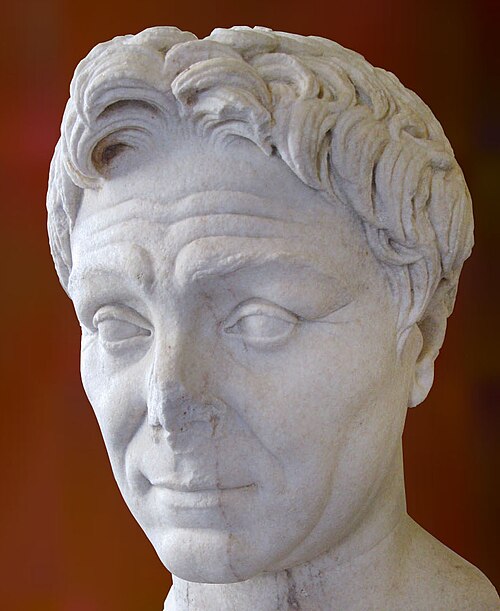
Pompey the Great
AncientGeneralRoman Republic-106 — -48
罗马共和国末期军事统帅前三头同盟成员。征服叙利亚和犹太地区。
Compare Pompey the Great with another historical figure:
Quick Facts
Born
106 BCE
Died
48 BCE
Country
Roman Republic
Era
Ancient
Occupation
General
Score Overview
Military (10%)88
Political (20%)68
Influence (20%)55
Legacy (20%)40
Leadership (15%)49
Strategy (15%)78
Total Score57.9
Pompey the Great — Complete Timeline
67 BC
Clearing the Mediterranean of PiratesWar◆ Major
Pompey was granted extraordinary command under the Lex Gabinia to eliminate piracy in the Mediterranean. He divided the sea into sectors and within three months destroyed pirate fleets and captured their strongholds, restoring Roman trade routes and grain supply.
PiracyRoman NavyGrain Supply
Impact: regionalconstructive
66 BC
Conquest of the East (Third Mithridatic War)War◆ Major
Pompey took command against Mithridates VI of Pontus, defeating him and forcing his suicide. He then annexed Syria, captured Jerusalem, and established Roman provinces in the East. He organized the region into client kingdoms and provinces, extending Roman hegemony to the Euphrates.
Eastern ConquestRoman EmpireClient Kingdoms
Impact: global
60 BC
Formation of the First TriumviratePolitical Action◆ Major
Pompey, Caesar, and Crassus formed a political alliance to advance their individual ambitions. Pompey sought ratification of his Eastern settlements and land for his veterans. The pact dominated Roman politics for a decade until Crassus's death in 53 BC.
AllianceRoman PoliticsPower Sharing
Impact: global
48 BC
Battle of PharsalusWar
Pompey commanded the senatorial army against Caesar at Pharsalus in Greece. Despite numerical superiority, his forces were defeated by Caesar's veterans. Pompey fled to Egypt, expecting refuge, but was assassinated on the orders of the Egyptian court upon arrival.
Roman Civil WarDefeatDeath
Impact: globaltragic
Assassination in EgyptPolitical Action◆ Major
After his defeat at Pharsalus, Pompey landed in Egypt seeking refuge. On September 28, 48 BC, he was stabbed to death by former Roman soldiers serving the Egyptian king Ptolemy XIII, who hoped to curry favor with Caesar. His head was presented to Caesar.
AssassinationEgyptCivil War
Impact: regionaltragic
Detailed Scores
▶View all detailed scores
Military
Strategy
8
Tactics
8
Battles
8
Army Scale
8
War Impact
8
Political
Governance
5
Reform
5
Stability
5
Policy
5
Power
5
Influence
History
8
Global
7
Culture
8
Ideology
8
Legacy
8
People often compare with
See how Pompey the Great stacks up against other historical figures