Loading...
Lu Meng vs Pompey the Great
Pompey the Great leads by 6.1 pts · 2 figures compared
…

Lu Meng
General · Ancient
51.8Total
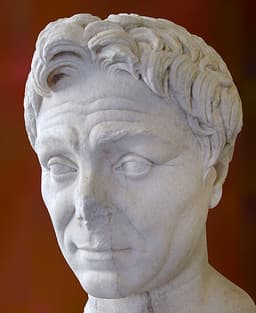
Pompey the Great
General · Ancient
57.9Total
Basic Information
Born
178
-106
Died
219
-48
Era
Ancient
Ancient
Nationality
China
Roman Republic
Occupation
General
General
Civilization
Eastern
Western
Score Comparison
Military (10%)
74.0
88.0
Political (20%)
30.8
68.0
Influence (20%)
54.1
55.0
Legacy (20%)
50.0
40.0
Leadership (15%)
50.7
48.8
Strategy (15%)
61.3
78.4
TOTAL
51.8
57.9
Lu Meng — Complete Timeline
213 AD
Battle of RuxuWar◆ Major
Lu Meng defended Ruxu against Cao Cao's invasion. He used defensive tactics to repel the Wei forces, securing Wu's northern border.
Three KingdomsBattleDefense
Impact: regional
215 AD
Reform of Military TrainingReform
Lu蒙 implemented a program to improve the training and discipline of Wu's navy. He emphasized the use of fire ships and coordinated tactics, enhancing Wu's naval capabilities.
WuMilitary ReformNavy
Impact: nationalconstructive
219 AD
Capture of Jing ProvinceWar
Lu Meng led a surprise attack on Jing Province while Guan Yu was campaigning against Wei. He captured the province, executed Guan Yu, and ended Shu's control of the region.
Three KingdomsConquestJing Province
Impact: global
Pompey the Great — Complete Timeline
67 BC
Clearing the Mediterranean of PiratesWar◆ Major
Pompey was granted extraordinary command under the Lex Gabinia to eliminate piracy in the Mediterranean. He divided the sea into sectors and within three months destroyed pirate fleets and captured their strongholds, restoring Roman trade routes and grain supply.
PiracyRoman NavyGrain Supply
Impact: regionalconstructive
66 BC
Conquest of the East (Third Mithridatic War)War◆ Major
Pompey took command against Mithridates VI of Pontus, defeating him and forcing his suicide. He then annexed Syria, captured Jerusalem, and established Roman provinces in the East. He organized the region into client kingdoms and provinces, extending Roman hegemony to the Euphrates.
Eastern ConquestRoman EmpireClient Kingdoms
Impact: global
60 BC
Formation of the First TriumviratePolitical Action◆ Major
Pompey, Caesar, and Crassus formed a political alliance to advance their individual ambitions. Pompey sought ratification of his Eastern settlements and land for his veterans. The pact dominated Roman politics for a decade until Crassus's death in 53 BC.
AllianceRoman PoliticsPower Sharing
Impact: global
48 BC
Battle of PharsalusWar
Pompey commanded the senatorial army against Caesar at Pharsalus in Greece. Despite numerical superiority, his forces were defeated by Caesar's veterans. Pompey fled to Egypt, expecting refuge, but was assassinated on the orders of the Egyptian court upon arrival.
Roman Civil WarDefeatDeath
Impact: globaltragic
Assassination in EgyptPolitical Action◆ Major
After his defeat at Pharsalus, Pompey landed in Egypt seeking refuge. On September 28, 48 BC, he was stabbed to death by former Roman soldiers serving the Egyptian king Ptolemy XIII, who hoped to curry favor with Caesar. His head was presented to Caesar.
AssassinationEgyptCivil War
Impact: regionaltragic
Expert Analysis
Origins
Lu Meng (178-220 CE) was born into a peasant family in Runan, present-day Anhui, during the waning years of the Han dynasty. Orphaned young, he joined his brother-in-law Deng Dang's military retinue as a teenager, learning combat and tactics on the job without formal education. His early exposure to warfare along the Yangtze River shaped his defensive-minded approach. In contrast, Gnaeus Pompeius Magnus (106-48 BCE) hailed from a wealthy Italian equestrian family in Picenum. His father, Gnaeus Pompeius Strabo, was a consul and successful general who secured client armies, giving Pompey a patrimony of military resources and political connections. Pompey's education was typical of a Roman aristocrat, emphasizing rhetoric, law, and military command. Where Lu Meng rose from obscurity through sheer competence, Pompey inherited a springboard to power.
Rise to Power
Lu Meng's rise began under Sun Ce, but he gained notice after Sun Quan took charge. In 208, at the Battle of Ruxu, Lu Meng defended Wu's northern border against Cao Cao, using defensive tactics that repelled the Wei forces. His strategic advice to Sun Quan to fortify Ruxu proved prescient. However, his defining moment came in 219 when he orchestrated the capture of Jing Province. While Guan Yu was campaigning against Wei, Lu Meng feigned illness, replaced himself with a lesser-known general, and launched a surprise amphibious assault. His forces disguised as merchants infiltrated Jing's defenses, capturing the province and executing Guan Yu. This ended Shu Han's expansion and secured Wu's western flank. Pompey's rise was meteoric. In 83 BCE, at age 23, he raised three legions from his father's veterans to support Sulla against the Marians. Sulla hailed him as "Magnus" (the Great). Pompey then campaigned in Sicily and Africa, defeating Marian forces and earning a triumph in 79 BCE. His political acumen led to the Lex Gabinia in 67 BCE, granting him extraordinary command to clear the Mediterranean of pirates. Within three months, he eradicated piracy, demonstrating organizational genius. He followed with the conquest of the East (66-63 BCE), defeating Mithridates VI, annexing Syria, and capturing Jerusalem. These triumphs made him Rome's most powerful man.
Leadership & Governance
Lu Meng's leadership emphasized discipline and training. He reformed Wu's navy, focusing on fire ships and coordinated tactics, and insisted on merit over birth. He famously studied Sun Tzu's Art of War and other texts at Sun Quan's urging, transforming from a rough soldier into a literate strategist. His governance of captured Jing Province was conciliatory, treating locals leniently to secure loyalty. Pompey's leadership was more about personal prestige and alliances. As a governor, he organized the East into provinces, establishing client kings and a system of tribute that lasted for decades. He built public works in Rome, including his theater and portico, using his wealth to curry favor. However, his political governance was less adept: he mishandled the Senate and ultimately relied on the Triumvirate with Caesar and Crassus. When that alliance frayed, his indecision led to civil war.
Triumph & Tragedy
Lu Meng's greatest triumph was the capture of Jing Province, a masterstroke of deception and speed that expanded Wu's territory and eliminated its rival Shu's best general. He scored 74.0 in military, reflecting his tactical brilliance. His tragedy came soon after: he died of illness in 220, likely in his early forties, just as he reached his peak. His reforms were cut short, and Wu lost a capable commander. Pompey's triumphs were vast: clearing the Mediterranean of pirates in three months (a feat that scored him 88.0 in military) and conquering the East, doubling Rome's revenue. He was awarded three triumphs and the title "Magnus." His tragedy was Pharsalus: despite commanding a larger army, he was decisively defeated by Caesar in 48 BCE. Fleeing to Egypt, he was assassinated on the beach by former Roman soldiers, a humiliating end for a man who had once been "the Great."
Character & Destiny
Lu Meng was cautious, studious, and loyal to Sun Quan. His decision to feign illness and use deception shows a patient, calculating mind. His early death prevented him from reaching higher political power; his destiny was that of a brilliant general who never outlived his moment. Pompey was ambitious, charismatic, but increasingly indecisive. He sought public approval and legal authority, yet hesitated to confront Caesar directly. His character—vainglorious yet anxious—led him to flee Italy rather than fight early, a fatal error. Ancient historians like Plutarch note his inability to handle civil war, a direct contrast to his success against foreign foes.
Legacy
Lu Meng's legacy is mixed: he is celebrated in Chinese history as a model of self-improvement and military cunning, but his execution of Guan Yu made him a villain in later folklore (e.g., in Romance of the Three Kingdoms). His naval reforms influenced later Wu strategy. He scores 50.0 in legacy. Pompey's legacy is more tangible: his Eastern organization lasted centuries, and his name became synonymous with Roman expansion. However, his defeat at Pharsalus and assassination overshadow his achievements; he scores 40.0 in legacy, lower than Lu Meng. Both men's legacies are tied to their respective civil wars: Lu Meng's victory helped shape the Three Kingdoms; Pompey's defeat ended the Republic.
Conclusion
While Pompey the Great achieved higher military scores (88.0 vs 74.0) and had a broader geopolitical impact, Lu Meng's influence within Chinese history and his tactical masterpiece at Jing Province give him a more focused legacy. However, Pompey's failures in political leadership and his ultimate defeat reduce his overall score to 57.9, only slightly above Lu Meng's 51.8. In terms of sheer impact on world history, Pompey's conquests shaped the Roman Empire, but Lu Meng's actions directly altered the trajectory of Chinese civilization. Taking a stance: Pompey the Great had greater immediate impact, but Lu Meng's strategic legacy endures in a more concentrated form. The score gap of 6.1 points reflects Pompey's higher military and political scores, but Lu Meng's higher legacy score (50.0 vs 40.0) suggests his story resonates more in its cultural context. Ultimately, Pompey's broader canvas gives him the edge, but Lu Meng's precision makes him a more admirable tactician.
Rankings
🥇
Pompey the GreatLeader
Mil: 88.0Pol: 68.0Inf: 55.0
57.9
🥈
Lu Meng
Mil: 74.0Pol: 30.8Inf: 54.1
51.8
+6.1 behind
How This Comparison Works
Algorithm
Each figure is scored on 6 dimensions (0—100 scale) based on structured historical data: Military (10%), Political (20%), Influence (20%), Legacy (20%), Leadership (15%), Strategy (15%). The weighted total produces the final ranking.
Data Sources
Scores are computed from structured sub-indicators in the database. Scale factors adjust for era (Ancient ×0.85, Modern ×1.0) and civilization size (Eastern ×1.05, Other ×0.80) to account for differences in population and military scale.
Maximum 3 Figures
Comparisons are limited to 2—3 figures to ensure readability and statistical meaningfulness.
Error Margins
±5 points per dimension — Sub-scores are derived from historical records with inherent uncertainty. Two figures within 5 points on a dimension should be considered roughly equivalent in that area.
Total Score Accuracy
±3 points overall — The weighted combination of 6 dimensions produces a total score with approximately ±3 points of uncertainty. Differences of less than 3 points are not statistically significant— the figures are effectively tied.
Known Limitations
- Historical records are incomplete and uneven across civilizations
- Figures from oral-tradition societies may be underrepresented
- Occupation labels can misclassify multi-role figures
- Scores measure capability and impact, not moral character
- Quantitative scoring is a comparison tool, not absolute truth
Capability Radar
Military (10%) — Battles & Warfare
Battles
65
85
Win Rate
70
90
Expansion
60
92
Political (20%) — Governance & Reform
Reform
30
65
Diplomacy
55
80
Economy
35
70
Influence (20%) — Cultural & Global Reach
Cultural
45
75
Global
30
75
Legacy (20%) — Historical Impact
Historical
60
85
Longevity
55
80
Leadership (15%) — Power & Stability
Tenure
50
85
Stability
40
60
Strategy (15%) — Tactics & Innovation
Strategy
70
88
Tactics
75
80
Reform
30
70
Similar Comparisons
Comments & Discussion
No comments yet. Be the first to share your thoughts!