Loading...
Huan Wen vs Pompey the Great
Pompey the Great leads by 0.8 pts · 2 figures compared
…
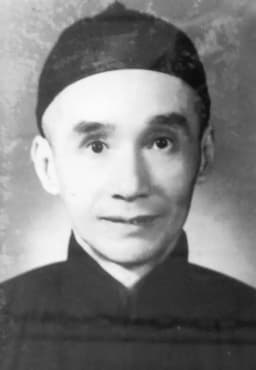
Huan Wen
General · Ancient
57.1Total
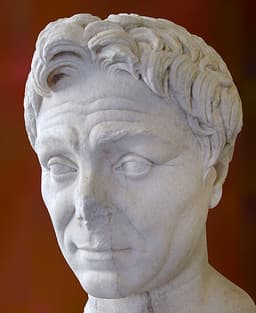
Pompey the Great
General · Ancient
57.9Total
Basic Information
Born
312
-106
Died
373
-48
Era
Ancient
Ancient
Nationality
China
Roman Republic
Occupation
General
General
Civilization
Eastern
Western
Score Comparison
Military (10%)
85.0
88.0
Political (20%)
43.7
68.0
Influence (20%)
54.1
55.0
Legacy (20%)
47.5
40.0
Leadership (15%)
61.1
48.8
Strategy (15%)
75.0
78.4
TOTAL
57.1
57.9
Huan Wen — Complete Timeline
346 AD
Conquest of ShuWar
Huan Wen led a campaign to conquer the Cheng Han state in Sichuan. He defeated the Cheng Han army and captured its capital Chengdu, annexing the region into the Jin Dynasty and expanding Jin territory.
Jin DynastyCheng HanConquestSichuan
Impact: regionalconstructive
354 AD
Northern ExpeditionsWar◆ Major
Huan Wen launched a series of northern expeditions against the Former Qin and other states. He achieved initial victories but failed to hold territory, ultimately retreating due to lack of supplies and political opposition at court.
Jin DynastyNorthern ExpeditionFormer Qin
Impact: regional
371 AD
Attempted UsurpationPolitical Action
Huan Wen deposed Emperor Fei of Jin and installed Emperor Jianwen, a puppet ruler. He sought to usurp the throne but died in 373 before completing his plans, leaving his son Huan Xuan to later attempt the same.
Jin DynastyUsurpationCoupHuan Xuan
Impact: nationaldestructive
Pompey the Great — Complete Timeline
67 BC
Clearing the Mediterranean of PiratesWar◆ Major
Pompey was granted extraordinary command under the Lex Gabinia to eliminate piracy in the Mediterranean. He divided the sea into sectors and within three months destroyed pirate fleets and captured their strongholds, restoring Roman trade routes and grain supply.
PiracyRoman NavyGrain Supply
Impact: regionalconstructive
66 BC
Conquest of the East (Third Mithridatic War)War◆ Major
Pompey took command against Mithridates VI of Pontus, defeating him and forcing his suicide. He then annexed Syria, captured Jerusalem, and established Roman provinces in the East. He organized the region into client kingdoms and provinces, extending Roman hegemony to the Euphrates.
Eastern ConquestRoman EmpireClient Kingdoms
Impact: global
60 BC
Formation of the First TriumviratePolitical Action◆ Major
Pompey, Caesar, and Crassus formed a political alliance to advance their individual ambitions. Pompey sought ratification of his Eastern settlements and land for his veterans. The pact dominated Roman politics for a decade until Crassus's death in 53 BC.
AllianceRoman PoliticsPower Sharing
Impact: global
48 BC
Battle of PharsalusWar
Pompey commanded the senatorial army against Caesar at Pharsalus in Greece. Despite numerical superiority, his forces were defeated by Caesar's veterans. Pompey fled to Egypt, expecting refuge, but was assassinated on the orders of the Egyptian court upon arrival.
Roman Civil WarDefeatDeath
Impact: globaltragic
Assassination in EgyptPolitical Action◆ Major
After his defeat at Pharsalus, Pompey landed in Egypt seeking refuge. On September 28, 48 BC, he was stabbed to death by former Roman soldiers serving the Egyptian king Ptolemy XIII, who hoped to curry favor with Caesar. His head was presented to Caesar.
AssassinationEgyptCivil War
Impact: regionaltragic
Expert Analysis
Origins
Huan Wen was born in 312 CE into a prominent family of the Eastern Jin dynasty. His father, Huan Yi, was a high-ranking official, but the family faced political turbulence. Huan Wen grew up during the chaotic period of the Sixteen Kingdoms, when northern China was fragmented by non-Chinese states. He received a Confucian education and early military training, joining the Jin army as a young man. His career advanced through family connections and his own ambitions, but he lacked the prestige of a royal lineage.
Pompey the Great was born Gnaeus Pompeius Magnus on September 29, 106 BCE, into a wealthy Italian family from Picenum. His father, Gnaeus Pompeius Strabo, was a consul and military commander, though his reputation was mixed. Pompey grew up during the Social War and the civil wars of the late Republic. He joined his father's campaigns as a teenager, gaining military experience. After his father's death, Pompey inherited his client armies and wealth, becoming a private citizen with substantial military power at age 23.
Rise to Power
Huan Wen rose through military successes. In 346 CE, he led a campaign against the Cheng Han state in Sichuan. He marched through difficult terrain, defeated the Cheng Han army at the Battle of Chengdu, and captured the capital. This victory annexed Sichuan for Jin and earned Huan Wen the title of Grand General. He used this prestige to become regent for the young Emperor Mu. Between 354 and 369, Huan Wen launched three northern expeditions against the Former Qin state. His first expedition in 354 reached the Wei River but he retreated due to supply issues. The second in 356 captured the old Jin capital Luoyang temporarily. The third in 369 advanced to Xiangyang but was repelled by Former Qin forces.
Pompey's rise was meteoric. In 83 BCE, he raised three legions from his father's veterans and joined Sulla in the civil war against the Marians. Sulla hailed him as "Magnus" (the Great). Pompey then defeated the Marians in Sicily and Africa, but was denied a triumph by Sulla. In 77 BCE, he was sent to Hispania to fight Sertorius, a rebel Roman general. After a prolonged campaign, Sertorius was assassinated, and Pompey returned to Rome to celebrate a triumph. In 67 BCE, he received an extraordinary command under the Lex Gabinia to clear the Mediterranean of pirates. He divided the sea into sectors and within three months eliminated piracy. In 66 BCE, he took command of the war against Mithridates VI of Pontus. He defeated Mithridates, forced his suicide, and then annexed Syria, captured Jerusalem, and established the province of Syria. He returned to Rome in 62 BCE and celebrated a grand triumph.
Leadership & Governance
Huan Wen's leadership was autocratic and militaristic. He centralized power in his own hands, using military victories to justify political control. As regent, he deposed Emperor Fei in 371 and installed Emperor Jianwen as a puppet. He purged rivals and filled offices with his supporters. His governance focused on consolidating his own power rather than reforming the state. He attempted to usurp the throne but died in 373 before achieving it. His military strategy scored 75.0, reflecting his ability to plan campaigns, but his political score of 43.7 indicates his failure to secure lasting power.
Pompey's leadership was more politically astute. He built a network of client kings and veterans who owed allegiance to him. As a consul, he passed laws to ratify his Eastern settlements and grant land to his veterans. He formed the First Triumvirate with Caesar and Crassus in 60 BCE, an informal alliance that dominated Roman politics. However, Pompey's political skill was reactive; he often hesitated and tried to maintain the status quo. His military score of 88.0 and strategy of 78.4 highlight his tactical brilliance, but his political score of 68.0 indicates he was less adept at long-term statecraft.
Triumph & Tragedy
Huan Wen's greatest triumph was the conquest of Shu in 346, which expanded Jin territory significantly. His occupation of Luoyang in 356 was a symbolic victory, restoring the old capital briefly. However, his northern expeditions ultimately failed to hold territory. His greatest tragedy was his failed usurpation. He deposed a legitimate emperor but could not secure the throne for his own family. His death in 373 left his ambitions unfulfilled, and his family was later purged by the Jin court.
Pompey's triumphs were numerous: clearing the Mediterranean of pirates in 67 BCE, conquering the East and adding Syria and Judaea to Rome, and celebrating three triumphs. His greatest tragedy was his defeat at the Battle of Pharsalus in 48 BCE. Despite commanding a larger army, he was outmaneuvered by Caesar. After the defeat, he fled to Egypt, where he was assassinated by former Roman soldiers on September 28, 48 BCE. His death marked the end of the Republic and the rise of Caesar's dictatorship.
Character & Destiny
Huan Wen was ambitious and ruthless, willing to depose emperors and purge rivals. He was a capable military commander but lacked the political finesse to secure his legacy. His character drove him to attempt usurpation, but his early death prevented him from completing it. Historians view him as a warlord who destabilized the Jin dynasty.
Pompey was proud of his achievements and sought recognition. He was cautious and indecisive in politics, often trying to preserve his status. His character made him a stabilizing force in the Republic for a time, but his rivalry with Caesar led to civil war. His fate was sealed by his inability to match Caesar's audacity.
Legacy
Huan Wen's legacy is mixed. He is remembered as a general who briefly expanded Jin territory but whose ambitions weakened the dynasty. His conquest of Shu was a lasting achievement, but his political machinations foreshadowed the decline of the Eastern Jin. He scored 47.5 in legacy and 54.1 in influence.
Pompey's legacy is more profound. He expanded Rome's eastern borders, established provinces that lasted for centuries, and set precedents for extraordinary commands. His defeat at Pharsalus marked the end of the Republic, but his military reforms influenced later Roman commanders. He scored 40.0 in legacy and 55.0 in influence, but his military impact was higher.
Conclusion
Pompey the Great had greater overall impact than Huan Wen. Pompey's military achievements (score 88.0) reshaped the Roman world, while Huan Wen's (85.0) were more limited. Pompey's political influence (68.0) was higher than Huan Wen's (43.7). Despite his ultimate defeat, Pompey's conquests and administrative actions had lasting effects on the Mediterranean. Huan Wen's failure to secure the throne and the ephemeral nature of his victories reduce his long-term significance. Pompey's legacy, though tarnished by his fall, endures in Roman history.
Rankings
🥇
Pompey the GreatLeader
Mil: 88.0Pol: 68.0Inf: 55.0
57.9
🥈
Huan Wen
Mil: 85.0Pol: 43.7Inf: 54.1
57.1
+0.8 behind
How This Comparison Works
Algorithm
Each figure is scored on 6 dimensions (0—100 scale) based on structured historical data: Military (10%), Political (20%), Influence (20%), Legacy (20%), Leadership (15%), Strategy (15%). The weighted total produces the final ranking.
Data Sources
Scores are computed from structured sub-indicators in the database. Scale factors adjust for era (Ancient ×0.85, Modern ×1.0) and civilization size (Eastern ×1.05, Other ×0.80) to account for differences in population and military scale.
Maximum 3 Figures
Comparisons are limited to 2—3 figures to ensure readability and statistical meaningfulness.
Error Margins
±5 points per dimension — Sub-scores are derived from historical records with inherent uncertainty. Two figures within 5 points on a dimension should be considered roughly equivalent in that area.
Total Score Accuracy
±3 points overall — The weighted combination of 6 dimensions produces a total score with approximately ±3 points of uncertainty. Differences of less than 3 points are not statistically significant— the figures are effectively tied.
Known Limitations
- Historical records are incomplete and uneven across civilizations
- Figures from oral-tradition societies may be underrepresented
- Occupation labels can misclassify multi-role figures
- Scores measure capability and impact, not moral character
- Quantitative scoring is a comparison tool, not absolute truth
Capability Radar
Military (10%) — Battles & Warfare
Battles
75
85
Win Rate
70
90
Expansion
70
92
Political (20%) — Governance & Reform
Reform
55
65
Diplomacy
60
80
Economy
50
70
Influence (20%) — Cultural & Global Reach
Cultural
45
75
Global
30
75
Legacy (20%) — Historical Impact
Historical
55
85
Longevity
40
80
Leadership (15%) — Power & Stability
Tenure
65
85
Stability
40
60
Strategy (15%) — Tactics & Innovation
Strategy
75
88
Tactics
80
80
Reform
60
70
Similar Comparisons
Comments & Discussion
No comments yet. Be the first to share your thoughts!