Loading...
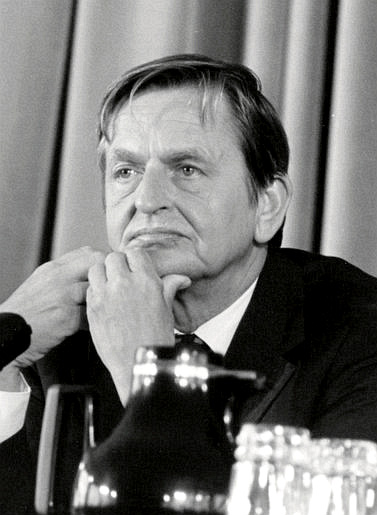
Olof Palme
ModernPoliticianSweden1927 — ?
Swedish prime minister assassinated in Stockholm.
Compare Olof Palme with another historical figure:
Quick Facts
Born
1927
Country
Sweden
Era
Modern
Occupation
Politician
Score Overview
Military (10%)49
Political (20%)72
Influence (20%)58
Legacy (20%)56
Leadership (15%)72
Strategy (15%)44
Total Score59.4
Olof Palme — Complete Timeline
1968 AD
Criticism of the Vietnam WarPolitical Action◆ Major
As a prominent Social Democrat, Palme vocally criticized the US involvement in the Vietnam War, even participating in a protest march alongside the North Vietnamese ambassador in 1968. His stance strained US-Sweden relations but solidified his reputation as a champion of anti-imperialism and international solidarity.
Foreign PolicyVietnam WarProtest
Impact: globalconstructive
1969 AD
Domestic Reforms and Welfare State ExpansionReform◆ Major
Palme's government implemented a series of progressive reforms, including expanded parental leave, increased pensions, and the introduction of a comprehensive health insurance system. He also pursued educational reforms and workplace democratization, strengthening Sweden's welfare state and social safety net.
Welfare StateSocial ReformSweden
Impact: nationalconstructive
1970 AD
Support for Decolonization and Anti-ApartheidPolitical Action◆ Major
Palme was a vocal supporter of decolonization movements in Africa and Asia, and a strong opponent of apartheid in South Africa. He provided financial and political support to the African National Congress (ANC) and other liberation movements, and condemned the Pinochet regime in Chile after the 1973 coup.
Foreign PolicyAnti-ApartheidDecolonization
Impact: globalconstructive
1986 AD
Assassination of Olof PalmePolitical Action
On February 28, 1986, Prime Minister Olof Palme was shot and killed while walking home from a cinema in Stockholm with his wife. The assassination, which remains unsolved, shocked Sweden and the world, and led to a massive police investigation that failed to identify the perpetrator.
AssassinationPolitical ViolenceSweden
Impact: nationaltragic
Detailed Scores
▶View all detailed scores
Military
Strategy
6
Tactics
5
Battles
6
Army Scale
5
War Impact
6
Political
Governance
7
Reform
7
Stability
7
Policy
7
Power
8
Influence
History
9
Global
8
Culture
8
Ideology
9
Legacy
8
People often compare with
See how Olof Palme stacks up against other historical figures
Popular Comparisons
Olof Palme vs Valentin Paniagua
vs Valentin Paniagua54
Olof Palme vs Keith Mitchell
vs Keith Mitchell53
Olof Palme vs Hu Jintao
vs Hu Jintao52
Olof Palme vs Nong Duc Manh
vs Nong Duc Manh48
Olof Palme vs Abdirashid Ali Shermarke
vs Abdirashid Ali Shermarke47
Olof Palme vs Shi Kefa
vs Shi Kefa43