Loading...
Nong Duc Manh vs Olof Palme
Olof Palme leads by 11.9 pts · 2 figures compared
…

Nong Duc Manh
Politician · Modern
47.5Total
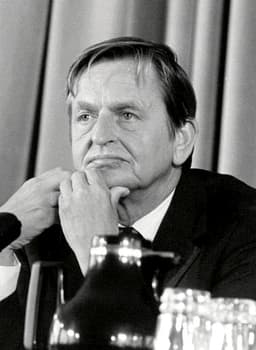
Olof Palme
Politician · Modern
59.4Total
Basic Information
Born
1940
1927
Died
—
—
Era
Modern
Modern
Nationality
Vietnam
Sweden
Occupation
Politician
Politician
Civilization
Eastern
Western
Score Comparison
Military (10%)
10.2
48.5
Political (20%)
62.7
72.0
Influence (20%)
50.2
58.3
Legacy (20%)
42.5
56.0
Leadership (15%)
72.0
72.0
Strategy (15%)
30.6
43.5
TOTAL
47.5
59.4
Nong Duc Manh — Complete Timeline
2001 AD
Elected as General Secretary of the Communist Party of VietnamPolitical Action◆ Major
Nong Duc Manh was elected as General Secretary of the Communist Party of Vietnam at the 9th National Party Congress. He succeeded Le Kha Phieu and became the first ethnic minority (Tay) to hold the top party position.
Communist PartyLeadershipEthnic Minority
Impact: national
2006 AD
Hosted the 2006 APEC Summit in HanoiPolitical Action◆ Major
Nong Duc Manh hosted the Asia-Pacific Economic Cooperation (APEC) summit in Hanoi, which brought together leaders from 21 economies. The summit enhanced Vietnam's international profile and promoted regional economic cooperation.
APECDiplomacyInternational Relations
Impact: globalconstructive
2007 AD
Oversaw Vietnam's WTO AccessionPolitical Action◆ Major
Under Nong Duc Manh's leadership, Vietnam joined the World Trade Organization (WTO) after years of negotiations. The accession opened Vietnam's economy to global trade and investment, accelerating economic growth.
WTOEconomic IntegrationTrade
Impact: globalconstructive
2011 AD
Stepped Down as Party ChiefPolitical Action◆ Major
Nong Duc Manh stepped down as General Secretary at the 11th National Party Congress, handing over power to Nguyen Phu Trong. His retirement marked a peaceful transition of leadership, a rarity in Vietnamese politics.
Leadership TransitionRetirementParty Congress
Impact: national
Olof Palme — Complete Timeline
1968 AD
Criticism of the Vietnam WarPolitical Action◆ Major
As a prominent Social Democrat, Palme vocally criticized the US involvement in the Vietnam War, even participating in a protest march alongside the North Vietnamese ambassador in 1968. His stance strained US-Sweden relations but solidified his reputation as a champion of anti-imperialism and international solidarity.
Foreign PolicyVietnam WarProtest
Impact: globalconstructive
1969 AD
Domestic Reforms and Welfare State ExpansionReform◆ Major
Palme's government implemented a series of progressive reforms, including expanded parental leave, increased pensions, and the introduction of a comprehensive health insurance system. He also pursued educational reforms and workplace democratization, strengthening Sweden's welfare state and social safety net.
Welfare StateSocial ReformSweden
Impact: nationalconstructive
1970 AD
Support for Decolonization and Anti-ApartheidPolitical Action◆ Major
Palme was a vocal supporter of decolonization movements in Africa and Asia, and a strong opponent of apartheid in South Africa. He provided financial and political support to the African National Congress (ANC) and other liberation movements, and condemned the Pinochet regime in Chile after the 1973 coup.
Foreign PolicyAnti-ApartheidDecolonization
Impact: globalconstructive
1986 AD
Assassination of Olof PalmePolitical Action
On February 28, 1986, Prime Minister Olof Palme was shot and killed while walking home from a cinema in Stockholm with his wife. The assassination, which remains unsolved, shocked Sweden and the world, and led to a massive police investigation that failed to identify the perpetrator.
AssassinationPolitical ViolenceSweden
Impact: nationaltragic
Expert Analysis
Origins
Nong Duc Manh was born in 1940 in the remote Tay ethnic minority village of Cuong Loi in Bac Kan province, Vietnam. His father was a poor peasant, and Manh joined the Communist Party in 1963 after studying forestry at the University of Forestry. He rose through the party ranks, serving as chairman of the Bac Thai provincial people's committee from 1974 to 1984, where he focused on agricultural development.
Olof Palme was born in 1927 into an upper-class Swedish family in Stockholm. His father was a businessman, and Palme studied at Kenyon College in the US and later at Stockholm University, earning a law degree. He joined the Social Democratic Youth League in 1949 and became active in student politics, influenced by the horrors of World War II.
Rise to Power
Nong Duc Manh's rise was gradual within the Communist Party of Vietnam. He became a member of the Central Committee in 1986, the Secretariat in 1991, and the Politburo in 1992. In 1997, he was elected Chairman of the National Assembly, a position he held until 2001. His major breakthrough came in April 2001 when he was elected General Secretary of the Communist Party, succeeding Le Kha Phieu. He was the first ethnic minority leader of the party, a symbol of unity.
Olof Palme entered the Swedish parliament in 1957 and quickly became a close aide to Prime Minister Tage Erlander. He served as Minister of Communications (1965-1967) and then Minister of Education (1967-1969). In 1969, he succeeded Erlander as Prime Minister, becoming at 42 the youngest in Europe. His rise was marked by his charismatic oratory and strong anti-war stance.
Leadership & Governance
Nong Duc Manh's leadership style was pragmatic and consensus-driven. He focused on economic growth and integration, overseeing Vietnam's accession to the World Trade Organization in 2007. He also hosted the 2006 APEC summit, boosting Vietnam's international profile. Domestically, he maintained the party's monopoly on power and promoted anti-corruption campaigns, though with limited success. His political score of 62.7 reflects his steady but unremarkable governance.
Olof Palme was a visionary social democrat. He expanded Sweden's welfare state, introducing a comprehensive parental leave system, increased pensions, and progressive taxation. His foreign policy was activist: he criticized the US war in Vietnam, supported decolonization, and provided financial aid to anti-apartheid movements. His leadership score of 72.0 is matched by his high political score of 72.0, indicating strong influence both domestically and internationally.
Triumph & Tragedy
Nong Duc Manh's triumphs include Vietnam's WTO accession, which boosted trade and foreign investment, and the successful APEC summit. His tragedy lies in the persistence of corruption and inequality despite his anti-graft efforts. He stepped down peacefully in 2011, a rare feat in Vietnamese politics, but his legacy is overshadowed by more dynamic successors.
Olof Palme's triumphs include the expansion of the Swedish welfare state and his moral leadership on global issues. His tragedy is his assassination in 1986, which remains unsolved and traumatized Sweden. The murder cut short his reforms and left a legacy of unresolved grief. His influence score of 58.3 reflects his global reach, but his military score of 48.5 is low for a peacetime leader.
Character & Destiny
Nong Duc Manh was cautious and bureaucratic, reflecting his rise through the party machine. His ethnic background made him a symbol of inclusivity, but he lacked the charisma of his predecessors. His destiny was to be a transitional figure, steering Vietnam through economic integration but failing to address systemic issues.
Olof Palme was bold and outspoken, willing to challenge superpowers. His character made him a target; he received death threats for his activism. His destiny was cut short by violence, turning him into a martyr for social democracy. Historians often note his stubbornness and moral absolutism as both strengths and weaknesses.
Legacy
Nong Duc Manh's legacy is mixed. He is remembered as the leader who opened Vietnam to global trade but did little to reform the political system. His total score of 47.5 reflects his moderate impact. Vietnam's WTO membership endures, but his personal imprint is faint.
Olof Palme's legacy is profound. He shaped modern Sweden's social policies, and his anti-war and anti-apartheid stances inspired global movements. His assassination made him an icon. His total score of 59.4 is higher, reflecting greater influence and lasting impact.
Conclusion
Olof Palme had a greater impact than Nong Duc Manh. Palme's reforms transformed Swedish society and his moral voice resonated worldwide. Manh, while competent, was a steward of a one-party state who facilitated economic integration but left no major ideological or structural change. The score gap of 11.9 points underscores this. Palme's legacy is more enduring and globally recognized, making him the more significant leader.
Rankings
🥇
Olof PalmeLeader
Mil: 48.5Pol: 72.0Inf: 58.3
59.4
🥈
Nong Duc Manh
Mil: 10.2Pol: 62.7Inf: 50.2
47.5
+11.9 behind
How This Comparison Works
Algorithm
Each figure is scored on 6 dimensions (0—100 scale) based on structured historical data: Military (10%), Political (20%), Influence (20%), Legacy (20%), Leadership (15%), Strategy (15%). The weighted total produces the final ranking.
Data Sources
Scores are computed from structured sub-indicators in the database. Scale factors adjust for era (Ancient ×0.85, Modern ×1.0) and civilization size (Eastern ×1.05, Other ×0.80) to account for differences in population and military scale.
Maximum 3 Figures
Comparisons are limited to 2—3 figures to ensure readability and statistical meaningfulness.
Error Margins
±5 points per dimension — Sub-scores are derived from historical records with inherent uncertainty. Two figures within 5 points on a dimension should be considered roughly equivalent in that area.
Total Score Accuracy
±3 points overall — The weighted combination of 6 dimensions produces a total score with approximately ±3 points of uncertainty. Differences of less than 3 points are not statistically significant— the figures are effectively tied.
Known Limitations
- Historical records are incomplete and uneven across civilizations
- Figures from oral-tradition societies may be underrepresented
- Occupation labels can misclassify multi-role figures
- Scores measure capability and impact, not moral character
- Quantitative scoring is a comparison tool, not absolute truth
Capability Radar
Military (10%) — Battles & Warfare
Battles
16
30
Win Rate
19
32
Expansion
21
36
Political (20%) — Governance & Reform
Reform
55
75
Diplomacy
60
80
Economy
55
70
Influence (20%) — Cultural & Global Reach
Cultural
20
60
Global
20
60
Legacy (20%) — Historical Impact
Historical
30
65
Longevity
25
55
Leadership (15%) — Power & Stability
Tenure
65
65
Stability
60
55
Strategy (15%) — Tactics & Innovation
Strategy
22
39
Tactics
26
40
Reform
31
46
Similar Comparisons
Comments & Discussion
No comments yet. Be the first to share your thoughts!