Loading...
Olof Palme vs Valentin Paniagua
Olof Palme leads by 5.2 pts · 2 figures compared
…
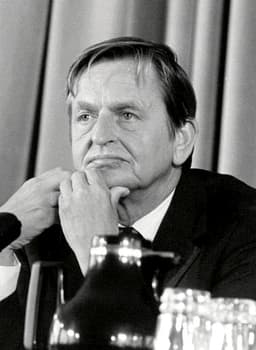
Olof Palme
Politician · Modern
59.4Total

Valentin Paniagua
Politician · Modern
54.2Total
Basic Information
Born
1927
1936
Died
—
—
Era
Modern
Modern
Nationality
Sweden
Peru
Occupation
Politician
Politician
Civilization
Western
Western
Score Comparison
Military (10%)
48.5
47.7
Political (20%)
72.0
72.0
Influence (20%)
58.3
50.2
Legacy (20%)
56.0
44.2
Leadership (15%)
72.0
72.0
Strategy (15%)
43.5
42.5
TOTAL
59.4
54.2
Olof Palme — Complete Timeline
1968 AD
Criticism of the Vietnam WarPolitical Action◆ Major
As a prominent Social Democrat, Palme vocally criticized the US involvement in the Vietnam War, even participating in a protest march alongside the North Vietnamese ambassador in 1968. His stance strained US-Sweden relations but solidified his reputation as a champion of anti-imperialism and international solidarity.
Foreign PolicyVietnam WarProtest
Impact: globalconstructive
1969 AD
Domestic Reforms and Welfare State ExpansionReform◆ Major
Palme's government implemented a series of progressive reforms, including expanded parental leave, increased pensions, and the introduction of a comprehensive health insurance system. He also pursued educational reforms and workplace democratization, strengthening Sweden's welfare state and social safety net.
Welfare StateSocial ReformSweden
Impact: nationalconstructive
1970 AD
Support for Decolonization and Anti-ApartheidPolitical Action◆ Major
Palme was a vocal supporter of decolonization movements in Africa and Asia, and a strong opponent of apartheid in South Africa. He provided financial and political support to the African National Congress (ANC) and other liberation movements, and condemned the Pinochet regime in Chile after the 1973 coup.
Foreign PolicyAnti-ApartheidDecolonization
Impact: globalconstructive
1986 AD
Assassination of Olof PalmePolitical Action
On February 28, 1986, Prime Minister Olof Palme was shot and killed while walking home from a cinema in Stockholm with his wife. The assassination, which remains unsolved, shocked Sweden and the world, and led to a massive police investigation that failed to identify the perpetrator.
AssassinationPolitical ViolenceSweden
Impact: nationaltragic
Valentin Paniagua — Complete Timeline
2000 AD
Appointed Interim President of PeruPolitical Action
After the resignation of President Alberto Fujimori amid a corruption scandal, Valent
InterimTransitionDemocracy
Impact: nationalconstructive
2001 AD
Oversaw the transition to democratic electionsPolitical Action◆ Major
Paniagua's interim government organized free and fair elections in 2001, which were won by Alejandro Toledo. This marked the end of the Fujimori era and the restoration of democratic governance in Peru.
ElectionDemocracyTransition
Impact: nationalconstructive
Created the Truth and Reconciliation CommissionPolitical Action◆ Major
Paniagua established the Truth and Reconciliation Commission (CVR) to investigate human rights abuses committed during the internal conflict between the government and insurgent groups (1980-2000). The CVR's report documented thousands of deaths and disappearances.
Human RightsTruth CommissionJustice
Impact: nationalconstructive
Expert Analysis
Origins
Olof Palme was born on January 30, 1927, in Stockholm, Sweden, into an upper-class family. His father was a businessman, and his mother was from a wealthy family. Palme studied at Kenyon College in Ohio and later at Stockholm University, where he earned a law degree. He joined the Social Democratic Party in the 1950s, influenced by his experiences traveling in developing countries and his opposition to nuclear weapons.
Valentín Paniagua was born on September 23, 1936, in Cusco, Peru, into a middle-class family. He studied law at the National University of San Antonio Abad in Cusco and later at the Pontifical Catholic University of Peru. Paniagua began his political career in the Christian Democratic Party and later joined Popular Action. He served as a congressman and held several ministerial positions before becoming interim president.
Rise to Power
Palme rose quickly through the Social Democratic ranks. He became a member of parliament in 1958, and by 1963 he was appointed Minister without Portfolio. In 1965, he became Minister of Communications, and in 1967, Minister of Education. His strong rhetoric against the Vietnam War and U.S. imperialism gained him international attention. In 1969, he succeeded Tage Erlander as Prime Minister of Sweden, a position he held until 1976 and again from 1982 until his assassination in 1986.
Paniagua's rise to power was more gradual and culminated in a crisis. He served as Minister of Education (1984-1985) and Minister of Justice (1985) under President Fernando Belaúnde. After the fall of Alberto Fujimori's regime in 2000, Paniagua, as President of Congress, was appointed interim president on November 22, 2000. His main task was to oversee a transition back to democratic governance.
Leadership & Governance
Palme's leadership was characterized by a strong commitment to social democracy and an expansive welfare state. He implemented reforms such as a comprehensive parental leave system, increased pensions, and a progressive tax system. He also nationalized some industries and expanded public services. Palme scored 72.0 in political and leadership categories, reflecting his ability to push through significant domestic reforms. However, his foreign policy was confrontational, especially his criticism of the U.S. and support for anti-colonial movements.
Paniagua's leadership was focused on restoring democratic institutions. He appointed a broad-based cabinet of independents and technocrats, organized free and fair elections in April 2001, and established the Truth and Reconciliation Commission to investigate human rights abuses. His political score is also 72.0, but his strategy score is lower at 42.5, as his role was more transitional than transformative. Paniagua's governance was marked by consensus-building and transparency, which helped restore public trust.
Triumph & Tragedy
Palme's greatest triumph was the expansion of Sweden's welfare state, which became a model for social democracy. He also played a key role in international affairs, supporting decolonization and opposing apartheid. His assassination on February 28, 1986, remains an unsolved tragedy that shocked Sweden and the world. The murder highlighted the vulnerabilities of open societies and left a legacy of unfinished reforms.
Paniagua's triumph was his successful management of Peru's transition from authoritarian rule to democracy. He oversaw the 2001 elections, which were deemed free and fair, and the creation of the Truth and Reconciliation Commission, which documented atrocities. His tragedy was the brevity of his presidency (only 8 months) and the limited scope of his reforms. He was unable to address deeper structural issues in Peru, such as economic inequality and political corruption.
Character & Destiny
Palme was known for his intellectual rigor, oratorical skills, and unwavering idealism. His confrontational style, particularly in foreign policy, made him both admired and hated. His character—principled but polarizing—shaped his destiny: he was assassinated by a still-unknown assailant, possibly linked to his outspoken stance against imperialism.
Paniagua was seen as a moderate, conciliatory figure with a deep commitment to democratic norms. His calm demeanor and legal expertise made him the ideal caretaker during a crisis. His destiny was to be a transitional leader, remembered for restoring democracy rather than for long-term governance.
Legacy
Palme's legacy is mixed. In Sweden, he is remembered as the architect of the modern welfare state, but his assassination created a sense of national trauma. Internationally, he is a symbol of anti-imperialism and social democracy. His influence score is 58.3, reflecting his impact on global leftist movements.
Paniagua's legacy is more focused on democratic restoration. He is credited with peacefully ending the Fujimori regime and laying the groundwork for democratic consolidation in Peru. His legacy score is 44.2, lower than Palme's, as his impact was more procedural than substantive. However, his role in transitional justice is highly regarded.
Conclusion
Olof Palme had a greater impact than Valentín Paniagua, with a total score of 59.4 compared to 54.2. While both were effective political leaders (both scoring 72.0 in political and leadership), Palme's influence and legacy were broader due to his long tenure and global activism. Paniagua's role was crucial but temporary, and his reforms were more about restoration than innovation. Palme's welfare state expansion and anti-colonial advocacy left a deeper mark on world history. Thus, Palme stands as the more significant figure.
Rankings
🥇
Olof PalmeLeader
Mil: 48.5Pol: 72.0Inf: 58.3
59.4
🥈
Valentin Paniagua
Mil: 47.7Pol: 72.0Inf: 50.2
54.2
+5.2 behind
How This Comparison Works
Algorithm
Each figure is scored on 6 dimensions (0—100 scale) based on structured historical data: Military (10%), Political (20%), Influence (20%), Legacy (20%), Leadership (15%), Strategy (15%). The weighted total produces the final ranking.
Data Sources
Scores are computed from structured sub-indicators in the database. Scale factors adjust for era (Ancient ×0.85, Modern ×1.0) and civilization size (Eastern ×1.05, Other ×0.80) to account for differences in population and military scale.
Maximum 3 Figures
Comparisons are limited to 2—3 figures to ensure readability and statistical meaningfulness.
Error Margins
±5 points per dimension — Sub-scores are derived from historical records with inherent uncertainty. Two figures within 5 points on a dimension should be considered roughly equivalent in that area.
Total Score Accuracy
±3 points overall — The weighted combination of 6 dimensions produces a total score with approximately ±3 points of uncertainty. Differences of less than 3 points are not statistically significant— the figures are effectively tied.
Known Limitations
- Historical records are incomplete and uneven across civilizations
- Figures from oral-tradition societies may be underrepresented
- Occupation labels can misclassify multi-role figures
- Scores measure capability and impact, not moral character
- Quantitative scoring is a comparison tool, not absolute truth
Capability Radar
Military (10%) — Battles & Warfare
Battles
30
29
Win Rate
32
34
Expansion
36
37
Political (20%) — Governance & Reform
Reform
75
70
Diplomacy
80
65
Economy
70
40
Influence (20%) — Cultural & Global Reach
Cultural
60
20
Global
60
20
Legacy (20%) — Historical Impact
Historical
65
40
Longevity
55
25
Leadership (15%) — Power & Stability
Tenure
65
15
Stability
55
75
Strategy (15%) — Tactics & Innovation
Strategy
39
38
Tactics
40
42
Reform
46
43
Similar Comparisons
Comments & Discussion
No comments yet. Be the first to share your thoughts!