Loading...
This comparison has not been analyzed yet.
One-time AI generation (~1 minute). Scores and timeline are already available below.
Olof Palme vs Shi Kefa
Olof Palme leads by 16.5 pts · 2 figures compared
…
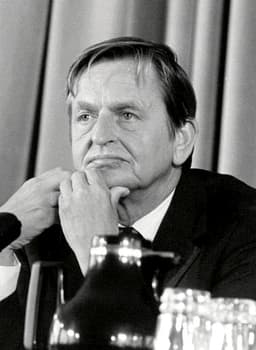
Olof Palme
Politician · Modern
59.4Total

Shi Kefa
Politician · Modern
42.9Total
Basic Information
Born
1927
1601
Died
—
1645
Era
Modern
Modern
Nationality
Sweden
China
Occupation
Politician
Politician
Civilization
Western
Eastern
Score Comparison
Military (10%)
48.5
21.2
Political (20%)
72.0
30.8
Influence (20%)
58.3
57.2
Legacy (20%)
56.0
48.3
Leadership (15%)
72.0
48.4
Strategy (15%)
43.5
25.0
TOTAL
59.4
42.9
Olof Palme — Complete Timeline
1968 AD
Criticism of the Vietnam WarPolitical Action◆ Major
As a prominent Social Democrat, Palme vocally criticized the US involvement in the Vietnam War, even participating in a protest march alongside the North Vietnamese ambassador in 1968. His stance strained US-Sweden relations but solidified his reputation as a champion of anti-imperialism and international solidarity.
Foreign PolicyVietnam WarProtest
Impact: globalconstructive
1969 AD
Domestic Reforms and Welfare State ExpansionReform◆ Major
Palme's government implemented a series of progressive reforms, including expanded parental leave, increased pensions, and the introduction of a comprehensive health insurance system. He also pursued educational reforms and workplace democratization, strengthening Sweden's welfare state and social safety net.
Welfare StateSocial ReformSweden
Impact: nationalconstructive
1970 AD
Support for Decolonization and Anti-ApartheidPolitical Action◆ Major
Palme was a vocal supporter of decolonization movements in Africa and Asia, and a strong opponent of apartheid in South Africa. He provided financial and political support to the African National Congress (ANC) and other liberation movements, and condemned the Pinochet regime in Chile after the 1973 coup.
Foreign PolicyAnti-ApartheidDecolonization
Impact: globalconstructive
1986 AD
Assassination of Olof PalmePolitical Action
On February 28, 1986, Prime Minister Olof Palme was shot and killed while walking home from a cinema in Stockholm with his wife. The assassination, which remains unsolved, shocked Sweden and the world, and led to a massive police investigation that failed to identify the perpetrator.
AssassinationPolitical ViolenceSweden
Impact: nationaltragic
Shi Kefa — Complete Timeline
1644 AD
Appointed Minister of WarPolitical Action◆ Major
Shi Kefa was appointed Minister of War by the Ming loyalist regime in Nanjing after the fall of Beijing to Li Zicheng's rebels. He organized defenses against the advancing Qing forces in the Yangtze region.
Minister of WarMing LoyalistNanjing
Impact: nationalconstructive
1645 AD
Defended Yangzhou from Qing SiegeWar
Shi Kefa commanded the defense of Yangzhou against a massive Qing army led by Prince Dodo. Despite outnumbered forces, he held the city for several days, inflicting heavy casualties on the attackers before the walls were breached.
YangzhouSiegeQing Conquest
Impact: regionaltragic
Died Defending YangzhouWar
After Yangzhou fell to the Qing, Shi Kefa was captured and executed by the Manchus. His death made him a martyr for Ming loyalism, and he is remembered as a symbol of resistance to the Qing conquest of China.
MartyrdomMing LoyalistQing Conquest
Impact: nationaltragic
This comparison has not been analyzed yet.
One-time AI generation (~1 minute). Scores and timeline are already available below.
Rankings
🥇
Olof PalmeLeader
Mil: 48.5Pol: 72.0Inf: 58.3
59.4
🥈
Shi Kefa
Mil: 21.2Pol: 30.8Inf: 57.2
42.9
+16.5 behind
How This Comparison Works
Algorithm
Each figure is scored on 6 dimensions (0—100 scale) based on structured historical data: Military (10%), Political (20%), Influence (20%), Legacy (20%), Leadership (15%), Strategy (15%). The weighted total produces the final ranking.
Data Sources
Scores are computed from structured sub-indicators in the database. Scale factors adjust for era (Ancient ×0.85, Modern ×1.0) and civilization size (Eastern ×1.05, Other ×0.80) to account for differences in population and military scale.
Maximum 3 Figures
Comparisons are limited to 2—3 figures to ensure readability and statistical meaningfulness.
Error Margins
±5 points per dimension — Sub-scores are derived from historical records with inherent uncertainty. Two figures within 5 points on a dimension should be considered roughly equivalent in that area.
Total Score Accuracy
±3 points overall — The weighted combination of 6 dimensions produces a total score with approximately ±3 points of uncertainty. Differences of less than 3 points are not statistically significant— the figures are effectively tied.
Known Limitations
- Historical records are incomplete and uneven across civilizations
- Figures from oral-tradition societies may be underrepresented
- Occupation labels can misclassify multi-role figures
- Scores measure capability and impact, not moral character
- Quantitative scoring is a comparison tool, not absolute truth
Capability Radar
Military (10%) — Battles & Warfare
Battles
30
35
Win Rate
32
20
Expansion
36
5
Political (20%) — Governance & Reform
Reform
75
15
Diplomacy
80
25
Economy
70
20
Influence (20%) — Cultural & Global Reach
Cultural
60
45
Global
60
30
Legacy (20%) — Historical Impact
Historical
65
50
Longevity
55
40
Leadership (15%) — Power & Stability
Tenure
65
30
Stability
55
10
Strategy (15%) — Tactics & Innovation
Strategy
39
30
Tactics
40
40
Reform
46
10
Similar Comparisons
Comments & Discussion
No comments yet. Be the first to share your thoughts!