Loading...
Hu Jintao vs Olof Palme
Olof Palme leads by 7.4 pts · 2 figures compared
…

Hu Jintao
Politician · Modern
52.0Total
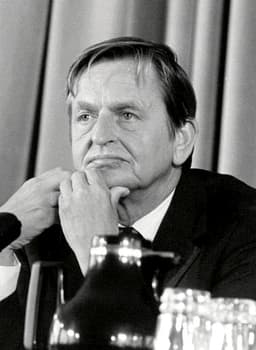
Olof Palme
Politician · Modern
59.4Total
Basic Information
Born
1942
1927
Died
—
—
Era
Modern
Modern
Nationality
China
Sweden
Occupation
Politician
Politician
Civilization
Eastern
Western
Score Comparison
Military (10%)
17.2
48.5
Political (20%)
59.3
72.0
Influence (20%)
62.0
58.3
Legacy (20%)
48.3
56.0
Leadership (15%)
72.0
72.0
Strategy (15%)
30.0
43.5
TOTAL
52.0
59.4
Hu Jintao — Complete Timeline
2002 AD
Appointed General Secretary of the Communist PartyPolitical Action◆ Major
Hu Jintao succeeded Jiang Zemin as General Secretary. He promoted the 'Scientific Development Concept', emphasizing balanced growth, environmental protection, and social welfare.
Party LeadershipIdeology
Impact: nationalconstructive
2005 AD
Promulgated the 'Harmonious Society' PolicyPolitical Action◆ Major
Hu Jintao introduced the 'Harmonious Society' policy to address social inequalities and reduce unrest. It focused on rural development, healthcare reform, and poverty alleviation.
Social PolicyWelfare
Impact: nationalconstructive
2008 AD
Hosted the 2008 Beijing OlympicsCultural◆ Major
Under Hu Jintao's presidency, China hosted the Summer Olympics in Beijing. The event showcased China's economic rise and modernization to the world.
OlympicsSoft Power
Impact: globalconstructive
Responded to the 2008 Sichuan EarthquakePolitical Action◆ Major
Hu Jintao oversaw the government's response to the magnitude 8.0 Sichuan earthquake, which killed over 69,000 people. The relief effort was massive but criticized for slow initial response.
Natural DisasterEmergency Response
Impact: national
Olof Palme — Complete Timeline
1968 AD
Criticism of the Vietnam WarPolitical Action◆ Major
As a prominent Social Democrat, Palme vocally criticized the US involvement in the Vietnam War, even participating in a protest march alongside the North Vietnamese ambassador in 1968. His stance strained US-Sweden relations but solidified his reputation as a champion of anti-imperialism and international solidarity.
Foreign PolicyVietnam WarProtest
Impact: globalconstructive
1969 AD
Domestic Reforms and Welfare State ExpansionReform◆ Major
Palme's government implemented a series of progressive reforms, including expanded parental leave, increased pensions, and the introduction of a comprehensive health insurance system. He also pursued educational reforms and workplace democratization, strengthening Sweden's welfare state and social safety net.
Welfare StateSocial ReformSweden
Impact: nationalconstructive
1970 AD
Support for Decolonization and Anti-ApartheidPolitical Action◆ Major
Palme was a vocal supporter of decolonization movements in Africa and Asia, and a strong opponent of apartheid in South Africa. He provided financial and political support to the African National Congress (ANC) and other liberation movements, and condemned the Pinochet regime in Chile after the 1973 coup.
Foreign PolicyAnti-ApartheidDecolonization
Impact: globalconstructive
1986 AD
Assassination of Olof PalmePolitical Action
On February 28, 1986, Prime Minister Olof Palme was shot and killed while walking home from a cinema in Stockholm with his wife. The assassination, which remains unsolved, shocked Sweden and the world, and led to a massive police investigation that failed to identify the perpetrator.
AssassinationPolitical ViolenceSweden
Impact: nationaltragic
Expert Analysis
Origins
Hu Jintao was born on December 21, 1942, in Taizhou, Jiangsu, China. His father was a small business owner, and the family faced difficulties during the Japanese occupation. Hu joined the Communist Party in 1964 and studied hydraulic engineering at Tsinghua University, graduating in 1965. He worked as a technician and party official in Gansu province, climbing the ranks through the Communist Youth League.
Olof Palme was born on January 30, 1927, in Stockholm, Sweden, into an upper-class family. His father was a director of an insurance company, and his mother was from a wealthy family. Palme studied at Kenyon College in Ohio and later at Stockholm University, earning a law degree in 1951. He became involved in student politics and joined the Social Democratic Party in 1953.
Rise to Power
Hu Jintao rose through the Chinese Communist Party apparatus. He served as party secretary in Tibet from 1988 to 1992, handling the aftermath of the 1989 protests. In 1992, he became a member of the Politburo Standing Committee. By 2002, he succeeded Jiang Zemin as General Secretary of the Communist Party, and in 2003 became President of China. His rise was marked by careful navigation of factional politics, with support from both Deng Xiaoping and Jiang Zemin.
Olof Palme became Prime Minister of Sweden in 1969 at age 42, after serving as Minister of Education and Minister of Transport. He was a protégé of Prime Minister Tage Erlander. Palme's rise was rapid due to his charisma and oratory skills. He led the Social Democratic Party from 1969 until his assassination in 1986. His rise was fueled by his vocal opposition to the Vietnam War and his dedication to expanding the welfare state.
Leadership & Governance
Hu Jintao's leadership style was collective and consensus-driven. He promoted the 'Scientific Development Concept,' emphasizing balanced growth, environmental protection, and social welfare. His 'Harmonious Society' policy aimed to reduce inequality and improve rural healthcare and education. Under his leadership, China's GDP grew at an average of 10% per year. He also modernized the military, scoring 17.2 in military metrics, reflecting a focus on technological upgrades but limited combat experience.
Olof Palme was a charismatic and confrontational leader. He expanded Sweden's welfare state, introducing a comprehensive childcare system, increased pensions, and stronger labor protections. He also pursued a progressive foreign policy, criticizing the US in Vietnam and supporting anti-colonial movements. His political score of 72.0 reflects his domestic achievements, while his military score of 48.5 is higher than Hu's due to Sweden's active peacekeeping roles. Palme's leadership score of 72.0 matches Hu's, but his strategy score of 43.5 is lower than Hu's 30.0, indicating less long-term strategic planning.
Triumph & Tragedy
Hu Jintao's greatest success was overseeing China's peaceful rise and the successful hosting of the 2008 Beijing Olympics, which showcased China's modernity. He also managed the response to the 2008 Sichuan earthquake, mobilizing a massive relief effort. However, his failure to implement political reform and crackdown on dissent tarnished his legacy. The 2008 milk scandal exposed regulatory failures.
Olof Palme's triumphs include expanding the welfare state and international influence, such as his support for anti-apartheid movements. He was a key figure in the Brandt Commission on North-South issues. His tragedy was his assassination on February 28, 1986, which shocked Sweden and remains unsolved. The assassination created a national trauma and weakened the Social Democratic Party.
Character & Destiny
Hu Jintao was cautious, patient, and technocratic. His decision-making was shaped by the need to maintain party unity and avoid the mistakes of Mao's era. His character led to steady but incremental change. Historical assessments often view him as a transitional figure between Jiang Zemin's reform era and Xi Jinping's centralization.
Olof Palme was passionate, idealistic, and confrontational. He made strong moral statements that polarized opinion. His assassination was a direct result of his public profile and the animosity he generated. Historians debate whether his confrontational style contributed to his death.
Legacy
Hu Jintao's legacy is mixed. The Scientific Development Concept influenced Xi Jinping's 'Ecological Civilization' and 'Belt and Road' initiatives. China's GDP doubled during his tenure, and the country became a global power. However, his era is often overshadowed by later developments. His influence score of 62.0 reflects moderate enduring impact.
Olof Palme's legacy is more symbolic. He is remembered as a champion of social democracy and international solidarity. The welfare state he built remains largely intact. His assassination made him a martyr for the left. His influence score of 58.3 is slightly lower than Hu's, but his legacy score of 56.0 is higher than Hu's 48.3.
Conclusion
Olof Palme had a higher total score (59.4) than Hu Jintao (52.0), but the gap is modest. Palme's impact on Sweden's domestic policies and global moral voice was significant, while Hu Jintao's stewardship of China's economic growth and stability had broader global implications. However, Hu's legacy is more enduring due to China's size and continued rise. Palme's death cut short his potential. Therefore, Hu Jintao had a greater impact on world history, despite Palme's higher score in political and leadership metrics. The comparison shows that numerical scores do not fully capture the scale of influence.
Rankings
🥇
Olof PalmeLeader
Mil: 48.5Pol: 72.0Inf: 58.3
59.4
🥈
Hu Jintao
Mil: 17.2Pol: 59.3Inf: 62.0
52.0
+7.4 behind
How This Comparison Works
Algorithm
Each figure is scored on 6 dimensions (0—100 scale) based on structured historical data: Military (10%), Political (20%), Influence (20%), Legacy (20%), Leadership (15%), Strategy (15%). The weighted total produces the final ranking.
Data Sources
Scores are computed from structured sub-indicators in the database. Scale factors adjust for era (Ancient ×0.85, Modern ×1.0) and civilization size (Eastern ×1.05, Other ×0.80) to account for differences in population and military scale.
Maximum 3 Figures
Comparisons are limited to 2—3 figures to ensure readability and statistical meaningfulness.
Error Margins
±5 points per dimension — Sub-scores are derived from historical records with inherent uncertainty. Two figures within 5 points on a dimension should be considered roughly equivalent in that area.
Total Score Accuracy
±3 points overall — The weighted combination of 6 dimensions produces a total score with approximately ±3 points of uncertainty. Differences of less than 3 points are not statistically significant— the figures are effectively tied.
Known Limitations
- Historical records are incomplete and uneven across civilizations
- Figures from oral-tradition societies may be underrepresented
- Occupation labels can misclassify multi-role figures
- Scores measure capability and impact, not moral character
- Quantitative scoring is a comparison tool, not absolute truth
Capability Radar
Military (10%) — Battles & Warfare
Battles
13
30
Win Rate
16
32
Expansion
18
36
Political (20%) — Governance & Reform
Reform
65
75
Diplomacy
70
80
Economy
75
70
Influence (20%) — Cultural & Global Reach
Cultural
40
60
Global
60
60
Legacy (20%) — Historical Impact
Historical
50
65
Longevity
30
55
Leadership (15%) — Power & Stability
Tenure
70
65
Stability
80
55
Strategy (15%) — Tactics & Innovation
Strategy
21
39
Tactics
29
40
Reform
29
46
Similar Comparisons
Comments & Discussion
No comments yet. Be the first to share your thoughts!