Loading...
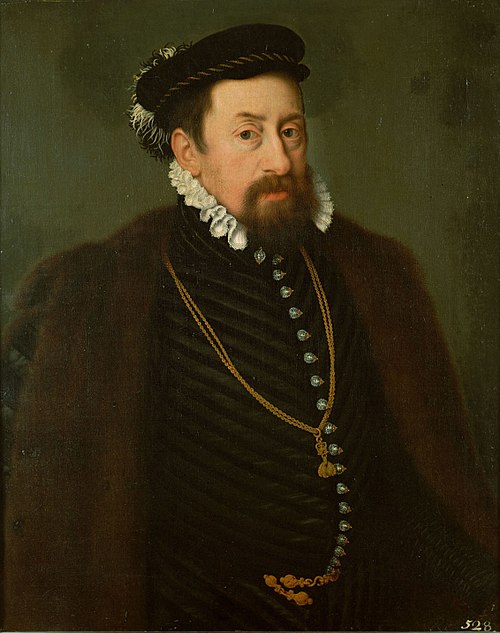
Maximilian II
ModernEmperorHoly Roman Empire1527 — 1576
Tolerant emperor sympathetic to Protestantism.
Compare Maximilian II with another historical figure:
Quick Facts
Born
1527
Died
1576
Country
Holy Roman Empire
Era
Modern
Occupation
Emperor
Score Overview
Military (10%)50
Political (20%)72
Influence (20%)54
Legacy (20%)43
Leadership (15%)53
Strategy (15%)37
Total Score51.6
Maximilian II — Complete Timeline
1564 AD
Coronation as Holy Roman EmperorPolitical Action◆ Major
Maximilian II was crowned Holy Roman Emperor in Frankfurt, succeeding his father Ferdinand I. His coronation was marked by a conciliatory tone towards Protestants, reflecting his personal beliefs. Maximilian's reign was characterized by an attempt to maintain peace between the Catholic and Protestant factions in the Empire.
CoronationImperial AuthorityReligious Peace
Impact: globalconstructive
1566 AD
Conflict with the Ottoman EmpireWar◆ Major
Maximilian II led a campaign against the Ottoman Empire in Hungary, culminating in the Siege of Szigetv
Ottoman WarsSiege of SzigetvárHungary
Impact: regional
1568 AD
Religious Toleration PolicyReform◆ Major
Maximilian II issued a decree of religious toleration for the Protestant nobility in Austria, allowing them to practice their faith freely. This policy was influenced by his own Protestant sympathies and aimed to reduce religious tensions. However, it was opposed by the Catholic Church and his Spanish relatives.
Religious TolerationProtestantismAustria
Impact: regionalprogressive
1570 AD
Patronage of the Arts and SciencesCultural
Maximilian II was a patron of the arts and sciences, supporting scholars, musicians, and artists at his court in Vienna. He employed the botanist Carolus Clusius and the historian Johannes Sambucus. His court became a center of humanist learning and cultural exchange, though his patronage was less extravagant than that of his son Rudolf II.
PatronageHumanismCultural Center
Impact: regionalconstructive
Detailed Scores
▶View all detailed scores
Military
Strategy
7
Tactics
6
Battles
7
Army Scale
6
War Impact
7
Political
Governance
7
Reform
7
Stability
7
Policy
8
Power
8
Influence
History
8
Global
8
Culture
8
Ideology
9
Legacy
8
People often compare with
See how Maximilian II stacks up against other historical figures
Popular Comparisons
Maximilian II vs Karamokho Alfa
vs Karamokho Alfa60
Maximilian II vs Chithira Thirunal
vs Chithira Thirunal58
Maximilian II vs Ernest I of Saxe-Gotha
vs Ernest I of Saxe-Gotha55
Maximilian II vs Joseph I
vs Joseph I53
Maximilian II vs Daulat Rao Sindhia
vs Daulat Rao Sindhia51
Maximilian II vs Sekonyela
vs Sekonyela45