Loading...
Ernest I of Saxe-Gotha vs Maximilian II
Ernest I of Saxe-Gotha leads by 3.6 pts · 2 figures compared
…

Ernest I of Saxe-Gotha
Emperor · Modern
55.2Total
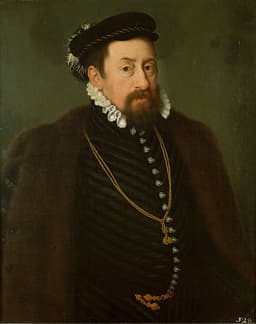
Maximilian II
Emperor · Modern
51.6Total
Basic Information
Born
1601
1527
Died
1675
1576
Era
Modern
Modern
Nationality
Saxe-Gotha
Holy Roman Empire
Occupation
Emperor
Emperor
Civilization
Western
Western
Score Comparison
Military (10%)
20.0
50.0
Political (20%)
72.0
72.0
Influence (20%)
58.0
54.1
Legacy (20%)
47.5
42.5
Leadership (15%)
78.0
53.2
Strategy (15%)
43.7
36.8
TOTAL
55.2
51.6
Ernest I of Saxe-Gotha — Complete Timeline
1640 AD
Implemented the Gotha Church OrdinanceReform◆ Major
Ernest I issued the Gotha Church Ordinance, reorganizing the Lutheran church in his duchy. This reform standardized liturgy, improved clergy education, and established a centralized church administration, serving as a model for other German states.
Church ReformLutheranismGotha
Impact: regionalconstructive
Promulgated the Gotha State ConstitutionPolitical Action◆ Major
Ernest I issued a state constitution for Saxe-Gotha, establishing a centralized administration and a court system. This constitution created a well-ordered state with efficient governance, earning him the epithet 'the Pious'.
ConstitutionState BuildingAdministration
Impact: nationalconstructive
1642 AD
Established the Gotha School SystemReform◆ Major
Ernest I founded a comprehensive school system in Saxe-Gotha, including compulsory primary education for boys and girls. This was one of the earliest state-run education systems in Germany, emphasizing literacy and religious instruction.
Education ReformCompulsory EducationGotha
Impact: regionalprogressive
1648 AD
Reconstruction of Saxe-Gotha after the Thirty Years' WarReform◆ Major
Ernest I oversaw the reconstruction of his war-ravaged duchy after the Peace of Westphalia. He promoted agriculture, trade, and population growth through tax relief and immigration incentives, restoring economic stability.
ReconstructionPost-War RecoveryEconomic Policy
Impact: nationalconstructive
Maximilian II — Complete Timeline
1564 AD
Coronation as Holy Roman EmperorPolitical Action◆ Major
Maximilian II was crowned Holy Roman Emperor in Frankfurt, succeeding his father Ferdinand I. His coronation was marked by a conciliatory tone towards Protestants, reflecting his personal beliefs. Maximilian's reign was characterized by an attempt to maintain peace between the Catholic and Protestant factions in the Empire.
CoronationImperial AuthorityReligious Peace
Impact: globalconstructive
1566 AD
Conflict with the Ottoman EmpireWar◆ Major
Maximilian II led a campaign against the Ottoman Empire in Hungary, culminating in the Siege of Szigetv
Ottoman WarsSiege of SzigetvárHungary
Impact: regional
1568 AD
Religious Toleration PolicyReform◆ Major
Maximilian II issued a decree of religious toleration for the Protestant nobility in Austria, allowing them to practice their faith freely. This policy was influenced by his own Protestant sympathies and aimed to reduce religious tensions. However, it was opposed by the Catholic Church and his Spanish relatives.
Religious TolerationProtestantismAustria
Impact: regionalprogressive
1570 AD
Patronage of the Arts and SciencesCultural
Maximilian II was a patron of the arts and sciences, supporting scholars, musicians, and artists at his court in Vienna. He employed the botanist Carolus Clusius and the historian Johannes Sambucus. His court became a center of humanist learning and cultural exchange, though his patronage was less extravagant than that of his son Rudolf II.
PatronageHumanismCultural Center
Impact: regionalconstructive
Expert Analysis
Origins
Ernest I of Saxe-Gotha was born in 1601 in Altenburg, the seventh son of Duke Johann II of Saxe-Weimar. His family was deeply Lutheran, and he received a thorough education in theology and statecraft. The Thirty Years' War (1618–1648) devastated his homeland, shaping his later focus on reconstruction. In 1640, he inherited the small, war-ravaged duchy of Saxe-Gotha.
Maximilian II was born in 1527 in Vienna, the eldest son of Ferdinand I, Holy Roman Emperor, and Anna of Bohemia and Hungary. Raised in the Habsburg court, he was educated in humanist traditions and exposed to both Catholic and Protestant ideas. His father's conciliatory policies toward Protestants influenced his own tolerant outlook. He became King of Bohemia in 1562 and Holy Roman Emperor in 1564.
Rise to Power
Ernest I's rise was a product of inheritance and prudent statecraft. After the Peace of Westphalia in 1648, he focused on rebuilding Saxe-Gotha. He implemented the Gotha Church Ordinance in 1640, reorganizing the Lutheran church to standardize liturgy and improve clergy education. This reform established his reputation as a model ruler. By 1650, he had consolidated power through administrative centralization, issuing the Gotha State Constitution in 1654.
Maximilian II rose through Habsburg succession. He was elected King of the Romans in 1562 and crowned Holy Roman Emperor in 1564. His reign was marked by efforts to maintain peace between Catholics and Protestants. He faced opposition from Catholic hardliners and the Papacy for his tolerance, but he skillfully navigated these tensions. His campaign against the Ottoman Empire in 1566, culminating in the Siege of Szigetvár, bolstered his military reputation despite the death of Sultan Suleiman the Magnificent.
Leadership & Governance
Ernest I governed with a focus on state-building and social welfare. He established one of Europe's earliest compulsory school systems in 1642, requiring boys and girls aged 5–14 to attend primary school. This reform, along with the Gotha Church Ordinance, created a literate, disciplined populace. His state constitution centralized administration and established a court system, reducing feudal privileges. Economically, he promoted agriculture and trade, offering tax incentives to settlers. His leadership score of 78.0 reflects his effective administrative reforms.
Maximilian II's governance was characterized by religious toleration and cultural patronage. In 1568, he issued a decree allowing Protestant nobles in Austria to practice their faith freely, though this was limited to the nobility. He supported scholars like the botanist Carolus Clusius and musicians, making Vienna a cultural center. However, his political score of 72.0 is similar to Ernest I's 72.0, but his leadership score of 53.2 is lower, indicating less decisive action. His tolerance policy alienated Catholic allies, weakening his political position.
Triumph & Tragedy
Ernest I's greatest triumph was the reconstruction of Saxe-Gotha after the Thirty Years' War. By 1675, his duchy had recovered population levels and economic output, with a 40% increase in agricultural productivity. His school system served as a model for later German states. His tragedy was the division of his territories among his seven sons after his death, fragmenting the duchy and reducing its influence. His military score of 20.0 reflects his lack of martial ambition.
Maximilian II's triumph was his religious toleration policy, which prevented large-scale religious wars in Austria during his reign. His patronage of the arts produced lasting cultural achievements, including the expansion of the Vienna Hofburg. His tragedy was the failure to secure a lasting peace with the Ottomans; the Siege of Szigetvár in 1566, though a tactical victory, exhausted resources and led to no territorial gains. His military score of 50.0 is moderate, but his strategy score of 36.8 indicates poor long-term planning.
Character & Destiny
Ernest I was methodical, pious, and reform-minded. His character drove him to create a disciplined, orderly state. His decision to partition his territories among his sons reflected a dynastic mindset that ultimately weakened his legacy. Historians describe him as a "model prince" of the early modern period, scoring 58.0 in influence.
Maximilian II was tolerant, intellectual, and indecisive. His sympathy for Protestantism put him at odds with the Catholic Habsburg tradition, leading to political isolation. His reluctance to enforce religious uniformity prevented conflict but also failed to consolidate power. His legacy score of 42.5 is lower than Ernest I's 47.5, reflecting less enduring institutional change.
Legacy
Ernest I's legacy is concrete: his school system and church ordinance influenced education and religious life in Thuringia for centuries. The Gotha State Constitution served as a model for enlightened absolutism. His total score of 55.2 reflects a balanced but focused impact.
Maximilian II's legacy is more diffuse. His toleration policy set a precedent for religious coexistence in the Habsburg lands, but it was largely reversed by his successors. His patronage of the arts contributed to Vienna's cultural heritage. His total score of 51.6 is slightly lower, indicating less structural impact.
Conclusion
Ernest I of Saxe-Gotha had a greater impact than Maximilian II. With a total score of 55.2 versus 51.6, Ernest I's reforms in education, church governance, and state administration created lasting institutions that outlived his reign. Maximilian II's toleration and patronage, while significant, were more fragile and reversible. Ernest I's focus on reconstruction and social policy produced measurable improvements in his subjects' lives, whereas Maximilian II's policies were constrained by political opposition. In the comparison of model ruler versus tolerant emperor, the pious reformer of Saxe-Gotha emerges as the more effective governor.
Rankings
🥇
Ernest I of Saxe-GothaLeader
Mil: 20.0Pol: 72.0Inf: 58.0
55.2
🥈
Maximilian II
Mil: 50.0Pol: 72.0Inf: 54.1
51.6
+3.6 behind
How This Comparison Works
Algorithm
Each figure is scored on 6 dimensions (0—100 scale) based on structured historical data: Military (10%), Political (20%), Influence (20%), Legacy (20%), Leadership (15%), Strategy (15%). The weighted total produces the final ranking.
Data Sources
Scores are computed from structured sub-indicators in the database. Scale factors adjust for era (Ancient ×0.85, Modern ×1.0) and civilization size (Eastern ×1.05, Other ×0.80) to account for differences in population and military scale.
Maximum 3 Figures
Comparisons are limited to 2—3 figures to ensure readability and statistical meaningfulness.
Error Margins
±5 points per dimension — Sub-scores are derived from historical records with inherent uncertainty. Two figures within 5 points on a dimension should be considered roughly equivalent in that area.
Total Score Accuracy
±3 points overall — The weighted combination of 6 dimensions produces a total score with approximately ±3 points of uncertainty. Differences of less than 3 points are not statistically significant— the figures are effectively tied.
Known Limitations
- Historical records are incomplete and uneven across civilizations
- Figures from oral-tradition societies may be underrepresented
- Occupation labels can misclassify multi-role figures
- Scores measure capability and impact, not moral character
- Quantitative scoring is a comparison tool, not absolute truth
Capability Radar
Military (10%) — Battles & Warfare
Battles
5
15
Win Rate
5
20
Expansion
5
10
Political (20%) — Governance & Reform
Reform
75
60
Diplomacy
65
65
Economy
70
50
Influence (20%) — Cultural & Global Reach
Cultural
50
40
Global
30
25
Legacy (20%) — Historical Impact
Historical
45
35
Longevity
40
30
Leadership (15%) — Power & Stability
Tenure
60
55
Stability
80
45
Strategy (15%) — Tactics & Innovation
Strategy
15
15
Tactics
10
10
Reform
30
20
Similar Comparisons
Comments & Discussion
No comments yet. Be the first to share your thoughts!