Loading...
Karamokho Alfa vs Maximilian II
Karamokho Alfa leads by 8.2 pts · 2 figures compared
…

Karamokho Alfa
Emperor · Modern
59.8Total
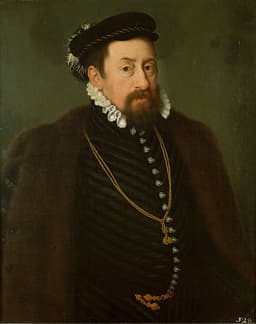
Maximilian II
Emperor · Modern
51.6Total
Basic Information
Born
1690
1527
Died
1751
1576
Era
Modern
Modern
Nationality
Futa Jallon
Holy Roman Empire
Occupation
Emperor
Emperor
Civilization
Other
Western
Score Comparison
Military (10%)
55.0
50.0
Political (20%)
68.0
72.0
Influence (20%)
59.0
54.1
Legacy (20%)
50.0
42.5
Leadership (15%)
72.0
53.2
Strategy (15%)
60.0
36.8
TOTAL
59.8
51.6
Karamokho Alfa — Complete Timeline
1725 AD
Fulani Jihad in Futa JallonWar
Karamokho Alfa launched a religious war (jihad) against the non-Muslim rulers of Futa Jallon. This conflict aimed to establish an Islamic state and ended with the defeat of the traditional rulers, leading to the creation of the Imamate of Futa Jallon.
JihadFoundingIslamic State
Impact: regional
1727 AD
Founding of the Imamate of Futa JallonPolitical Action
Karamokho Alfa established the Imamate of Futa Jallon, a theocratic state governed by Islamic law. He became the first Almami (religious leader) and implemented a system of governance that combined religious and political authority.
FoundingImamateTheocracy
Impact: regionalconstructive
1730 AD
Codification of Islamic GovernanceReform◆ Major
Karamokho Alfa established a council of elders and religious scholars to advise the Almami. He also implemented a legal system based on the Maliki school of Islamic jurisprudence, replacing traditional customary law with sharia.
Legal ReformIslamic LawGovernance
Impact: regionalconstructive
Maximilian II — Complete Timeline
1564 AD
Coronation as Holy Roman EmperorPolitical Action◆ Major
Maximilian II was crowned Holy Roman Emperor in Frankfurt, succeeding his father Ferdinand I. His coronation was marked by a conciliatory tone towards Protestants, reflecting his personal beliefs. Maximilian's reign was characterized by an attempt to maintain peace between the Catholic and Protestant factions in the Empire.
CoronationImperial AuthorityReligious Peace
Impact: globalconstructive
1566 AD
Conflict with the Ottoman EmpireWar◆ Major
Maximilian II led a campaign against the Ottoman Empire in Hungary, culminating in the Siege of Szigetv
Ottoman WarsSiege of SzigetvárHungary
Impact: regional
1568 AD
Religious Toleration PolicyReform◆ Major
Maximilian II issued a decree of religious toleration for the Protestant nobility in Austria, allowing them to practice their faith freely. This policy was influenced by his own Protestant sympathies and aimed to reduce religious tensions. However, it was opposed by the Catholic Church and his Spanish relatives.
Religious TolerationProtestantismAustria
Impact: regionalprogressive
1570 AD
Patronage of the Arts and SciencesCultural
Maximilian II was a patron of the arts and sciences, supporting scholars, musicians, and artists at his court in Vienna. He employed the botanist Carolus Clusius and the historian Johannes Sambucus. His court became a center of humanist learning and cultural exchange, though his patronage was less extravagant than that of his son Rudolf II.
PatronageHumanismCultural Center
Impact: regionalconstructive
Expert Analysis
Origins
Karamokho Alfa, born around 1700 in the Futa Jallon region of West Africa, was a Fulani Islamic scholar from a clerical family. His early education focused on the Quran and Maliki jurisprudence, which later shaped his theocratic vision. In contrast, Maximilian II was born on July 31, 1527, in Vienna, as the eldest son of Ferdinand I of the Holy Roman Empire and Anna of Bohemia and Hungary. He received a humanist education, studying languages, history, and theology, and was exposed to both Catholic and Protestant ideas, influencing his later tolerance.
Rise to Power
Karamokho Alfa rose to prominence by leading a Fulani jihad (1725-1727) against the non-Muslim Jallonke rulers. He united various Fulani clans under a religious banner, leveraging grievances against oppressive local chiefs. After military victories, he established the Imamate of Futa Jallon in 1727, becoming its first Almami (religious leader). Maximilian II's rise was more conventional: he was elected King of the Romans in 1562, then crowned Holy Roman Emperor in 1564 upon his father's death. His ascent was facilitated by his family's Habsburg power and his diplomatic skills, which helped him navigate the religious tensions of the Reformation.
Leadership & Governance
Karamokho Alfa ruled a theocratic state, implementing Islamic law based on the Maliki school. He created a council of elders (the 'Great Council') to advise him, balancing religious authority with tribal consultation. His governance focused on religious conformity and social order, but his strict policies alienated some local groups. Maximilian II, conversely, pursued a policy of religious toleration, granting freedom of worship to Protestant nobles in Austria via the 1568 decree. He avoided open conflict with the Ottoman Empire, preferring diplomacy, and supported the arts and sciences, patronizing figures like botanist Carolus Clusius. His governance was characterized by pragmatism and a desire for peace.
Triumph & Tragedy
Karamokho Alfa's greatest triumph was founding the Imamate of Futa Jallon, a stable Islamic state that lasted until French colonization. His codification of Islamic governance provided a model for later West African theocracies. However, his failure to fully integrate non-Fulani populations led to internal rebellions and a rigid social hierarchy that limited long-term unity. Maximilian II's triumph was maintaining religious peace in the Holy Roman Empire despite deep divisions, and his patronage fostered cultural flourishing. His tragedy was the failure to secure a lasting religious settlement; the Peace of Augsburg (1555) remained fragile, and his tolerance was often ineffective. His military campaign against the Ottomans ended inconclusively, and his death in 1576 left unresolved conflicts.
Character & Destiny
Karamokho Alfa was a devout, uncompromising leader whose religious zeal drove his actions. His character as a scholar-warrior enabled him to mobilize followers but also created a rigid system that struggled with diversity. Maximilian II was a cautious, intellectual ruler, more interested in peace and culture than conquest. His tolerance reflected a humanist outlook, but his indecisiveness and inability to enforce policies weakened his authority. Historians note his 'melancholic' personality, which may have limited his political effectiveness.
Legacy
Karamokho Alfa's Imamate of Futa Jallon became a center of Islamic learning and governance in West Africa, influencing later jihad states like the Sokoto Caliphate. His legacy endures in the region's Islamic identity, but his state's social stratification had negative long-term effects. Maximilian II's legacy is mixed: his toleration policies foreshadowed later religious freedoms, but his reign is often overshadowed by more decisive emperors. His patronage contributed to the Vienna court's cultural prestige, but his political achievements were modest. Scoring 59.8 overall to Maximilian's 51.6, Karamokho Alfa shows stronger leadership (72.0 vs 53.2) and strategy (60.0 vs 36.8), reflecting his foundational impact.
Conclusion
Karamokho Alfa had a greater impact on history than Maximilian II. His founding of a theocratic state reshaped West African political and religious landscapes, creating a lasting model of Islamic governance. While Maximilian II's tolerance was notable, his influence was constrained by the existing power structures and his own limitations. Karamokho Alfa's higher total score (59.8 vs 51.6) and superior leadership and strategy scores underscore his more decisive role in shaping the course of history.
Rankings
🥇
Karamokho AlfaLeader
Mil: 55.0Pol: 68.0Inf: 59.0
59.8
🥈
Maximilian II
Mil: 50.0Pol: 72.0Inf: 54.1
51.6
+8.2 behind
How This Comparison Works
Algorithm
Each figure is scored on 6 dimensions (0—100 scale) based on structured historical data: Military (10%), Political (20%), Influence (20%), Legacy (20%), Leadership (15%), Strategy (15%). The weighted total produces the final ranking.
Data Sources
Scores are computed from structured sub-indicators in the database. Scale factors adjust for era (Ancient ×0.85, Modern ×1.0) and civilization size (Eastern ×1.05, Other ×0.80) to account for differences in population and military scale.
Maximum 3 Figures
Comparisons are limited to 2—3 figures to ensure readability and statistical meaningfulness.
Error Margins
±5 points per dimension — Sub-scores are derived from historical records with inherent uncertainty. Two figures within 5 points on a dimension should be considered roughly equivalent in that area.
Total Score Accuracy
±3 points overall — The weighted combination of 6 dimensions produces a total score with approximately ±3 points of uncertainty. Differences of less than 3 points are not statistically significant— the figures are effectively tied.
Known Limitations
- Historical records are incomplete and uneven across civilizations
- Figures from oral-tradition societies may be underrepresented
- Occupation labels can misclassify multi-role figures
- Scores measure capability and impact, not moral character
- Quantitative scoring is a comparison tool, not absolute truth
Capability Radar
Military (10%) — Battles & Warfare
Battles
45
15
Win Rate
55
20
Expansion
55
10
Political (20%) — Governance & Reform
Reform
65
60
Diplomacy
50
65
Economy
45
50
Influence (20%) — Cultural & Global Reach
Cultural
55
40
Global
40
25
Legacy (20%) — Historical Impact
Historical
55
35
Longevity
50
30
Leadership (15%) — Power & Stability
Tenure
60
55
Stability
50
45
Strategy (15%) — Tactics & Innovation
Strategy
50
15
Tactics
40
10
Reform
60
20
Similar Comparisons
Comments & Discussion
No comments yet. Be the first to share your thoughts!