Loading...
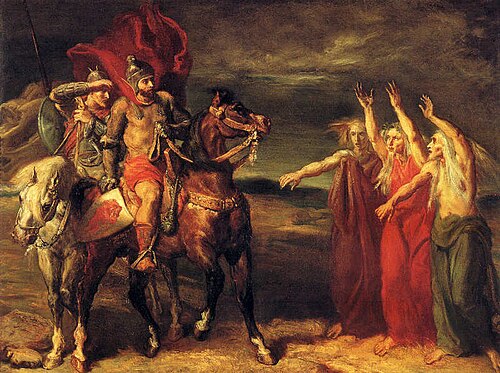
Macbeth of Scotland
MedievalEmperorScotland1005 — 1057
Scottish king immortalized by Shakespeare.
Compare Macbeth of Scotland with another historical figure:
Quick Facts
Born
1005
Died
1057
Country
Scotland
Era
Medieval
Occupation
Emperor
Score Overview
Military (10%)55
Political (20%)26
Influence (20%)55
Legacy (20%)55
Leadership (15%)48
Strategy (15%)44
Total Score48.6
Macbeth of Scotland — Complete Timeline
1040 AD
Battle of PitgavenyWar
Macbeth defeated and killed King Duncan I in battle at Pitgaveny near Elgin. Macbeth then claimed the Scottish throne, becoming King of Scots. This event is the basis for Shakespeare's play, though the historical circumstances differ from the fictional account.
BattleSuccessionDuncan
Impact: national
1050 AD
Pilgrimage to RomeCultural◆ Major
Macbeth made a pilgrimage to Rome, where he was received by Pope Leo IX and distributed alms to the poor. This was a significant act of piety and diplomacy, demonstrating Macbeth's legitimacy as a Christian king and his connections to the wider European church.
PilgrimageRomePiety
Impact: regionalconstructive
1054 AD
Battle of DunsinaneWar◆ Major
Macbeth was defeated at the Battle of Dunsinane by an army led by Siward, Earl of Northumbria, acting on behalf of Malcolm Canmore. The defeat weakened Macbeth's position but did not immediately end his reign, as he continued to rule for three more years.
BattleNorthumbriaMalcolm
Impact: regional
1057 AD
Battle of LumphananWar◆ Major
Macbeth was killed at the Battle of Lumphanan in Aberdeenshire, fighting against Malcolm Canmore's forces. His death ended his 17-year reign and allowed Malcolm to claim the throne. Macbeth's stepson Lulach succeeded briefly before being killed by Malcolm.
BattleDeathSuccession
Impact: national
Detailed Scores
▶View all detailed scores
Military
Strategy
7
Tactics
7
Battles
7
Army Scale
6
War Impact
7
Political
Governance
6
Reform
7
Stability
6
Policy
7
Power
7
Influence
History
9
Global
8
Culture
8
Ideology
9
Legacy
8
People often compare with
See how Macbeth of Scotland stacks up against other historical figures
Popular Comparisons
Macbeth of Scotland vs Ottokar II of Bohemia
vs Ottokar II of Bohemia62
Macbeth of Scotland vs Al-Nasir
vs Al-Nasir60
Macbeth of Scotland vs Dmitar Zvonimir
vs Dmitar Zvonimir52
Macbeth of Scotland vs Fulk of Jerusalem
vs Fulk of Jerusalem51
Macbeth of Scotland vs Childeric III
vs Childeric III44
Macbeth of Scotland vs Chilperic I
vs Chilperic I40