Loading...
Fulk of Jerusalem vs Macbeth of Scotland
Fulk of Jerusalem leads by 2.1 pts · 2 figures compared
…
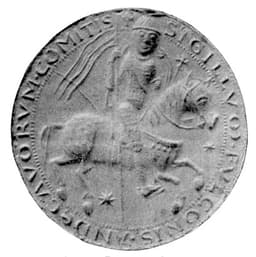
Fulk of Jerusalem
Emperor · Medieval
50.7Total
Macbeth of Scotland
Emperor · Medieval
48.6Total
Basic Information
Born
1092
1005
Died
1143
1057
Era
Medieval
Medieval
Nationality
Jerusalem
Scotland
Occupation
Emperor
Emperor
Civilization
Western
Western
Score Comparison
Military (10%)
40.0
55.0
Political (20%)
48.0
26.4
Influence (20%)
51.8
55.0
Legacy (20%)
43.3
55.0
Leadership (15%)
65.0
48.4
Strategy (15%)
60.0
43.7
TOTAL
50.7
48.6
Fulk of Jerusalem — Complete Timeline
1109 AD
Became Count of AnjouPolitical Action◆ Major
Fulk inherited the County of Anjou from his father Fulk IV. He became a powerful French noble, known for his military skill and political maneuvering.
InheritanceAnjou
Impact: regional
1129 AD
Married Melisende of JerusalemPolitical Action◆ Major
Fulk married Melisende, daughter of King Baldwin II of Jerusalem. The marriage made him heir to the Kingdom of Jerusalem and strengthened ties between the Crusader states and Europe.
MarriageCrusader States
Impact: globalconstructive
1131 AD
Crowned King of JerusalemPolitical Action◆ Major
Fulk was crowned King of Jerusalem alongside his wife Melisende. He became the ruler of the Crusader kingdom, facing threats from Muslim states to the north and east.
CoronationCrusader States
Impact: globalconstructive
1137 AD
Defended the Kingdom of JerusalemWar◆ Major
Fulk led campaigns against the Muslim ruler Zengi of Mosul. He successfully defended the kingdom's borders, but failed to capture key cities like Damascus.
DefenseCrusader States
Impact: regionalconstructive
1143 AD
Died in a hunting accidentOther◆ Major
Fulk died after falling from his horse during a hunting trip near Acre. His death left the kingdom in the hands of his wife Melisende and their son Baldwin III.
DeathAccident
Impact: regionaltragic
Macbeth of Scotland — Complete Timeline
1040 AD
Battle of PitgavenyWar
Macbeth defeated and killed King Duncan I in battle at Pitgaveny near Elgin. Macbeth then claimed the Scottish throne, becoming King of Scots. This event is the basis for Shakespeare's play, though the historical circumstances differ from the fictional account.
BattleSuccessionDuncan
Impact: national
1050 AD
Pilgrimage to RomeCultural◆ Major
Macbeth made a pilgrimage to Rome, where he was received by Pope Leo IX and distributed alms to the poor. This was a significant act of piety and diplomacy, demonstrating Macbeth's legitimacy as a Christian king and his connections to the wider European church.
PilgrimageRomePiety
Impact: regionalconstructive
1054 AD
Battle of DunsinaneWar◆ Major
Macbeth was defeated at the Battle of Dunsinane by an army led by Siward, Earl of Northumbria, acting on behalf of Malcolm Canmore. The defeat weakened Macbeth's position but did not immediately end his reign, as he continued to rule for three more years.
BattleNorthumbriaMalcolm
Impact: regional
1057 AD
Battle of LumphananWar◆ Major
Macbeth was killed at the Battle of Lumphanan in Aberdeenshire, fighting against Malcolm Canmore's forces. His death ended his 17-year reign and allowed Malcolm to claim the throne. Macbeth's stepson Lulach succeeded briefly before being killed by Malcolm.
BattleDeathSuccession
Impact: national
Expert Analysis
Origins
Fulk of Jerusalem, born in 1089, was the son of Fulk IV, Count of Anjou. He inherited the County of Anjou at age 20, becoming a powerful French noble. His early life was marked by political maneuvering and military campaigns to consolidate his rule. In contrast, Macbeth of Scotland, born around 1005, was the son of Findláech, Mormaer of Moray. He emerged from a regional lordship in northern Scotland, with his early life steeped in the Gaelic tradition of kingship and conflict.
Rise to Power
Fulk's rise to prominence came through marriage. In 1129, he married Melisende, daughter of King Baldwin II of Jerusalem, making him heir to the Crusader kingdom. He was crowned King of Jerusalem in 1131, ruling jointly with Melisende. His political acumen (score 48.0) helped him navigate the complex Crusader politics. Macbeth's rise was more violent. In 1040, he defeated and killed King Duncan I at the Battle of Pitgaveny, claiming the throne. This event, immortalized by Shakespeare, was a turning point. Macbeth's military score (55.0) reflects his success in this coup.
Leadership & Governance
Fulk's leadership style (score 65.0) was pragmatic and focused on defense. He led campaigns against the Muslim ruler Zengi, successfully defending the kingdom's borders but failing to capture key cities like Damascus. His governance was marked by cooperation with the nobility and the Church. Macbeth's leadership (score 48.4) was more autocratic. He faced rebellions from Duncan's supporters and relied on military force. His pilgrimage to Rome in 1050 showed a desire for legitimacy, but his rule remained contested. Fulk's strategic score (60.0) outpaces Macbeth's (43.7), indicating better long-term planning.
Triumph & Tragedy
Fulk's greatest success was maintaining the Kingdom of Jerusalem during a period of Muslim resurgence. However, his failure to capture Damascus left the kingdom vulnerable. His death in a hunting accident in 1143 was a tragedy, plunging the kingdom into a succession crisis. Macbeth's triumph was his 17-year reign, a relatively long period for a medieval Scottish king. But his defeat at the Battle of Dunsinane in 1054 and death at the Battle of Lumphanan in 1057 ended his line. Both men faced tragic ends, but Fulk's death was accidental while Macbeth's was in battle.
Character & Destiny
Fulk was known for his military skill and political maneuvering, but his character was marked by ambition tempered by pragmatism. He scored 65.0 in leadership, reflecting his ability to rule. Macbeth, according to historical sources, was a capable ruler but his usurpation of the throne defined his destiny. Shakespeare's portrayal as a guilt-ridden tyrant contrasts with the historical Macbeth, who was a competent king. Fulk's character led to a stable reign, while Macbeth's character, shaped by his rise to power, led to constant conflict.
Legacy
Fulk's legacy (score 43.3) is tied to the Crusader states. His marriage to Melisende established a dynasty that ruled Jerusalem for decades. His defensive policies delayed the fall of the kingdom. Macbeth's legacy (score 55.0) is more influential due to Shakespeare's play. Historically, he is remembered as a usurper, but his reign saw stability in Scotland. His pilgrimage to Rome demonstrated his piety. Fulk's influence score (51.8) is slightly lower, but his impact on Crusader history is significant.
Conclusion
Fulk of Jerusalem (total score 50.7) edges out Macbeth of Scotland (total score 48.6) by 2.1 points. Fulk's higher leadership and strategy scores reflect his more effective governance of a complex Crusader kingdom. Macbeth's higher military and legacy scores are notable, but his reign was marked by constant conflict and ended in defeat. Fulk's impact on the Crusader states was more substantial, as he helped preserve the kingdom during a critical period. Therefore, Fulk had a greater historical impact.
Rankings
🥇
Fulk of JerusalemLeader
Mil: 40.0Pol: 48.0Inf: 51.8
50.7
🥈
Macbeth of Scotland
Mil: 55.0Pol: 26.4Inf: 55.0
48.6
+2.1 behind
How This Comparison Works
Algorithm
Each figure is scored on 6 dimensions (0—100 scale) based on structured historical data: Military (10%), Political (20%), Influence (20%), Legacy (20%), Leadership (15%), Strategy (15%). The weighted total produces the final ranking.
Data Sources
Scores are computed from structured sub-indicators in the database. Scale factors adjust for era (Ancient ×0.85, Modern ×1.0) and civilization size (Eastern ×1.05, Other ×0.80) to account for differences in population and military scale.
Maximum 3 Figures
Comparisons are limited to 2—3 figures to ensure readability and statistical meaningfulness.
Error Margins
±5 points per dimension — Sub-scores are derived from historical records with inherent uncertainty. Two figures within 5 points on a dimension should be considered roughly equivalent in that area.
Total Score Accuracy
±3 points overall — The weighted combination of 6 dimensions produces a total score with approximately ±3 points of uncertainty. Differences of less than 3 points are not statistically significant— the figures are effectively tied.
Known Limitations
- Historical records are incomplete and uneven across civilizations
- Figures from oral-tradition societies may be underrepresented
- Occupation labels can misclassify multi-role figures
- Scores measure capability and impact, not moral character
- Quantitative scoring is a comparison tool, not absolute truth
Capability Radar
Military (10%) — Battles & Warfare
Battles
45
30
Win Rate
50
35
Expansion
40
25
Political (20%) — Governance & Reform
Reform
35
15
Diplomacy
60
20
Economy
40
15
Influence (20%) — Cultural & Global Reach
Cultural
30
70
Global
20
60
Legacy (20%) — Historical Impact
Historical
35
65
Longevity
25
75
Leadership (15%) — Power & Stability
Tenure
55
40
Stability
45
20
Strategy (15%) — Tactics & Innovation
Strategy
45
20
Tactics
40
25
Reform
30
10
Similar Comparisons
Comments & Discussion
No comments yet. Be the first to share your thoughts!