Loading...
Chilperic I vs Macbeth of Scotland
Macbeth of Scotland leads by 9.0 pts · 2 figures compared
…
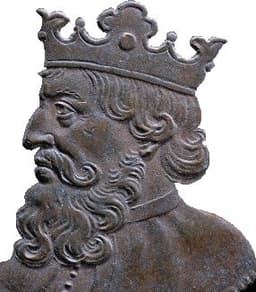
Chilperic I
Emperor · Medieval
39.6Total
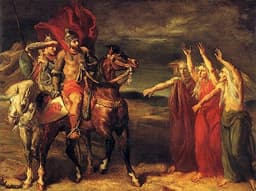
Macbeth of Scotland
Emperor · Medieval
48.6Total
Basic Information
Born
539
1005
Died
584
1057
Era
Medieval
Medieval
Nationality
Frankish Empire
Scotland
Occupation
Emperor
Emperor
Civilization
Western
Western
Score Comparison
Military (10%)
45.0
55.0
Political (20%)
26.4
26.4
Influence (20%)
47.1
55.0
Legacy (20%)
38.3
55.0
Leadership (15%)
41.5
48.4
Strategy (15%)
35.7
43.7
TOTAL
39.6
48.6
Chilperic I — Complete Timeline
573 AD
War with Sigebert IWar◆ Major
Chilperic I invaded Austrasia, triggering a civil war with his brother Sigebert I. The conflict involved shifting alliances and battles across Neustria and Austrasia, including the siege of Tournai. It ended inconclusively with Sigebert's assassination.
MerovingianCivil WarNeustria
Impact: regionaldestructive
575 AD
Assassination of Sigebert IPolitical Action◆ Major
Chilperic I's wife Fredegund is believed to have orchestrated the assassination of Sigebert I, king of Austrasia and Chilperic's brother. Sigebert was stabbed with poisoned daggers at Vitry-en-Artois, ending the conflict between Neustria and Austrasia temporarily.
MerovingianAssassinationFredegund
Impact: regionaldestructive
579 AD
Tax Reforms and Conflicts with the ChurchReform
Chilperic I attempted to impose new taxes on church lands and property, leading to conflict with bishops, particularly Gregory of Tours. The reforms were resisted and eventually abandoned after widespread opposition and ecclesiastical condemnation.
MerovingianTaxationChurch Conflict
Impact: nationaldestructive
580 AD
Construction of the Circus at SoissonsCultural
Chilperic I ordered the construction of a circus (hippodrome) in Soissons, imitating Roman spectacles. This project reflected his interest in Roman culture and his desire to project imperial authority, though it was criticized by contemporaries like Gregory of Tours.
MerovingianArchitectureRoman Influence
Macbeth of Scotland — Complete Timeline
1040 AD
Battle of PitgavenyWar
Macbeth defeated and killed King Duncan I in battle at Pitgaveny near Elgin. Macbeth then claimed the Scottish throne, becoming King of Scots. This event is the basis for Shakespeare's play, though the historical circumstances differ from the fictional account.
BattleSuccessionDuncan
Impact: national
1050 AD
Pilgrimage to RomeCultural◆ Major
Macbeth made a pilgrimage to Rome, where he was received by Pope Leo IX and distributed alms to the poor. This was a significant act of piety and diplomacy, demonstrating Macbeth's legitimacy as a Christian king and his connections to the wider European church.
PilgrimageRomePiety
Impact: regionalconstructive
1054 AD
Battle of DunsinaneWar◆ Major
Macbeth was defeated at the Battle of Dunsinane by an army led by Siward, Earl of Northumbria, acting on behalf of Malcolm Canmore. The defeat weakened Macbeth's position but did not immediately end his reign, as he continued to rule for three more years.
BattleNorthumbriaMalcolm
Impact: regional
1057 AD
Battle of LumphananWar◆ Major
Macbeth was killed at the Battle of Lumphanan in Aberdeenshire, fighting against Malcolm Canmore's forces. His death ended his 17-year reign and allowed Malcolm to claim the throne. Macbeth's stepson Lulach succeeded briefly before being killed by Malcolm.
BattleDeathSuccession
Impact: national
Expert Analysis
Origins
Chilperic I was born around 539 AD, a son of the Merovingian king Clotaire I and his wife Aregund. He grew up in the Frankish realm, inheriting the kingdom of Neustria upon his father's death in 561 AD. His early life was marked by the violent rivalries among his half-brothers, typical of Merovingian dynastic politics. He was educated in the Roman-influenced court culture, but his temperament was impulsive and cruel.
Macbeth of Scotland, born around 1005 AD, was the son of Findláech of Moray, a powerful provincial ruler. He belonged to the royal lineage of Kenneth MacAlpin through his mother, giving him a claim to the throne. His early life was spent in the turbulent Scottish Highlands, where clan warfare and succession disputes were common. He was likely trained as a warrior from a young age.
Rise to Power
Chilperic I rose to power as king of Neustria, one of the four Frankish kingdoms. He immediately clashed with his brother Sigebert I of Austrasia. In 575 AD, Chilperic invaded Austrasia, triggering a civil war. His fortunes turned when his wife Fredegund orchestrated the assassination of Sigebert in 575 AD, but Chilperic failed to capitalize fully. He constantly fought to expand his territory but was checked by his other brother, Guntram of Burgundy.
Macbeth rose to power by defeating King Duncan I at the Battle of Pitgaveny in 1040 AD. Duncan had previously led a failed invasion of Macbeth's territory of Moray. Macbeth's victory was decisive, and he claimed the Scottish throne. Unlike Chilperic, Macbeth's rise was based on a single, clear military action. He then secured his rule through diplomacy, including a pilgrimage to Rome in 1050 AD, where he distributed alms and gained papal favor.
Leadership & Governance
Chilperic I's leadership was chaotic and self-serving. He imposed heavy taxes on church lands, sparking conflict with bishops like Gregory of Tours. He built a circus in Soissons to imitate Roman spectacles, but his rule was marked by brutality and lack of strategic vision. His political score is 26.4, reflecting his failure to stabilize his realm.
Macbeth ruled Scotland for 17 years, a period of relative peace and stability. He enacted laws that strengthened royal authority and maintained order. His pilgrimage to Rome showed diplomatic acumen. His leadership score of 48.4 indicates a more effective ruler. However, his governance was challenged by the persistent claims of Malcolm Canmore, Duncan's son.
Triumph & Tragedy
Chilperic I's greatest success was surviving multiple conflicts and expanding Neustrian influence temporarily. His tragedy was his assassination in 584 AD, likely orchestrated by his wife Fredegund or political enemies. His reign ended in chaos, and his legacy was overshadowed by the brutality of his court.
Macbeth's triumph was his 17-year reign as a stable king after a period of turmoil. His pilgrimage to Rome was a diplomatic success. His tragedy was his defeat at the Battle of Dunsinane in 1054 AD by Siward of Northumbria, and his death at the Battle of Lumphanan in 1057 AD. He was later immortalized by Shakespeare, but the historical Macbeth was a capable ruler.
Character & Destiny
Chilperic I was impulsive, cruel, and politically inept. He alienated the church and his nobles. His character led to his downfall, as he made many enemies. Historians describe him as a typical Merovingian 'do-nothing' king, but more active and violent.
Macbeth was pragmatic, pious, and determined. He sought legitimacy through church and diplomacy. His character allowed him to rule effectively, but his claim was always contested. His destiny was to be remembered as a usurper, though historical evidence suggests he was a legitimate ruler.
Legacy
Chilperic I's legacy is minimal. He is remembered as a violent Merovingian king, his reign a footnote in Frankish history. His scores: Military 45.0, Political 26.4, Influence 47.1, Legacy 38.3, Leadership 41.5, Strategy 35.7, Total 39.6.
Macbeth's legacy is more significant. He ruled effectively and his pilgrimage to Rome was notable. However, Shakespeare's play overshadowed the historical figure. His scores: Military 55.0, Political 26.4, Influence 55.0, Legacy 55.0, Leadership 48.4, Strategy 43.7, Total 48.6. The score gap of 9.0 points reflects his greater impact.
Conclusion
Macbeth of Scotland had a greater impact than Chilperic I. He ruled longer, achieved more stability, and his legacy, though distorted, endures. Chilperic I was a failed king whose reign ended in assassination. Data supports Macbeth's superiority: higher military (55.0 vs 45.0), influence (55.0 vs 47.1), legacy (55.0 vs 38.3), and total score (48.6 vs 39.6). Macbeth's reign contributed to the development of the Scottish kingdom, while Chilperic's contributed little.
Rankings
🥇
Macbeth of ScotlandLeader
Mil: 55.0Pol: 26.4Inf: 55.0
48.6
🥈
Chilperic I
Mil: 45.0Pol: 26.4Inf: 47.1
39.6
+9.0 behind
How This Comparison Works
Algorithm
Each figure is scored on 6 dimensions (0—100 scale) based on structured historical data: Military (10%), Political (20%), Influence (20%), Legacy (20%), Leadership (15%), Strategy (15%). The weighted total produces the final ranking.
Data Sources
Scores are computed from structured sub-indicators in the database. Scale factors adjust for era (Ancient ×0.85, Modern ×1.0) and civilization size (Eastern ×1.05, Other ×0.80) to account for differences in population and military scale.
Maximum 3 Figures
Comparisons are limited to 2—3 figures to ensure readability and statistical meaningfulness.
Error Margins
±5 points per dimension — Sub-scores are derived from historical records with inherent uncertainty. Two figures within 5 points on a dimension should be considered roughly equivalent in that area.
Total Score Accuracy
±3 points overall — The weighted combination of 6 dimensions produces a total score with approximately ±3 points of uncertainty. Differences of less than 3 points are not statistically significant— the figures are effectively tied.
Known Limitations
- Historical records are incomplete and uneven across civilizations
- Figures from oral-tradition societies may be underrepresented
- Occupation labels can misclassify multi-role figures
- Scores measure capability and impact, not moral character
- Quantitative scoring is a comparison tool, not absolute truth
Capability Radar
Military (10%) — Battles & Warfare
Battles
30
30
Win Rate
25
35
Expansion
20
25
Political (20%) — Governance & Reform
Reform
20
15
Diplomacy
25
20
Economy
15
15
Influence (20%) — Cultural & Global Reach
Cultural
15
70
Global
5
60
Legacy (20%) — Historical Impact
Historical
20
65
Longevity
10
75
Leadership (15%) — Power & Stability
Tenure
40
40
Stability
10
20
Strategy (15%) — Tactics & Innovation
Strategy
15
20
Tactics
20
25
Reform
10
10
Similar Comparisons
Comments & Discussion
No comments yet. Be the first to share your thoughts!