Loading...
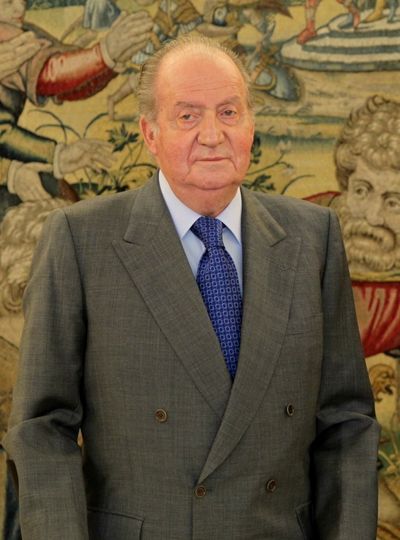
Juan Carlos I
ModernEmperorSpain1938 — ?
King of Spain who led the transition to democracy.
Compare Juan Carlos I with another historical figure:
Quick Facts
Born
1938
Country
Spain
Era
Modern
Occupation
Emperor
Score Overview
Military (10%)27
Political (20%)75
Influence (20%)55
Legacy (20%)52
Leadership (15%)72
Strategy (15%)60
Total Score57.5
Juan Carlos I — Complete Timeline
1975 AD
King of Spain CoronationPolitical Action◆ Major
Juan Carlos I was crowned King of Spain on November 22, 1975, two days after Francisco Franco's death. He inherited a dictatorship and immediately began steering the country toward democratic reform.
CoronationTransitionDemocracy
Impact: nationalconstructive
1976 AD
Spanish Transition to DemocracyReform
Juan Carlos I appointed Adolfo Suarez as Prime Minister and supported the Political Reform Act of 1976, which dismantled Francoist institutions. He used his authority to push through democratic reforms, leading to free elections in 1977.
DemocratizationReformConstitution
Impact: nationalprogressive
1981 AD
1981 Spanish Coup d'état AttemptPolitical Action
On February 23, 1981, Civil Guard officers led by Antonio Tejero stormed the Spanish Congress. Juan Carlos I appeared on national television in military uniform, denouncing the coup and ordering the military to remain loyal, which ended the attempt.
Coup AttemptCrisisLeadership
Impact: nationalconstructive
2014 AD
Abdication in Favor of Felipe VIPolitical Action◆ Major
Juan Carlos I abdicated the throne on June 2, 2014, citing personal reasons and the need for generational renewal. His son Felipe VI succeeded him. The abdication followed years of declining popularity due to scandals and economic crisis.
AbdicationMonarchySuccession
Impact: national
2020 AD
Corruption Scandals and ExilePolitical Action◆ Major
In August 2020, Juan Carlos I left Spain for the United Arab Emirates amid investigations into alleged financial irregularities, including hidden bank accounts and commissions from a high-speed rail contract in Saudi Arabia. He remained in self-imposed exile.
CorruptionExileScandal
Impact: nationaldestructive
Detailed Scores
▶View all detailed scores
Military
Strategy
7
Tactics
6
Battles
7
Army Scale
6
War Impact
7
Political
Governance
8
Reform
8
Stability
8
Policy
8
Power
9
Influence
History
9
Global
8
Culture
9
Ideology
9
Legacy
8
People often compare with
See how Juan Carlos I stacks up against other historical figures
Popular Comparisons
Juan Carlos I vs Wilhelm I
vs Wilhelm I71
Juan Carlos I vs Abdur Rahman Khan
vs Abdur Rahman Khan66
Juan Carlos I vs Gojong of Korea
vs Gojong of Korea56
Juan Carlos I vs King Sunjo of Joseon
vs King Sunjo of Joseon52
Juan Carlos I vs Charles I of Wurttemberg
vs Charles I of Wurttemberg49
Juan Carlos I vs Napoleon Bonaparte
vs Napoleon Bonaparte71