Loading...
Abdur Rahman Khan vs Juan Carlos I
Abdur Rahman Khan leads by 8.5 pts · 2 figures compared
…

Abdur Rahman Khan
Emperor · Modern
66.0Total
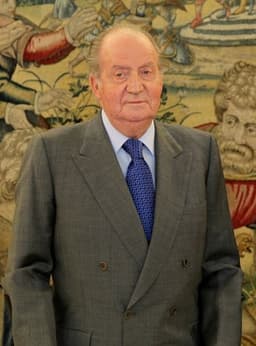
Juan Carlos I
Emperor · Modern
57.5Total
Basic Information
Born
1844
1938
Died
1901
—
Era
Modern
Modern
Nationality
Afghanistan
Spain
Occupation
Emperor
Emperor
Civilization
Middle Eastern
Western
Score Comparison
Military (10%)
70.0
26.8
Political (20%)
78.0
75.0
Influence (20%)
61.0
55.0
Legacy (20%)
58.0
52.0
Leadership (15%)
80.0
72.0
Strategy (15%)
55.0
60.0
TOTAL
66.0
57.5
Abdur Rahman Khan — Complete Timeline
1880 AD
Consolidation of central authorityPolitical Action◆ Major
After becoming Emir, Abdur Rahman Khan launched a campaign to subdue rebellious tribes and provincial rulers. He used a combination of military force, deportations, and executions to break the power of local chieftains, creating a centralized state for the first time in Afghan history.
AfghanistanCentralizationState-Building
Impact: nationaldestructive
1885 AD
Introduction of administrative reformsReform
Abdur Rahman Khan implemented a series of administrative reforms, including the creation of a standing army, a centralized tax system, and a postal service. He also established state monopolies on trade and introduced a system of provincial governors directly appointed by the Emir.
AfghanistanAdministrationModernization
Impact: nationalconstructive
1892 AD
Suppression of the Hazara uprisingWar◆ Major
Abdur Rahman Khan ordered a brutal military campaign against the Hazara ethnic group in central Afghanistan, who had rebelled against his rule. The uprising was crushed with mass killings, enslavement, and displacement of Hazara populations, solidifying Pashtun dominance.
AfghanistanEthnic ConflictGenocide
Impact: nationaldestructive
1893 AD
Signing of the Durand Line AgreementPolitical Action
Abdur Rahman Khan signed an agreement with British Indian diplomat Sir Mortimer Durand, establishing the Durand Line as the border between Afghanistan and British India. This line divided Pashtun tribal areas and remains a source of conflict between Afghanistan and Pakistan.
AfghanistanBorderColonialism
Impact: regional
Juan Carlos I — Complete Timeline
1975 AD
King of Spain CoronationPolitical Action◆ Major
Juan Carlos I was crowned King of Spain on November 22, 1975, two days after Francisco Franco's death. He inherited a dictatorship and immediately began steering the country toward democratic reform.
CoronationTransitionDemocracy
Impact: nationalconstructive
1976 AD
Spanish Transition to DemocracyReform
Juan Carlos I appointed Adolfo Suarez as Prime Minister and supported the Political Reform Act of 1976, which dismantled Francoist institutions. He used his authority to push through democratic reforms, leading to free elections in 1977.
DemocratizationReformConstitution
Impact: nationalprogressive
1981 AD
1981 Spanish Coup d'état AttemptPolitical Action
On February 23, 1981, Civil Guard officers led by Antonio Tejero stormed the Spanish Congress. Juan Carlos I appeared on national television in military uniform, denouncing the coup and ordering the military to remain loyal, which ended the attempt.
Coup AttemptCrisisLeadership
Impact: nationalconstructive
2014 AD
Abdication in Favor of Felipe VIPolitical Action◆ Major
Juan Carlos I abdicated the throne on June 2, 2014, citing personal reasons and the need for generational renewal. His son Felipe VI succeeded him. The abdication followed years of declining popularity due to scandals and economic crisis.
AbdicationMonarchySuccession
Impact: national
2020 AD
Corruption Scandals and ExilePolitical Action◆ Major
In August 2020, Juan Carlos I left Spain for the United Arab Emirates amid investigations into alleged financial irregularities, including hidden bank accounts and commissions from a high-speed rail contract in Saudi Arabia. He remained in self-imposed exile.
CorruptionExileScandal
Impact: nationaldestructive
Expert Analysis
Origins
Abdur Rahman Khan was born around 1844 in Kabul, Afghanistan, into the Barakzai dynasty. His father, Mohammad Afzal Khan, was a son of Emir Dost Mohammad Khan. Growing up amid civil war, Abdur Rahman received a traditional Islamic education and military training. Exiled after his father's defeat, he spent years in Bukhara and later in British India, observing imperial administration.
Juan Carlos I was born on January 5, 1938, in Rome, Italy, during the Spanish Civil War, into the Spanish Bourbon family. His grandfather, King Alfonso XIII, had been exiled. Franco's regime designated him as the future king, and he was educated in Spain, including at the military academies. He was groomed from childhood to inherit the dictatorship.
Rise to Power
Abdur Rahman Khan rose to power during a period of anarchy in Afghanistan. In 1880, with British support following the Second Anglo-Afghan War, he was recognized as Emir. He leveraged foreign subsidies to build a modern army and suppress rivals. By 1881, he had consolidated control over Kabul and began subduing provinces.
Juan Carlos I was crowned King of Spain on November 22, 1975, two days after Franco's death. He inherited a dictatorship but quickly moved to democratize. He appointed Adolfo Suárez as Prime Minister and backed the Political Reform Act of 1976, dismantling Francoist institutions. His pivotal role in the 1981 coup attempt—appearing on TV to denounce the rebels—secured his legitimacy as a democratic monarch.
Leadership & Governance
Abdur Rahman Khan ruled with an iron fist. He centralized authority by crushing tribal rebellions, imposing a standing army, and creating a uniform tax system. He implemented the Durand Line in 1893, defining Afghanistan's eastern border but dividing Pashtun lands. His governance was autocratic and brutal, especially toward the Hazara uprising (1891-1893), where he ordered massacres and enslavement. He scored 80.0 in leadership but only 55.0 in strategy, reflecting his reliance on force.
Juan Carlos I led a transition from dictatorship to democracy. He acted as a figurehead but wielded influence behind the scenes. His decision to back Suárez's reforms and his stand against the 1981 coup earned him political capital. However, his later years were marred by corruption scandals and exile. His political score of 75.0 reflects his transitional role, but his leadership score of 72.0 is lower than Abdur Rahman's due to personal failings.
Triumph & Tragedy
Abdur Rahman Khan's greatest success was forging a unified Afghanistan with defined borders and a centralized state. He established a postal service, a telegraph system, and a regular army. His tragedy was the human cost: his campaigns killed tens of thousands, particularly Hazaras, and he left a legacy of ethnic division. The Durand Line remains a source of conflict.
Juan Carlos I's triumph was steering Spain to democracy peacefully. His televised address on February 23, 1981, thwarted a military coup, cementing his role as a democratic icon. His tragedy is his fall from grace: after abdicating in 2014, he faced investigations into hidden bank accounts and fled Spain in 2020, tarnishing his legacy. He scored 52.0 in legacy, below Abdur Rahman's 58.0.
Character & Destiny
Abdur Rahman Khan was pragmatic, ruthless, and calculating. He used diplomacy with the British while violently suppressing internal opposition. His character forged a strong state but at the cost of alienating minorities. His destiny was to die in power in 1901, leaving a centralized but fragile kingdom.
Juan Carlos I was initially seen as a unifying figure, but his character was opportunistic. He embraced democracy when necessary but later indulged in luxury and secrecy. His destiny was to be remembered as the king who saved democracy, then lost his reputation. Historical assessments contrast his early courage with his later greed.
Legacy
Abdur Rahman Khan's legacy is the modern Afghan state—its borders, bureaucracy, and military traditions. However, his policies also entrenched ethnic tensions. He scored 58.0 in legacy, reflecting his lasting but controversial impact.
Juan Carlos I's legacy is the Spanish democratic monarchy. He is credited with preventing a return to dictatorship. But corruption scandals have diminished his reputation. His legacy score of 52.0 is lower due to his inglorious end.
Conclusion
Abdur Rahman Khan had a greater impact on his nation's trajectory, despite his brutality. His total score of 66.0 exceeds Juan Carlos I's 57.5 by 8.5 points. While Juan Carlos I played a crucial role in Spain's democratization, his later scandals weakened his legacy. Abdur Rahman Khan's creation of a centralized Afghan state—for good or ill—shaped a country that remains defined by his decisions. Therefore, the Iron Amir's influence is more enduring and consequential.
Rankings
🥇
Abdur Rahman KhanLeader
Mil: 70.0Pol: 78.0Inf: 61.0
66.0
🥈
Juan Carlos I
Mil: 26.8Pol: 75.0Inf: 55.0
57.5
+8.5 behind
How This Comparison Works
Algorithm
Each figure is scored on 6 dimensions (0—100 scale) based on structured historical data: Military (10%), Political (20%), Influence (20%), Legacy (20%), Leadership (15%), Strategy (15%). The weighted total produces the final ranking.
Data Sources
Scores are computed from structured sub-indicators in the database. Scale factors adjust for era (Ancient ×0.85, Modern ×1.0) and civilization size (Eastern ×1.05, Other ×0.80) to account for differences in population and military scale.
Maximum 3 Figures
Comparisons are limited to 2—3 figures to ensure readability and statistical meaningfulness.
Error Margins
±5 points per dimension — Sub-scores are derived from historical records with inherent uncertainty. Two figures within 5 points on a dimension should be considered roughly equivalent in that area.
Total Score Accuracy
±3 points overall — The weighted combination of 6 dimensions produces a total score with approximately ±3 points of uncertainty. Differences of less than 3 points are not statistically significant— the figures are effectively tied.
Known Limitations
- Historical records are incomplete and uneven across civilizations
- Figures from oral-tradition societies may be underrepresented
- Occupation labels can misclassify multi-role figures
- Scores measure capability and impact, not moral character
- Quantitative scoring is a comparison tool, not absolute truth
Capability Radar
Military (10%) — Battles & Warfare
Battles
60
34
Win Rate
65
39
Expansion
60
41
Political (20%) — Governance & Reform
Reform
80
85
Diplomacy
70
80
Economy
65
60
Influence (20%) — Cultural & Global Reach
Cultural
50
55
Global
55
65
Legacy (20%) — Historical Impact
Historical
70
70
Longevity
65
60
Leadership (15%) — Power & Stability
Tenure
75
65
Stability
60
75
Strategy (15%) — Tactics & Innovation
Strategy
70
44
Tactics
55
46
Reform
75
52
Similar Comparisons
Comments & Discussion
No comments yet. Be the first to share your thoughts!