Loading...
Gojong of Korea vs Juan Carlos I
Juan Carlos I leads by 2.0 pts · 2 figures compared
…
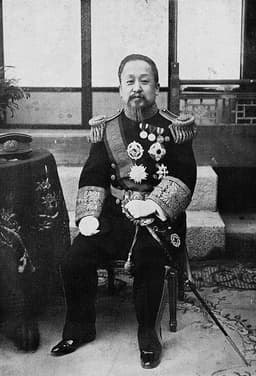
Gojong of Korea
Emperor · Modern
55.5Total
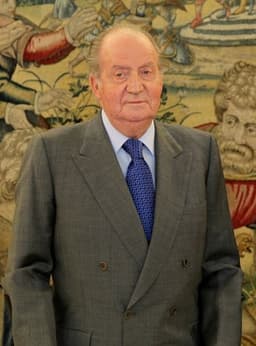
Juan Carlos I
Emperor · Modern
57.5Total
Basic Information
Born
1852
1938
Died
1919
—
Era
Modern
Modern
Nationality
Korea
Spain
Occupation
Emperor
Emperor
Civilization
Eastern
Western
Score Comparison
Military (10%)
43.3
26.8
Political (20%)
68.0
75.0
Influence (20%)
60.0
55.0
Legacy (20%)
50.0
52.0
Leadership (15%)
53.2
72.0
Strategy (15%)
54.6
60.0
TOTAL
55.5
57.5
Gojong of Korea — Complete Timeline
1897 AD
Proclamation of the Korean EmpirePolitical Action
Gojong declared Korea an empire, assuming the title of Emperor. This was an attempt to assert Korea's sovereignty and equal status with China and Japan, and to modernize the state. The move was partly a response to the assassination of his wife, Empress Myeongseong.
Korean EmpireSovereigntyModernization
Impact: nationalconstructive
1905 AD
Signing of the Japan-Korea Treaty of 1905Political Action
Under Japanese pressure, Gojong's government signed the Eulsa Treaty, making Korea a Japanese protectorate. Gojong did not sign the treaty himself and later attempted to appeal to international powers, but the treaty stripped Korea of its diplomatic sovereignty.
TreatyJapanese ProtectorateLoss of Sovereignty
Impact: nationaltragic
1907 AD
Forced Abdication by JapanPolitical Action◆ Major
Japanese authorities forced Gojong to abdicate in favor of his son, Sunjong, after Gojong sent a secret envoy to the Hague Peace Conference to protest Japanese control. The abdication was part of Japan's consolidation of power over Korea.
AbdicationJapanese ImperialismHague Secret Envoy Affair
Impact: nationaltragic
1919 AD
Death and Funeral of GojongOther
Gojong died suddenly, with rumors of poisoning by Japanese agents. His funeral on March 1, 1919, became a catalyst for the March First Movement, a massive nationwide protest against Japanese rule. The movement was brutally suppressed but galvanized Korean independence efforts.
DeathMarch First MovementKorean Independence
Impact: nationaltragic
Juan Carlos I — Complete Timeline
1975 AD
King of Spain CoronationPolitical Action◆ Major
Juan Carlos I was crowned King of Spain on November 22, 1975, two days after Francisco Franco's death. He inherited a dictatorship and immediately began steering the country toward democratic reform.
CoronationTransitionDemocracy
Impact: nationalconstructive
1976 AD
Spanish Transition to DemocracyReform
Juan Carlos I appointed Adolfo Suarez as Prime Minister and supported the Political Reform Act of 1976, which dismantled Francoist institutions. He used his authority to push through democratic reforms, leading to free elections in 1977.
DemocratizationReformConstitution
Impact: nationalprogressive
1981 AD
1981 Spanish Coup d'état AttemptPolitical Action
On February 23, 1981, Civil Guard officers led by Antonio Tejero stormed the Spanish Congress. Juan Carlos I appeared on national television in military uniform, denouncing the coup and ordering the military to remain loyal, which ended the attempt.
Coup AttemptCrisisLeadership
Impact: nationalconstructive
2014 AD
Abdication in Favor of Felipe VIPolitical Action◆ Major
Juan Carlos I abdicated the throne on June 2, 2014, citing personal reasons and the need for generational renewal. His son Felipe VI succeeded him. The abdication followed years of declining popularity due to scandals and economic crisis.
AbdicationMonarchySuccession
Impact: national
2020 AD
Corruption Scandals and ExilePolitical Action◆ Major
In August 2020, Juan Carlos I left Spain for the United Arab Emirates amid investigations into alleged financial irregularities, including hidden bank accounts and commissions from a high-speed rail contract in Saudi Arabia. He remained in self-imposed exile.
CorruptionExileScandal
Impact: nationaldestructive
Expert Analysis
Origins
Gojong of Korea (born 1852) was the 26th king of the Joseon dynasty and the first emperor of the Korean Empire. He ascended the throne at age 11, with his father, Regent Heungseon Daewongun, wielding power. Gojong received a Confucian education but faced mounting internal decay and external threats. Juan Carlos I (born 1938) was the grandson of King Alfonso XIII and was groomed by Francisco Franco to restore the monarchy. He studied in military academies and was educated under Franco's supervision, preparing for a symbolic role.
Rise to Power
Gojong began his reign under his father's regency, but after the Daewongun's retirement in 1873, Gojong took control. He attempted to modernize Korea, opening ports to foreign trade and adopting Western technology. However, his reign was marked by constant power struggles between conservatives and reformers. Juan Carlos I was named Franco's successor in 1969 and became king in 1975 upon Franco's death. He immediately distanced himself from the Francoist regime, appointing reformist Prime Minister Adolfo Suárez and pushing for democratic reforms.
Leadership & Governance
Gojong's leadership was characterized by indecisiveness and reliance on advisors, leading to inconsistent policies. He proclaimed the Korean Empire in 1897 to assert sovereignty but failed to build strong institutions. His governance score of 53.2 reflects his reactive style. Juan Carlos I, with a leadership score of 72.0, actively dismantled Francoist structures. He supported the 1978 Constitution, which established a democratic parliamentary monarchy, and used his authority to legitimize the new system.
Triumph & Tragedy
Gojong's greatest triumph was the proclamation of the Korean Empire, which temporarily elevated Korea's status. His greatest tragedy was the loss of sovereignty to Japan via the 1905 Eulsa Treaty (which he did not sign) and his forced abdication in 1907 after sending a secret envoy to the Hague Peace Conference. His sudden death in 1919 sparked the March First Movement for independence. Juan Carlos I's triumph was his decisive role in thwarting the 1981 coup attempt, where he ordered military units to stand down, preserving democracy. His tragedy came later with corruption scandals and exile in 2020, tarnishing his legacy.
Character & Destiny
Gojong was cautious and often paralyzed by conflicting advice. His attempts to balance reform and tradition failed against Japanese aggression. His character, scoring 54.6 in strategy, led to a tragic loss of sovereignty. Juan Carlos I was pragmatic and willing to take risks, as seen in his support for democracy. However, his later personal scandals revealed a lack of accountability, damaging his reputation. His political score of 75.0 underscores his effective maneuvering.
Legacy
Gojong's legacy is tied to Korean independence movements; he is remembered as a symbol of resistance. The March First Movement directly led to the establishment of the Provisional Government of the Republic of Korea. Juan Carlos I's legacy is the successful transition from dictatorship to democracy in Spain, though his later scandals have complicated his image. The monarchy survived under his son Felipe VI.
Conclusion
Juan Carlos I had a greater impact, scoring 57.5 overall to Gojong's 55.5. While Gojong's failure to protect Korea's sovereignty was a tragedy, Juan Carlos I actively shaped Spain's democratic future. His leadership during the coup attempt and political reforms created lasting change, whereas Gojong's reign ended in annexation. The data supports Juan Carlos I as more effective.
Rankings
🥇
Juan Carlos ILeader
Mil: 26.8Pol: 75.0Inf: 55.0
57.5
🥈
Gojong of Korea
Mil: 43.3Pol: 68.0Inf: 60.0
55.5
+2.0 behind
How This Comparison Works
Algorithm
Each figure is scored on 6 dimensions (0—100 scale) based on structured historical data: Military (10%), Political (20%), Influence (20%), Legacy (20%), Leadership (15%), Strategy (15%). The weighted total produces the final ranking.
Data Sources
Scores are computed from structured sub-indicators in the database. Scale factors adjust for era (Ancient ×0.85, Modern ×1.0) and civilization size (Eastern ×1.05, Other ×0.80) to account for differences in population and military scale.
Maximum 3 Figures
Comparisons are limited to 2—3 figures to ensure readability and statistical meaningfulness.
Error Margins
±5 points per dimension — Sub-scores are derived from historical records with inherent uncertainty. Two figures within 5 points on a dimension should be considered roughly equivalent in that area.
Total Score Accuracy
±3 points overall — The weighted combination of 6 dimensions produces a total score with approximately ±3 points of uncertainty. Differences of less than 3 points are not statistically significant— the figures are effectively tied.
Known Limitations
- Historical records are incomplete and uneven across civilizations
- Figures from oral-tradition societies may be underrepresented
- Occupation labels can misclassify multi-role figures
- Scores measure capability and impact, not moral character
- Quantitative scoring is a comparison tool, not absolute truth
Capability Radar
Military (10%) — Battles & Warfare
Battles
5
34
Win Rate
5
39
Expansion
5
41
Political (20%) — Governance & Reform
Reform
40
85
Diplomacy
30
80
Economy
30
60
Influence (20%) — Cultural & Global Reach
Cultural
50
55
Global
40
65
Legacy (20%) — Historical Impact
Historical
60
70
Longevity
40
60
Leadership (15%) — Power & Stability
Tenure
60
65
Stability
20
75
Strategy (15%) — Tactics & Innovation
Strategy
5
44
Tactics
5
46
Reform
10
52
Similar Comparisons
Comments & Discussion
No comments yet. Be the first to share your thoughts!