Loading...
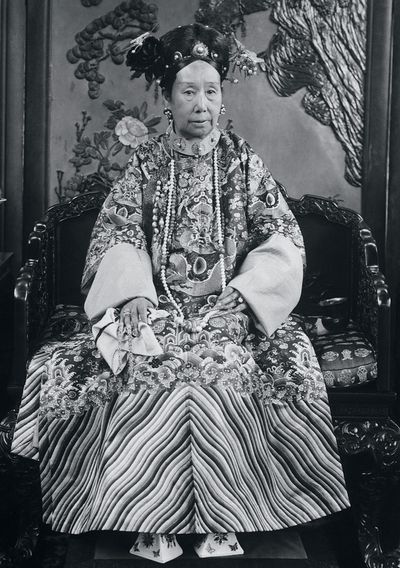
Empress Dowager Cixi
ModernPoliticianChina1835 — 1908
清朝晚期实际统治者,掌权近半个世纪。经历洋务运动、甲午战争、戊戌变法和义和团运动。
Compare Empress Dowager Cixi with another historical figure:
Quick Facts
Born
1835
Died
1908
Country
China
Era
Modern
Occupation
Politician
Score Overview
Military (10%)26
Political (20%)54
Influence (20%)58
Legacy (20%)52
Leadership (15%)72
Strategy (15%)60
Total Score55.0
Empress Dowager Cixi — Complete Timeline
1861 AD
Self-Strengthening MovementReform◆ Major
Cixi supported the Self-Strengthening Movement, which modernized China's military and infrastructure. Arsenals, shipyards, and railways were built, and the Tongwen Guan language school was established. However, the movement avoided political reform, limiting its effectiveness.
Qing dynastyModernizationReform
Impact: nationalconstructive
Xinyou CoupPolitical Action
Cixi, with Prince Gong, staged a coup against the eight regents appointed by the dying Xianfeng Emperor. She had the regents arrested and executed, establishing herself as co-regent for the young Tongzhi Emperor. This began her effective control over the Qing government.
Qing dynastyCoupRegency
Impact: national
1898 AD
Hundred Days' Reform CoupPolitical Action◆ Major
Cixi staged a coup to end the Hundred Days' Reform, a series of modernization edicts by the Guangxu Emperor. She imprisoned the emperor, executed six reform leaders, and rescinded most reforms. This reversed political liberalization and strengthened conservative forces.
Qing dynastyReform suppressionCoup
Impact: nationaldestructive
1900 AD
Boxer RebellionWar◆ Major
Cixi declared war on eight foreign powers after the Boxers besieged foreign legations in Beijing. The Eight-Nation Alliance invaded, defeated Qing forces, and occupied Beijing. Cixi fled to Xi'an. The resulting Boxer Protocol imposed heavy reparations and further weakened the Qing.
Qing dynastyForeign interventionWar
Impact: globaldestructive
1901 AD
Late Qing ReformsReform◆ Major
After the Boxer Rebellion, Cixi initiated the Late Qing Reforms, including abolition of the civil service examination, establishment of modern schools, and military modernization. These reforms aimed to strengthen the dynasty but came too late to prevent its collapse.
Qing dynastyModernizationReform
Impact: nationalconstructive
Detailed Scores
▶View all detailed scores
Military
Strategy
6
Tactics
5
Battles
6
Army Scale
5
War Impact
6
Political
Governance
7
Reform
7
Stability
7
Policy
7
Power
8
Influence
History
9
Global
8
Culture
8
Ideology
9
Legacy
8
People often compare with
See how Empress Dowager Cixi stacks up against other historical figures
Popular Comparisons
Empress Dowager Cixi vs Mao Zedong
vs Mao Zedong79
Empress Dowager Cixi vs Abraham Lincoln
vs Abraham Lincoln78
Empress Dowager Cixi vs George Washington
vs George Washington77
Empress Dowager Cixi vs Winston Churchill
vs Winston Churchill72
Empress Dowager Cixi vs Franklin D. Roosevelt
vs Franklin D. Roosevelt71
Empress Dowager Cixi vs Joseph Stalin
vs Joseph Stalin69